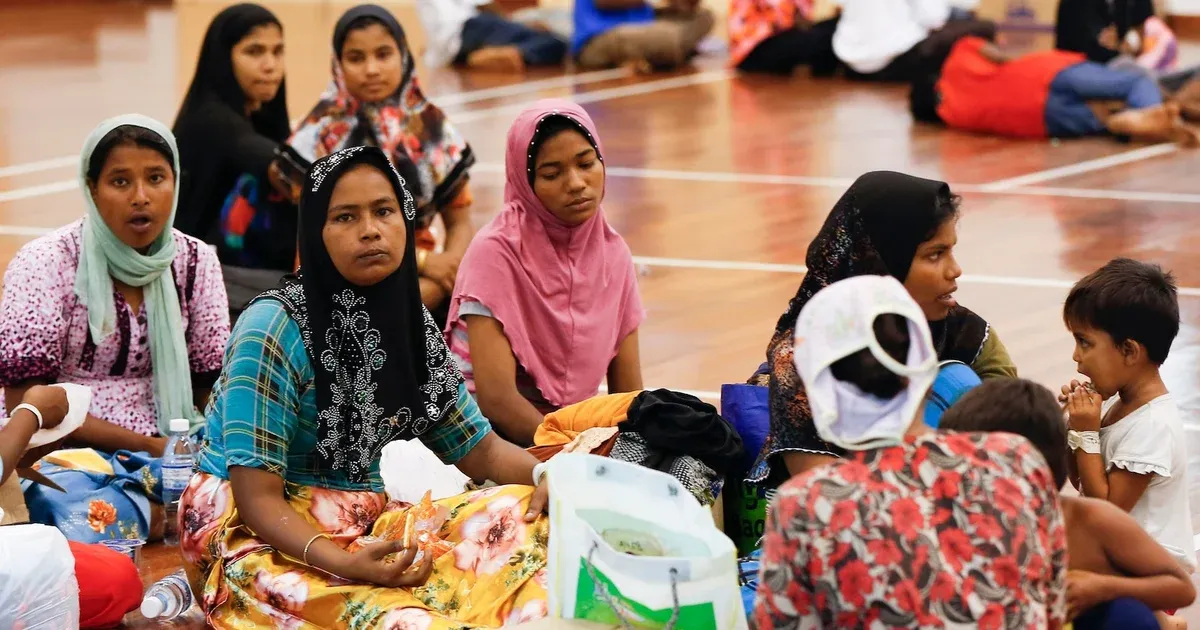
Malaysia has begun documenting detained Myanmar nationals for a proposed return program that could cover as many as 5,000 people. The headline number is an upper target, not a completed passenger list. Home Minister Saifuddin Nasution said on July 30, 2026, that about 4,000 people held across 19 immigration depots had been identified for transfer to one location, where officials will check their identities and records.
The process leaves a consequential gap between the political announcement and the people who may actually be moved. Prime Minister Anwar Ibrahim described the group as Rohingya refugees. Saifuddin used a narrower formulation, saying Myanmar nationals with refugee status would be returned. Myanmar officials then said the program covered verified citizens in Malaysian detention centers and rejected the suggestion that it was accepting Rohingya people as a group.
Anwar presented the arrangement as a change in Myanmar's willingness to cooperate. He said previous efforts to send people back had failed because Myanmar would not accept them, while improved relations had now produced an agreement covering 5,000 people from Malaysia. That diplomatic account explains the target, but it does not replace the identity review that both governments say must occur before a transfer.
Screening Will Determine the Real Size of the Program
Malaysia's immediate task is a centralized review of roughly 4,000 detainees. Moving them from 19 depots to one site is meant to support security screening and documentation. Saifuddin said the review would allow Malaysia to reach the 5,000-person target, after which the foreign ministry would manage the next stage with Myanmar.
Myanmar's public position makes verification the controlling step. Han Win Aung handles ASEAN affairs for the country's Foreign Affairs Ministry. He said the two governments were still coordinating and would return only people whose Myanmar citizenship was confirmed.
Both sides are still at the stage of coordinating to repatriate only those whose identity as genuine Myanmar citizens has been verified.
That standard does not resolve the disagreement over the word Rohingya. Myanmar does not recognize the Rohingya among its 135 lawful ethnic minorities and instead calls them Bengalis, a label that treats them as originating in Bangladesh. Anwar's description and Myanmar's citizenship test therefore do not identify the same group in the same way.
The Bangladesh portion is less definite. Saifuddin referred to an unspecified number of people in Cox's Bazar, but Mohammed Mizanur Rahman, a Bangladeshi official responsible for refugee relief and repatriation, told the Associated Press that he knew of no Rohingya return operation from Bangladesh. The Malaysian plan can be described with greater precision only for detainees already in Malaysia. The two locations also sit under different administrative authorities. Malaysia can assemble records for people in its own detention network, while any movement from Cox's Bazar would require a separately defined group and coordination with officials in Bangladesh. No such number was announced. Combining both references into one total would conceal how little has been established about the Bangladesh portion.
The 5,000 Figure Still Lacks a Transfer Schedule
Myanmar has accepted people from Malaysia before. Han Win Aung said earlier operations in 2021 and 2022 returned more than 1,100 Myanmar nationals who had been stranded in the country. That history shows an administrative route exists, but it does not establish the composition or speed of the new program. Officials have disclosed neither a final transfer list nor a timetable.
The UN refugee agency's register includes approximately 215,600 people seeking asylum or holding refugee status in Malaysia; around 126,000 are Rohingya. Those figures show the scale against which a 5,000-person program would operate. Malaysia has not joined the United Nations Refugee Convention, and its immigration system classifies refugees as undocumented migrants. The return review therefore brings detention records, refugee status and nationality into one administrative decision even though those labels answer different questions.
The announced target will become measurable only when the screening produces verified names and both governments publish a compatible account of who is eligible. Until then, 5,000 describes the ambition of the program rather than its confirmed reach. The unresolved definitions are not a wording dispute at the edge of the plan; they decide who can be transferred at all.