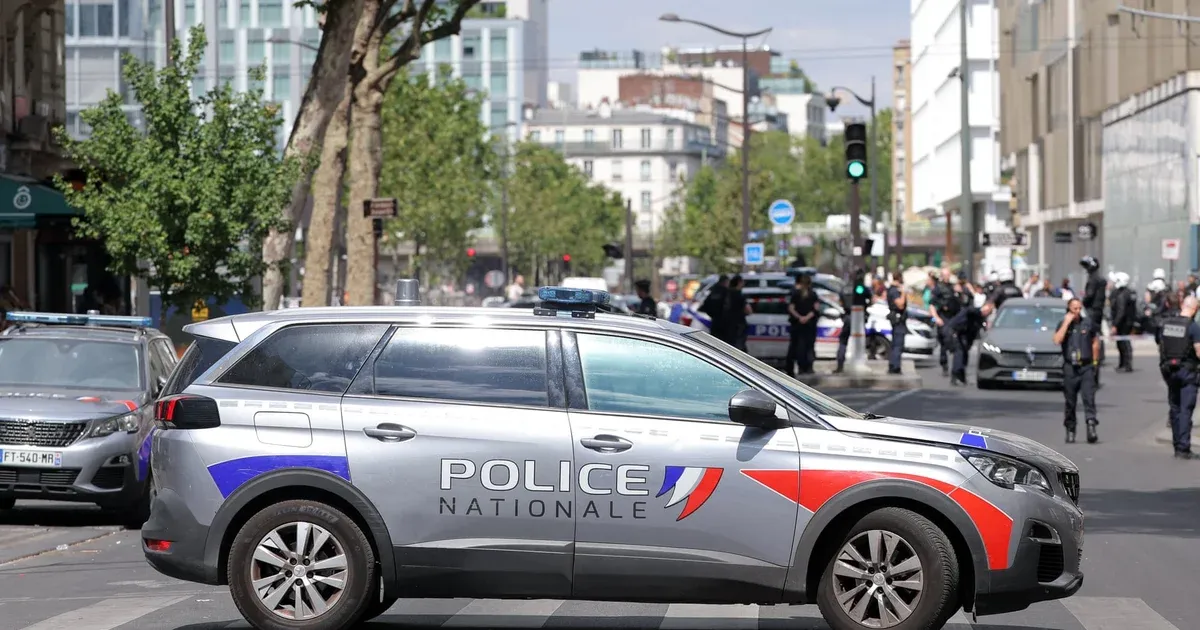
Three women were taken to hospital after a man attacked them with two kitchen knives in northern Paris. An off-duty police officer detained the suspect after people nearby helped bring him under control, ending a daylight assault before investigators had established who he was or why he acted. The victims ranged from 19 to 36 years old.
On July 27, 2026, the attack unfolded near Porte de Clichy, a busy gateway on the northern edge of the capital. Two of the women suffered serious injuries, but officials said neither was in life-threatening condition. The case now has two distinct tracks: medical care for the victims and an investigation that begins with a suspect in custody but no confirmed motive. Those tracks move at different speeds and require different kinds of proof.
A Street-Level Response Stopped the Attack
At about 11:30 a.m., emergency calls drew authorities to the 17th arrondissement. One victim had a lower-back wound, while another was stabbed in the abdomen, according to Interior Minister Laurent Nunez. District mayor Geoffroy Boulard said one of the women was pregnant. Officials did not immediately publish further medical detail.
The restraint did not depend on one action alone. A witness described a young traveler striking the attacker with a bag and knocking him down. A waiter then held a chair over the man while an off-duty officer completed the detention. That sequence placed several unplanned participants within reach of the knives, but it also prevented the attacker from immediately regaining his footing. It was civilian intervention under immediate pressure, not a rehearsed security operation.
The off-duty officer's presence supplied legal authority and training at the point when the scene could have become more chaotic. The other interventions bought seconds. Together, they created enough control for arriving police and medics to separate the suspect, victims and witnesses rather than entering an assault still in motion. That separation also helps preserve individual accounts before memories become blended through discussion. It gives medics space to triage three patients while officers account for both weapons and establish a perimeter.
Nunez confirmed the officer's role in the arrest.
The perpetrator was apprehended by an off-duty police officer.
The statement is narrow, and that is useful. It establishes who made the detention without turning the arrest into a complete account of the response. Witness testimony still matters because the bag strike and the chair explain how the suspect was kept down before the scene was secured. Investigators will need those accounts to establish order, timing and individual actions. A clean sequence can distinguish restraint from later police procedure and keep every participant's role precise. Any disagreement between early recollections can then be tested against physical evidence and available street or business cameras.
A Fast Arrest Does Not Make an Unknown Motive Knowable
The suspect's identity had not been released in the first official account. His motive was also unknown. Nunez said the man had made incoherent statements and urged the public not to draw conclusions from them. The central fact is that the motive remains unconfirmed. That caution keeps an unexplained act from being prematurely forced into a political, ideological or personal narrative. Confusion may be relevant evidence, but it is not a motive by itself.
For investigators, custody is the beginning of the evidentiary work rather than its conclusion. They can examine the knives, reconstruct movement through the area, compare witness accounts and determine whether the three victims were selected or encountered. Medical records can establish injuries; interviews and digital evidence may eventually clarify intent. The reported statements must be assessed in context, not treated as a ready-made explanation. None of those answers follows automatically from the speed of the arrest.
The public importance of the case lies partly in the intervention that stopped further harm. It also lies in the discipline required afterward. Bystanders and an off-duty officer acted on an immediate physical threat; officials must now act on evidence. The first task rewarded speed, while the second demands patience and corroboration. Confusing those standards would turn an effective street response into a license for unsupported speculation, making the loudest theory travel faster than the facts.