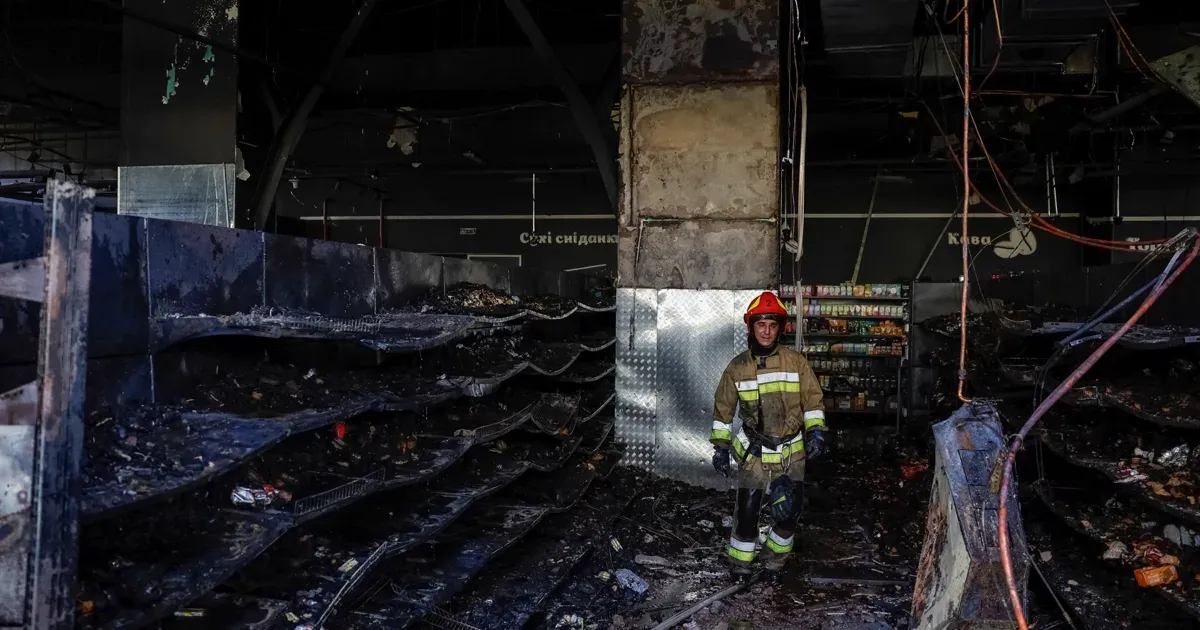
A supermarket, an apartment building, an emergency vehicle and a gas-company rescue team were caught in a new round of attacks spanning Ukraine, Russian-occupied territory and the Russian border. Ukrainian officials said Russian strikes killed at least six people, while Russian-installed officials reported four civilians killed by a Ukrainian drone in occupied Horlivka. The attacks unfolded on Sunday, July 26, 2026, as weapons reached both major cities and communities close to the front.
The overnight inventory released by Ukraine's air force consisted of 136 drones alongside seven ballistic missiles. Kyiv, Chernihiv, Zaporizhzhia and Kharkiv were hit. The mix of missiles, drones and a glide bomb placed pressure on air defenses while allowing separate attacks to arrive across northern, eastern and southern Ukraine.
The highest reported toll at one site came in Chernihiv, where officials said a Russian drone struck an ordinary supermarket. Among the dead was a nine-year-old girl. Officials counted 25 wounded and one other fatality. The store was a civilian location serving a regional city rather than a military installation, making the casualties central to Ukraine's account of the attack.
“This is deliberate Russian terror with absolutely no military justification,” Ukrainian President Volodymyr Zelenskyy said.
Damage Extended From Apartment Floors to a Rescue Team
Kharkiv faced a separate daytime drone attack. The city's mayor recorded one death; 16 other people were taken for treatment. A separate account from Governor Ivan Fedorov placed one fatality and six wounded in Zaporizhzhia, where the weapon was identified as a glide bomb. Those incidents added two different weapons and two more urban areas to the same day's casualty report.
Kyiv was struck during the overnight barrage. A central high-rise burned across two floors, according to Mayor Vitali Klitschko. The affected levels were the seventh and eighth; three people in the capital were wounded. Images released by emergency services showed burning vehicles, evidence that the blast effects reached ground-level property as well as the damaged floors.
In Sloviansk, the national oil and gas company Naftogaz said two employees were killed while helping residents affected by an earlier attack. Their deaths show how a strike can create a second period of exposure after the initial blast, when utility staff, medics and emergency crews enter a damaged area to restore services or assist civilians.
The geographic spread followed an earlier missile-and-drone barrage that hit Kyiv and tested Ukrainian defenses. The new attacks again required authorities to track several weapon types and damage sites at once. That distribution can strain warning systems and response teams even when no single strike determines the course of the wider war.
Russian-Controlled and Border Areas Reported Their Own Casualties
Ivan Prikhodko, Horlivka's Russian-installed mayor, put the civilian death toll at four after the Ukrainian drone attack. The city lies in the occupied part of the Donetsk region. A subsequent statement from Prikhodko counted four wounded when an emergency vehicle came under drone fire; three were medics. The cited report provided no corresponding Ukrainian account for Horlivka, so the figures remain attributed to the Russian-installed authority.
Belgorod authorities put the number wounded at 12. Two were children, and the city sits near the Ukrainian border. Moscow's previous-day account described 12 deaths in another Ukrainian strike, this time in an occupied town by the Azov Sea. Together, the reports describe civilian harm on both sides of the internationally recognized border and inside territory held by Russian forces.
Both Moscow and Kyiv deny targeting civilians. The denials do not erase the casualty record, but they make attribution and verification essential when official figures come from governments engaged in the fighting. Location, weapon type, reporting authority and whether an area is occupied all affect how each number should be read.
United Nations figures put the growing burden in a wider frame. For Ukraine, the UN's January-to-June count reached 1,396 dead and 7,978 injured. Reported figures for Russia over the same period were 250 killed and 1,596 injured. Analysts cited by Al Jazeera linked the increase to greater use of short-range drones and glide bombs, along with heavier attacks on infrastructure.
Expanding Strike Range Is Outrunning the Stalled Talks
The attack map now reaches far beyond a single front line. Ballistic missiles can threaten the capital, glide bombs can hit cities nearer the fighting, and drones can reach supermarkets, border communities and emergency vehicles. Each system creates a different warning time and damage pattern, but civilians and responders absorb the combined effect. That makes accurate, attributed casualty reporting part of the conflict itself: an unqualified figure can conceal who reported it, where control lies and whether independent confirmation exists.
U.S.-led talks aimed at ending the fighting have stalled, while the Kremlin continues to hold parts of eastern and southern Ukraine and says it intends to seize the rest of the east. Until negotiations change military incentives, the practical trend is visible in the places struck on Sunday. The weapons are widening the civilian geography of the war faster than diplomacy is narrowing it.