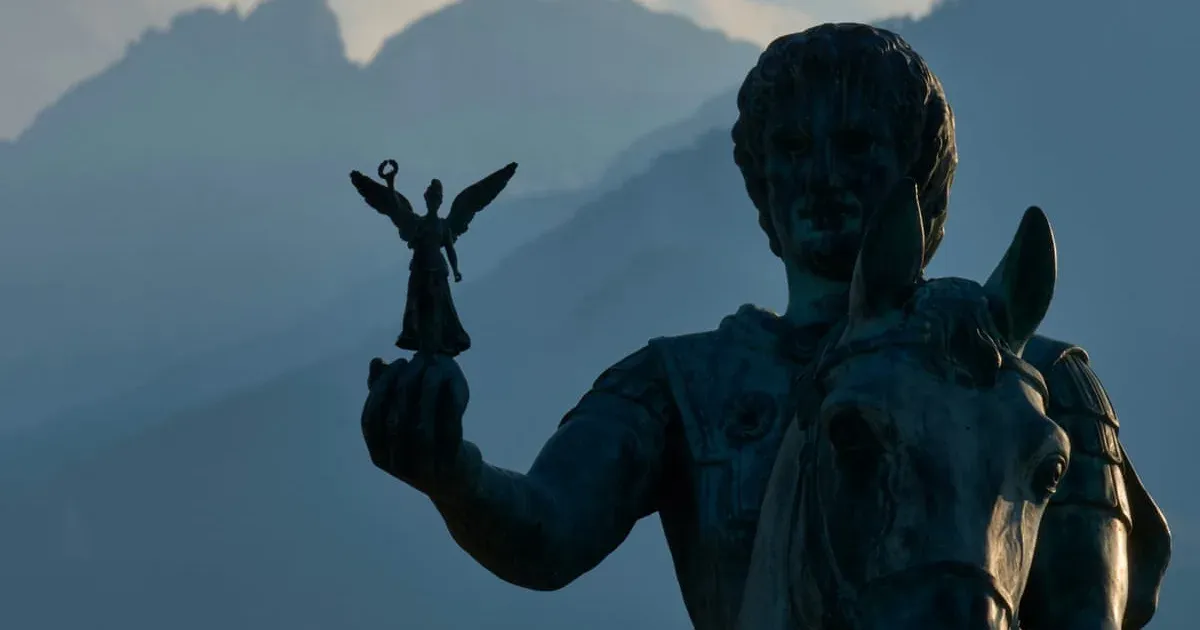
Greece has secured World Heritage status for Mount Olympus, placing the country's highest peak under UNESCO's international preservation framework. The decision treats the mountain as both a natural landscape and a cultural site shaped by its place in Greek mythology. The status came after a campaign that began when Greece placed Olympus on its tentative list in 2014.
The World Heritage Committee approved the inscription on July 26, 2026, during its annual meeting in Busan, South Korea. Mount Olympus entered the list as a mixed cultural and natural property, a category that recognizes the relationship between its ecosystems, physical landscape and centuries of human meaning. Greek officials had faced the possibility of another delay after draft documents suggested that UNESCO might request more information.
A Mountain Defined by Ecology and Mythology
Olympus rises 2,918 meters from a base close to sea level and is embedded in stories of Zeus and the 12 Olympian gods. That mythology gives the mountain a cultural identity recognized far beyond Greece, but the successful nomination was not based on legend alone. The site also contains protected habitats and unusually rich biodiversity, making the link between culture and nature central to the application.
Georgios Koumoutsakos, who leads Greece's UNESCO delegation, said the country viewed the designation as a commitment to preserve the mountain for current and future generations. Evangelos Geroliolios, mayor of the municipality at its base, had similarly warned that recognition would increase local responsibility for environmental protection. Their statements put conservation, rather than a tourism campaign, at the center of the official response. The unanimous vote also ended fears created by a draft agenda that had indicated the file might be returned to Greece for further work.
The committee was reviewing about 30 nominations during a session scheduled to end on Wednesday. Olympus joined a list that already contained 1,248 properties in 170 countries before this round of decisions. A World Heritage inscription can bring technical advice, greater international attention and access to financial support under UNESCO's convention, though it does not remove the need for national and local management. Authorities still have to maintain the attributes used to justify recognition and report threats that could damage them. Within Greece, Olympus now joins properties such as the Acropolis while extending international recognition from built monuments to a living mountain system.
The Decision Connected Four Very Different Landscapes
The Normandy inscription covers five D-Day landing beaches and Pointe du Hoc. The assault brought more than 150,000 Allied personnel onto the French coast on June 6, 1944, while about 4,000 soldiers died. Bunkers, gun positions, offshore wrecks and Allied installations remain across an 80-kilometer stretch, making the property both physical evidence of combat and a landscape of public memory.
France had pursued that recognition since 2008. Preservation advisers have identified tourism, rising sea levels, climate change and nearby development as threats that require closer monitoring. The designation therefore links remembrance of the landings with practical decisions about how a heavily visited coastline will be protected. It also extends UNESCO's recent treatment of places associated with conflict, a practice that has prompted debate about the boundaries of heritage status.
Asuka and Fujiwara, two former seats of Japanese power, were accepted through a group of 19 archaeological locations. The remains cover the sixth through eighth centuries, when Japan developed a centralized state and adopted political and religious ideas from China. Palaces, administrative buildings, Buddhist temples and tombs lie largely beneath present-day fields. Preserving an underground record that visitors cannot easily see requires a different management model from the visible monuments of Normandy or the open landscape of Olympus.
South Sudan received its first World Heritage property with the Boma-Badingilo Migratory Landscape. Its wetlands, savannas and floodplains carry a seasonal movement involving roughly 6 million animals. White-eared kob form the largest share, accompanied by tiang and Mongalla gazelles, while elephants, lions and cheetahs also inhabit the system. The protected area also supports communities that depend on herding, farming and fishing, so conservation decisions will have to account for human use as well as wildlife routes.
Recognition Makes Protection a Measurable Obligation
The Olympus inscription converts a national campaign into an international conservation commitment. Visitor numbers, construction, habitat protection and access will now be judged against the qualities that justified the listing. A rise in tourism may benefit nearby communities, but unmanaged growth could place pressure on the same landscape Greece asked UNESCO to recognize. The label may help attract conservation support, but it does not automatically supply the money or enforcement needed to manage that pressure.
The mixed designation also prevents officials from separating the mountain's mythology from its physical condition. Protecting only monuments or promoting only the stories of the gods would miss the basis of the decision; the mountain's habitats, scale and cultural history were accepted as one property. Local authorities will have to show that tourism plans and environmental safeguards can work together rather than compete for priority.
After 12 years, the vote in Busan ends the nomination phase but begins a more demanding test. Greece now has a globally visible standard against which future decisions around Olympus can be compared. The practical value of the UNESCO label will depend on whether that scrutiny produces durable habitat protection, controlled access and funding that reaches the landscape rather than stopping at international recognition.