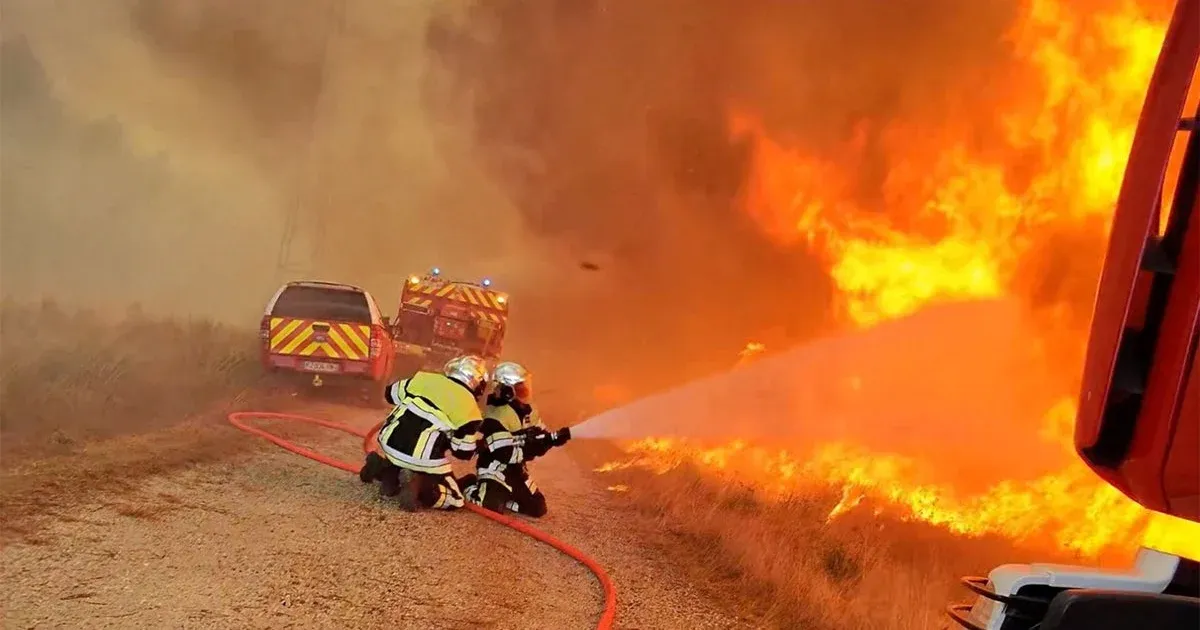
Water-bombing aircraft and helicopters are circling the forests west of Bordeaux, but the fight no longer ends when a visible wall of flame falls. Crews are following each drop on foot, soaking dry ground and watching for fire to surface again across roads, villages and evacuation zones.
The emergency has grown from a coastal evacuation into a regional test of firefighting capacity, temporary housing and public messaging. As of July 29, 2026, The Independent reported about 220,000 people forced from their homes, while the BBC put the burned area at about 50,000 hectares. Temperatures near 40C were helping small flare-ups become fresh fronts.
Heat and Dry Ground Turn Control Into Repeated Containment
A formation of three Canadairs attacked one outbreak from the air. The BBC said every aircraft released a load exceeding 1,000 gallons before helicopters followed with fire retardant and crews entered the forest. One fire was controlled in roughly 20 minutes, then smoke rose on the opposite side of the road. That sequence is why a status of relative control cannot be read as an all-clear.
Gironde's powder-dry soil is layered with pinecones and dead leaves. Even after flames retreat, heat can remain below the surface and find fuel when wind or temperature changes. Firefighters counter that risk by saturating soil and vegetation in a process known locally as noyer, or drowning. Teams from Brittany, Marseille, Lyon and other parts of France have joined the operation, turning a local fire line into a national deployment.
Volunteers are carrying water toward smaller outbreaks and helping protect communities close to the forest. Maelys, a 23-year-old nurse, described the double shift in one sentence.
In the morning I am at the hospital working, and in the afternoon I'm in the forest helping.
That local effort adds reach, but it cannot replace evacuation discipline. One homeowner told the BBC that he remained with his son after police asked the family to leave, then conceded that neither of them was trained to fight fire. Every person who stays inside a threatened zone can create a second task for crews already moving water, aircraft and vehicles through restricted roads.
Evacuation Halls Absorb a Crisis Larger Than the Fire Perimeter
Bordeaux used three halls to accommodate roughly 6,000 evacuees at the peak. The Parc des Expositions housed hundreds on camp beds, while officials shifted others into vacant student rooms and available housing. Some municipalities later allowed residents home. The overnight headcount at the principal reception centre then fell to about 850, but returns remain tied to fire conditions rather than a fixed timetable.
Yanis Sharif left Saint-Jean d'Illac with his aunt and two young cousins after a phone alert woke him. He managed to collect a laptop, documents and a few shirts before driving east. They slept in their car on arrival, then received beds, food, showers and strollers from the reception network. His account shows how an evacuation order becomes a housing operation within hours, especially for families who leave with children and almost no equipment.
Public donations arrived so quickly that Bordeaux Metropole suspended its appeal for food, clothing and essentials. That is evidence of strong local capacity, but also of a coordination problem: once warehouses and halls have enough supplies, transport, storage and sorting can compete with the needs of evacuees. Officials now have to move aid toward specific shortages while keeping reception sites ready for another change in the fire line.
The economic boundary is wider and less visible. The local commerce chamber counted 39,000 affected businesses, including tourism, wine, retail and companies in a department that also hosts major aerospace and defence operations. A mid-July poll had already found 94 percent of responding firms facing difficulties. June liquidations were 37 percent higher than a year earlier at the commercial courts serving Bordeaux and Libourne. The Grand Verdus wine estate sits about 35 kilometres from the flames, across the Garonne, yet its owner said travel warnings were already hurting wine tourism. Bordeaux sells beaches, vineyards, museums and Arcachon Bay as one destination, so a warning aimed at a single fire zone can suppress demand across unaffected sites.
General warnings to avoid the region are therefore colliding with more precise evacuation orders. Bordeaux itself has not been evacuated, and its museums, cafes and restaurants remain open. The earlier Arcachon Bay evacuations involved about 20,000 people and 3,400 hectares on July 23. Six days later, the larger figures and repeated flare-ups constitute a material new stage rather than a second account of the same conditions.
Evacuation Orders and Business Advice Must Share One Map
Fire authorities need people away from roads and forests where conditions can reverse quickly. Businesses outside those zones need equally exact guidance so that a necessary safety order does not become an unofficial closure of the entire Bordeaux economy. Publishing current perimeters, return decisions and open transport routes together would let residents, visitors and employers act on the same geography.
The key operational failure would be ambiguity. A message that is too narrow can leave people exposed; one that is too broad can empty safe districts and deepen losses for firms already close to liquidation. Gironde's fire line will keep moving as heat and wind change. If public instructions do not move with it, the economic damage will continue spreading beyond the land that actually burned.