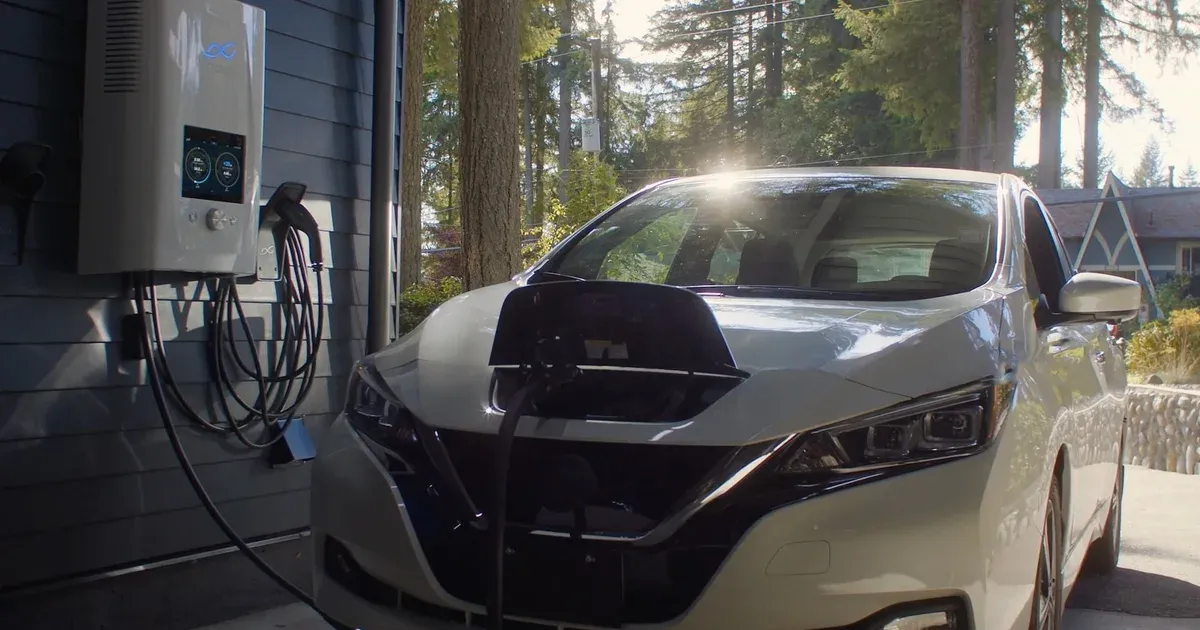
A Massachusetts pilot is testing whether parked electric vehicles can serve as a coordinated power reserve when the grid is under its greatest strain. Eversource and National Grid are working with EnergyHub, Sunrun and The Mobility House to let eligible customers send electricity from car batteries back through the utilities' existing ConnectedSolutions program.
The project was detailed on July 26, 2026, as utilities across the United States explored ways to manage rising electricity demand without building every new resource from scratch. Participating drivers will be paid when their vehicles discharge during selected demand-response events, giving the battery a second job while the car is sitting idle. The early test is designed to produce operating lessons, not to claim that private vehicles can already replace conventional grid capacity.
This is not a plan to drain vehicles every day. The pilot is aimed at a limited number of hours when consumption is unusually high, such as a hot afternoon when air conditioners are running across the region. A Mobility House executive said those discharges may occur during only a small number of hours over an entire year. Owners connect through a bidirectional charger, set their vehicle availability and allow the program to draw power during an event.
ConnectedSolutions Adds Cars to an Existing Network
ConnectedSolutions already coordinates devices such as residential batteries and other flexible loads. The new test adds compatible EVs to that system rather than creating a separate grid platform. Software can group many small batteries into one virtual power plant and dispatch them together when Eversource or National Grid needs additional capacity. The utilities can test the new resource through a control structure they already use.
The operating logic depends on timing. Cars can release power near the evening peak, when people return home and switch on appliances, then recharge later as demand falls. Active managed charging can also stagger when vehicles begin drawing electricity overnight, avoiding a new spike caused by thousands of cars plugging in at the same hour. Discharge and charging schedules therefore have to be managed as one cycle.
The technical value comes from coordination, not from any single car. A utility with a large pool can request a smaller contribution from each battery and still assemble a meaningful grid resource. The customer app is therefore as important as the charger: it needs to know when a vehicle will be available, when it must be ready for a trip and how much energy the owner is willing to provide.
Large Batteries Meet a Narrow Peak-Hour Problem
A typical EV battery holds roughly six times as much energy as a residential backup unit, according to the Wired report. School buses and municipal fleets may be especially useful because they combine large batteries with predictable schedules. Residential cars add another pool that is widely distributed and already paid for by their owners. Even a modest participation rate could create a sizable reserve when thousands of vehicles are aggregated.
That reserve arrives as electricity use is increasing from data centers, heat pumps and the vehicles themselves. Utilities are also adding wind and solar generation, whose output changes with weather and time of day. Storage helps bridge the gap between when renewable power is produced and when customers need it, but dedicated battery sites and new transmission lines require major capital spending. Other grid work, including buried power lines built for wildfire and storm resilience, is already reaching customer bills.
Vehicle-to-grid technology does not eliminate those investments, but it tests whether existing batteries can cover part of the most expensive short-duration demand. If a utility can call on cars during a heat wave, it may reduce the amount of rarely used capacity needed only for a handful of peaks. Drivers receive compensation for making that flexibility available, while customers without an EV could benefit if the resource reduces avoidable system costs.
Hardware remains a firm boundary. Not every EV can return electricity to the grid, and customers need a bidirectional charger rather than a conventional one-way unit. Models including the Nissan Leaf have the required capability, while equipment costs, installation and maturing technical standards still determine who can participate. The expectation is that chargers become cheaper and easier to install, but the pilot must work with the equipment available now.
The Pilot Must Prove Availability Before Scale
The Massachusetts test now has to show that a resource spread across private driveways can behave predictably. Cars move, owners change plans and batteries arrive home with different charge levels. Program software must respect those choices while still giving utilities enough confidence to count the aggregated capacity during a demand-response event. A large theoretical battery pool has little operational value if too many vehicles are unavailable at the critical hour.
Success would not mean every electric car becomes a power plant. It would mean utilities can identify a willing, compatible fraction of vehicles and combine them reliably at the right hour. That is the real threshold between an attractive battery statistic and a usable grid tool: not how much energy is parked across Massachusetts, but how much can be dispatched without making mobility less dependable for the people who own it.