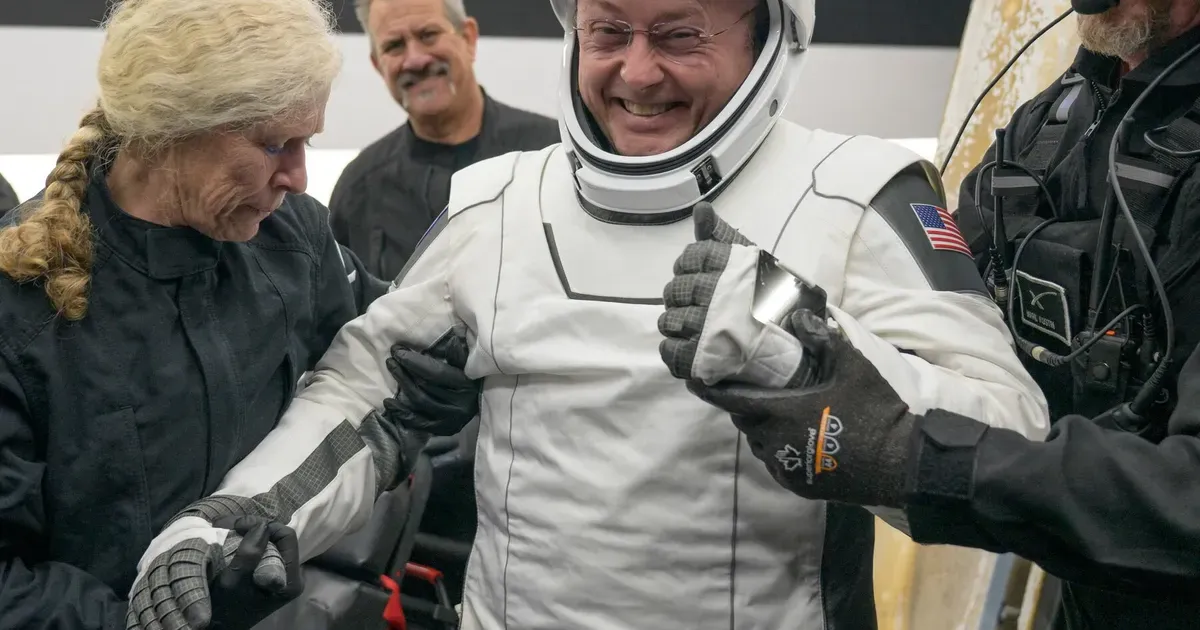
Michael Fincke's reported medical emergency aboard the International Space Station is the kind of incident that turns a technical mission story into a broader space medicine question. The illness account matters because crew health disclosures often balance public interest with medical privacy. Mission managers also had to preserve crew privacy while explaining why the event mattered. The mission framing also has to separate public attention from operational risk. The account published around March 29, 2026, described a sudden loss of speech during a January mission and an evacuation process that required close monitoring from the crew and ground controllers.
The most important detail is also the one that requires the most caution: the cause was not clearly identified in the existing account. Aphasia can be connected to several neurological problems on Earth, but spaceflight adds unusual conditions, including fluid shifts, radiation exposure, isolation, altered sleep and limited diagnostic capacity.
That does not mean the station environment caused the event. It means investigators would have to separate a personal medical episode from any mission-related factor before drawing firm conclusions.
Speech Loss Changes Emergency Response
A total or partial loss of speech creates a practical problem in orbit because standard emergency response depends on communication. A crew member who cannot explain symptoms must be assessed through observation, medical checklists and biometric telemetry. Ground teams then have to decide whether the condition can be stabilized on station or requires return to Earth.
In this case, the account described the use of a Crew Dragon return path and nonverbal coordination. That kind of response shows why training matters before a crisis. Astronauts rehearse procedures not because every scenario can be predicted, but because a disciplined checklist reduces confusion when symptoms are unclear. The International Space Station is not a hospital, even though it carries medical equipment and crew medical training.
NASA Must Separate Cause From Coincidence
Investigators would likely review air quality, carbon dioxide levels, radiation records, sleep logs, medication use and any neurological history. They would also compare the affected astronaut's data with the rest of the crew. If no one else showed similar symptoms, that would make a station-wide environmental cause less likely, though not impossible.
Radiation speculation is understandable but easy to overstate. Space radiation is a real concern for long-duration missions, especially beyond low Earth orbit. A single medical event, however, cannot prove a radiation mechanism without clinical evidence.
The same caution applies to microgravity. Fluid shifts and pressure changes are known challenges in orbit, but linking them directly to one speech episode would require more than timing.
What It Means for Future Missions
The Fincke account matters because Mars and lunar missions will have less immediate access to evacuation. On the ISS, a return vehicle and ground support can shorten the distance between emergency and hospital care. Deep-space crews may have to manage neurological symptoms for far longer before reaching Earth.
That reality pushes agencies toward better onboard diagnostics, clearer telemedicine protocols and training for crew members who may need to treat a colleague without real-time answers. It also strengthens the case for conservative medical screening before long missions. The editorial lesson is not to turn one reported illness into a mystery narrative. It is to recognize that human bodies remain one of the hardest engineering problems in spaceflight. Rockets can be tested repeatedly; neurological risk is harder to model, harder to diagnose in orbit and harder to resolve when communication itself becomes part of the emergency.
Medical Transparency Has Limits
NASA also has to balance transparency with medical privacy. Public confidence improves when agencies explain what happened, what was tested and whether other crew members were at risk. At the same time, an astronaut's private medical record cannot be treated as mission hardware open for public inspection.
That tension often leaves room for speculation. If officials say too little, outside observers fill the gap with radiation theories, equipment concerns or rumors about crew health. If officials say too much, they risk disclosing information that belongs to the patient rather than the program.
The better approach is process-based disclosure. NASA can describe the categories of checks performed, the emergency procedures used and any station-wide safety findings without pretending to diagnose the case in public. For future missions, that communication discipline will be as important as the medicine. Deep-space crews will operate in an environment where small uncertainties can become public narratives before investigators have finished the clinical work. The episode also underlines a basic truth about human spaceflight: medical risk is not a side issue to exploration, including the broader planning discussed in coverage of NASA nuclear rocket development. It is part of the mission architecture. A vehicle can be redundant, a communications system can have backups and a docking procedure can be rehearsed hundreds of times, but a sudden neurological symptom still forces judgment under uncertainty. Crews need equipment, training and permission to make conservative calls. Agencies need post-incident reviews that improve safety without turning every medical event into speculation. The best lesson from the Fincke account is therefore procedural rather than dramatic: future missions should assume that rare health events will happen and build response systems sturdy enough to handle them. That kind of review may sound less satisfying than a single dramatic cause, but it is the only responsible way to improve mission safety. Space agencies learn by narrowing uncertainty, not by rewarding the fastest theory. That is the standard a serious space program has to meet.