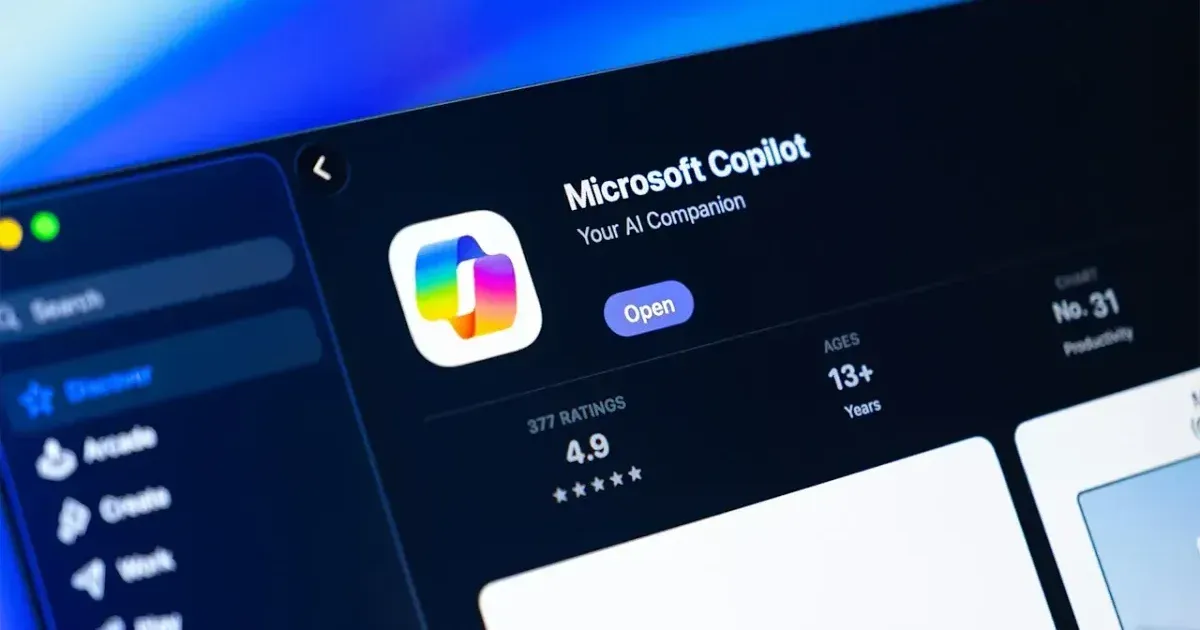
Microsoft's Copilot controversy exposed a gap between enterprise AI marketing and legal caution. The phrase at issue described the assistant as intended for entertainment purposes, even as the product was being sold as a workplace tool.
The mismatch mattered because businesses are being asked to trust the product inside daily workflows. The phrase spread widely after users noticed that the fine print warned against relying on the tool for important advice. Microsoft said on April 6, 2026, that it would revise the Terms of Use, a change meant to bring the legal language closer to the company's pitch that Copilot can support professional research, document work and workplace productivity.
Microsoft Addresses Viral Entertainment Label Backlash
Spokespeople for the Redmond-based software giant clarified that the wording was a remnant of an earlier development phase. Internal teams failed to update the legal documentation as the product transitioned from a simple chatbot to a comprehensive assistant integrated into Windows 11. Company officials claimed the phrasing persisted from the initial launch of the service within the Bing search engine. Microsoft confirmed that the next scheduled update for the software will include a complete overhaul of the user agreement to reflect current capabilities.
“The ‘entertainment purposes’ phrasing is legacy language from when Copilot originally launched as a search companion service in Bing,” Microsoft said.
Legal Language Contradicts Enterprise Productivity Marketing
Marketing materials released in April 2025 showcased the assistant performing complex research and revising sensitive corporate documents. Those advertisements encouraged users to delegate simple to-do lists and data analysis to the AI. Legal clauses stating that the software may not work as intended created a meaningful disconnect between the sales department and the compliance office. Corporate buyers paying for premium subscriptions expressed concern that the legal fine print provided the company a loophole to avoid liability for AI-generated errors. Reliance on such tools for professional research became a point of contention among legal scholars.
Market analysts observed that the standalone version of the software carried these restrictive terms while the enterprise-grade 365 edition used different language. Professional users typically operate under a separate Microsoft Services Agreement that avoids the entertainment label. Standalone users on Windows 11 remained subject to the more dismissive terminology until the viral backlash forced a change. This distinction created a two-tiered perception of reliability within the user base.
Public relations teams struggled to reconcile this legal distancing with the high-stakes promises made to investors. Satya Nadella, chief executive officer of Microsoft, previously touted the accuracy and speed of the tool during a January financial update. Nadella highlighted a feature known as Work IQ, which supposedly enhances the precision of the AI agent for corporate tasks. Financial analysts noted that the CEO described the tool as a core component of the modern workplace. Disclaimers calling it entertainment suggested a lack of confidence in those very same features. This legal uncertainty exacerbates the ongoing FOBO that grips American workers facing AI displacement across the corporate landscape.
Competitors in the generative AI sector have avoided the entertainment classification in their public-facing agreements. Documentation for OpenAI and Anthropic focuses on usage limits and data privacy without diminishing the intended professional utility of their models. Meta Platforms and xAI also use terms that emphasize technological limitations but stop short of labeling their primary agents as toys. Industry observers noted that Microsoft stood alone in its use of the specific entertainment disclaimer among the major technology players.
Legal departments at rival firms prefer language that focuses on the probabilistic nature of large language models. They emphasize that AI can hallucinate facts or produce biased content. Using the word entertainment allowed Microsoft to bypass deeper discussions regarding the accuracy of its neural networks. Industry experts suggested that the legal team prioritized liability protection over brand consistency. Revision of the terms indicates a shift toward accepting the professional responsibility that comes with enterprise software.
Social media discussion surrounding the controversy gave rise to derogatory terms for the company's AI efforts. Some critics adopted the label Microslop to describe what they perceived as low-quality automated output. The viral nature of the ToS clause intensified fears that big tech companies are rushing unpolished products to market. Users argued that if a company is not confident enough to call its product a tool in a legal contract, consumers should not trust it for professional work. Public trust in automated systems continues to fluctuate as these legal discrepancies surface.
AI Trust in the Fine Print
Corporate legal departments are the ultimate wet blanket on innovation, yet their cowardice in this instance exposes a deeper rot in the AI hype cycle. Microsoft spent the better part of two years convincing the world that its assistant was the most sophisticated productivity leap since the spreadsheet. Simultaneously, its lawyers were whispering into the Terms of Service that the whole thing was basically a digital mood ring. This is more than legacy language; it is a strategic retreat into plausible deniability. If the AI hallucinates a false legal precedent or erases a client database, the company can simply point to the fine print and shrug.
Is the software a revolutionary tool or a toy? Microsoft wants the valuation of the former with the liability profile of the latter. This dual-reality approach is unsustainable in a market where businesses are making billion-dollar bets on automation. When a company as dominant as Microsoft uses entertainment as a legal shield, it signals to every CIO that the technology is not ready for the heavy lifting of global commerce. The rebranding of these terms is a desperate attempt to patch a hole in the corporate narrative before the skepticism becomes permanent.