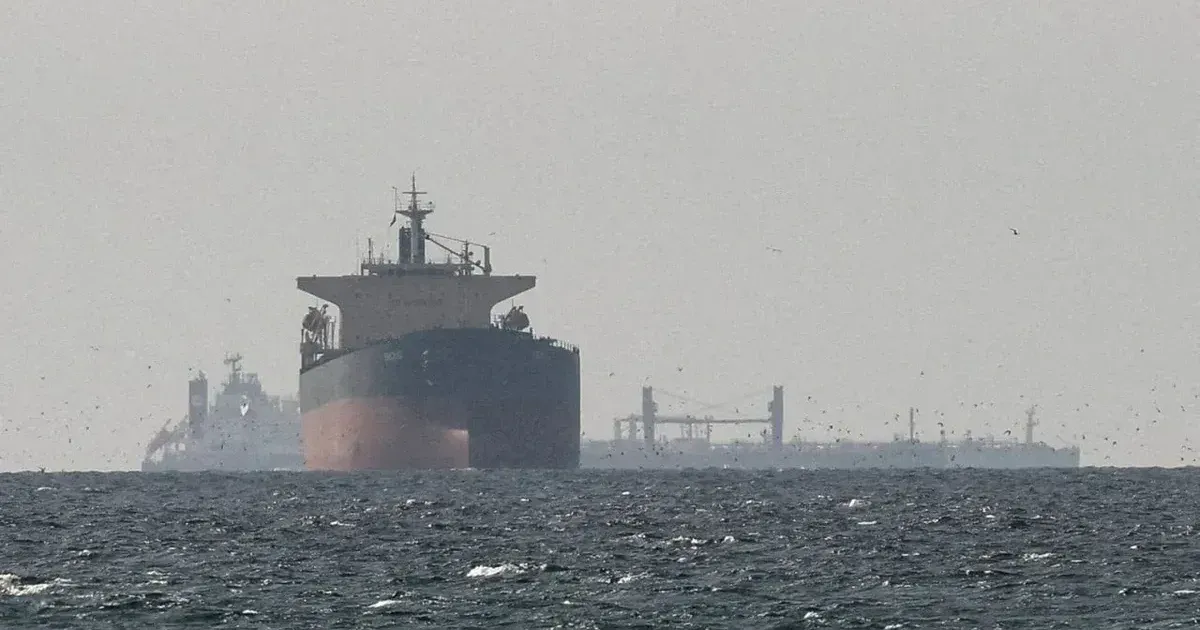
South Korea is treating the Hormuz closure as a logistics emergency, not a market abstraction. The Yanbu route offers a bypass, but it cannot fully replace ordinary Persian Gulf flows.
That gap is where the inflation risk sits.
South Korea's routing choice showed how quickly shipping risk can reshape trade. South Korean maritime officials on April 6, 2026, authorized a fleet of five Korean-flagged vessels to bypass the Strait of Hormuz and dock at the Saudi Arabian port of Yanbu. Iran effectively closed the narrow waterway, which is a transit point for one-fifth of global oil consumption, during the intensifying US-Israeli military campaign. Seventy percent of crude imports for Seoul originate in the Middle East, making the closure a direct threat to national energy security.
Yanbu Port Logistics and Supply-Chain Risks
Saudi Arabian officials have cleared additional berths at Yanbu to accommodate the influx of Korean and international tankers. The port usually handles smaller volumes compared to the larger terminals at Ras Tanura. Expanding capacity overnight has created meaningful congestion in the Red Sea shipping lanes. South Korea has sent logistics experts to the site to oversee the loading of the five ships. These experts report that while the port is functional, the pipeline capacity from the eastern oil fields is the ultimate limiting factor.
Insurance premiums for vessels entering the Red Sea have tripled over the last forty-eight hours. Although the Red Sea is safer than the Strait of Hormuz, it is not without peril. Proximity to the conflict zone in Iran keeps underwriters cautious. Ship owners are demanding state guarantees before committing more hulls to the route. Seoul has responded by creating a maritime insurance fund to cover potential losses from kinetic military actions or seizures. Tehran maintains that any vessel attempting to circumvent the blockade is a legitimate target. This rhetoric has not yet translated into attacks in the Red Sea, but the threat persists. South Korean intelligence suggests that Iranian naval assets are monitoring the traffic flow around the Arabian Peninsula. Military analysts expect the US-Israeli coalition to provide an escort for high-value energy assets if the threat level rises further. Protection of the energy corridor is now a top priority for the coalition forces.
Market Volatility and the Optimism Gap
Investors continue to price in a best-case scenario. Cameron Dawson highlighted the disconnect between the violent reality on the ground and the hopeful projections on Wall Street. Markets are reacting to headlines with sharp swings, yet the underlying assumption is that Iran will capitulate or the blockade will be broken within weeks. Dawson warned that this optimism leaves the market vulnerable to an enormous correction if the war enters a protracted phase. Data from NewEdge Wealth suggests that hedge funds are still betting on a rapid decline in oil prices by mid-summer.
Financial institutions are closely watching the success of the South Korean bypass strategy. If the Yanbu route proves efficient, it may dampen the price spikes caused by the Hormuz closure. By contrast, any technical failure in the Saudi pipeline network would send crude prices to record highs. The current volatility is a product of this uncertainty. Traders are balancing the reality of a physical shortage against the hope of a diplomatic or military breakthrough. Cameron Dawson noted that the gap between these two outcomes is where the risk lives.
Inflationary Pressures from the Hormuz Closure
Consumer prices in Seoul are rising at the fastest pace in a decade. Energy costs feed into every sector of the South Korean economy, from semiconductor manufacturing to food transport. The government has implemented temporary tax cuts on petroleum products, but these measures provide only marginal relief. If the war persists, the fiscal burden of these subsidies will become unsustainable for the central bank. Inflation projections for the second quarter have already been revised upward twice by the Bank of Korea.
Small and medium-sized enterprises are feeling the brunt of the energy crisis. Manufacturing plants that rely on petroleum-based feedstocks are cutting production hours to save costs. Logistics companies are raising freight rates to cover the increased price of diesel. These microeconomic pressures are aggregating into a broader slowdown in national GDP growth. South Korea is essentially a testing ground for how a developed economy handles a total energy blockade. The outcome of the Yanbu experiment will determine the severity of the coming recession.
Government ministers in Seoul coordinated the deployment of these five ships to establish a reliable alternative supply route. A ruling MP confirmed on Monday that the vessels will pick up crude at Yanbu, located on the Red Sea coast of Saudi Arabia. Using this western port allows shippers to avoid the high-risk waters of the Persian Gulf entirely. This logistics shift represents the first major state-led effort to circumvent the Hormuz blockade since the conflict escalated. Experts note that moving oil by truck or pipeline across the Saudi peninsula to Yanbu increases costs but ensures physical delivery.
Energy markets, meanwhile, are struggling to price the duration of the disruption. Cameron Dawson, Chief Investment Officer at NewEdge Wealth, observed that many investors are clinging to a narrative of a brief engagement. Dawson indicated that market volatility remains high because participants still harbor significant optimism regarding a quick resolution to the war. Such expectations often ignore the structural damage to regional shipping infrastructure that has already occurred.
Energy Routing Around Hormuz
Ignoring the physical reality of a closed waterway reveals a deep detachment among Western investors. The optimism noted by Cameron Dawson is not just a market quirk; it is a systemic failure to recognize that the Strait of Hormuz is the world's most vulnerable economic carotid artery. While South Korea scrambles to use Yanbu as a surgical bypass, the sheer volume of oil that must move through that region makes any alternative a mere stopgap. Five ships in the Red Sea cannot replace the constant stream of tankers that once navigated the Persian Gulf.
Relying on Saudi Arabian pipelines to solve a geopolitical blockade is a dangerous gamble. The strategy assumes that the Saudi infrastructure will remain untouched and that the Red Sea will stay open for business. Iran has already shown its willingness to shut down one choke point. There is no logical reason to believe it will not attempt to close another. Investors betting on a quick end to the conflict are ignoring the historical precedent of Middle Eastern wars, which frequently drag on far longer than military planners or market analysts predict.