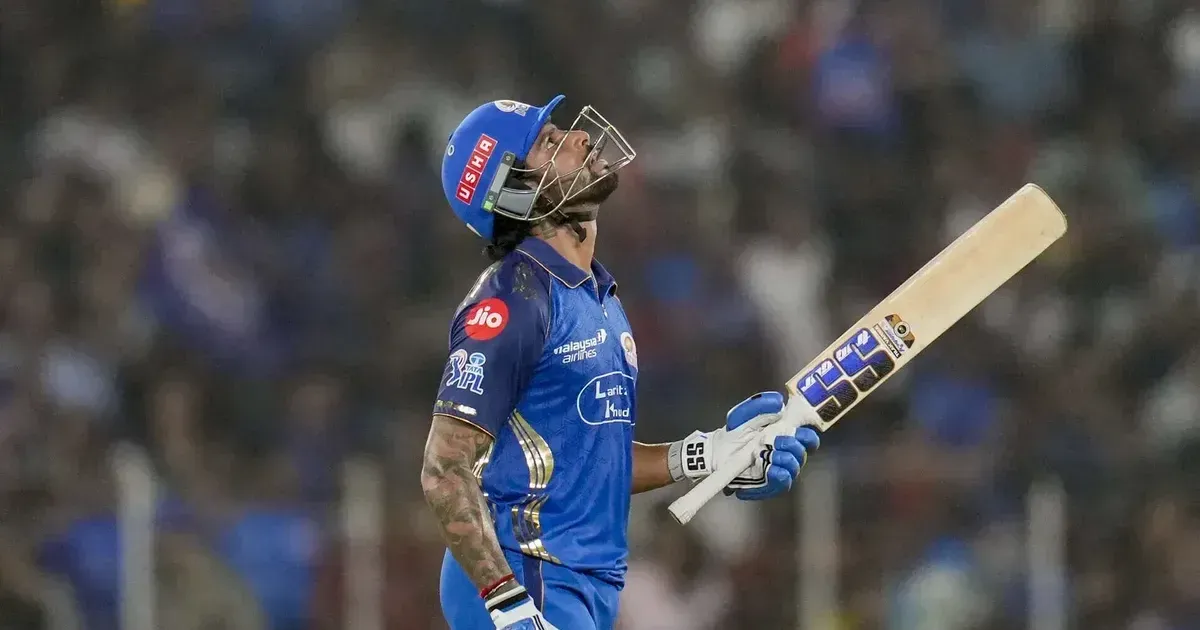
That century also changes how selectors read Mumbai batting depth. Tilak Varma’s century gave Mumbai Indians a rare bright spot in a difficult campaign. April 20, 2026, Mumbai Indians middle-order batter Tilak Varma dismantled the Gujarat Titans bowling attack to record a 45-ball century in a high-stakes IPL encounter. Varma arrived at the crease under intense scrutiny following a string of low scores that included 20, 0, 14, 1, and 8. Critics had questioned his placement at No. 5 in the batting order after several failures to stabilize the innings during the current season. Gujarat Titans bowlers initially appeared to have the upper hand as the 23-year-old struggled for timing in the opening stages of his stay.
Hardik Pandya initiated an animated conversation with Varma mid-match that seemingly changed the trajectory of the player's approach. Sources close to the team dugout noted that the captain appeared frustrated with the slow scoring rate before the tactical intervention. Varma had reached a pedestrian score before accelerating with a brutality rarely seen from a No. 5 batsman. Reports indicate he scored 82 runs off his final 23 deliveries to reach the three-figure landmark.
Mumbai Indians Scoring Trends
Mumbai Indians reached a total of 199/5 on the back of this late-innings surge. Scoring had remained stagnant through the middle overs as Gujarat tightened their lines and lengths. Varma countered this by targeting the short boundaries with 7 sixes and 8 fours. Data from the match shows he focused his power hitting toward the mid-wicket and long-on regions. The innings concluded with a boundary on the final ball of the 20th over to secure the milestone.
Batting deep in the order often limits the number of deliveries a player faces to construct a hundred. Varma overcame this limitation by maintaining a strike rate that surged past 200 during the death overs. Gujarat Titans captain Shubman Gill rotated his bowlers to stem the flow, but Varma exploited gaps in the deep. This specific knock accounts for over 50% of the team's total runs in the match.
Tilak Varma delivered a stunning counterattack for Mumbai Indians, smashing an unbeaten 101 off 45 balls against Gujarat Titans.
Gujarat Titans Bowling Statistics
Gujarat Titans fielded a diverse bowling unit featuring world-class spin and pace options. Rashid Khan and Mohammed Shami attempted to restrict Varma through disciplined variations early in his innings. Success remained elusive for the Titans as the left-handed batsman shifted his weight and cleared the infield consistently. Statistical breakdowns confirm that the final five overs yielded nearly 90 runs for the batting side.
Fielding placements failed to account for the unconventional angles Varma created during his assault. He used the pace of the bowlers to guide the ball behind point while simultaneously using brute force to clear the straight boundaries. Bowlers struggled to find a consistent length as the batter moved across his stumps. The sudden shift in momentum left the Gujarat fielding unit visibly disorganized during the closing stages.
Tilak Varma Career Progression
Tilak Varma has spent several seasons developing a reputation as a reliable middle-order anchor. His transition into a primary power hitter is a deliberate evolution in his technical setup. Analysts point to his improved bat speed and core strength as primary drivers for this increased output. Previous seasons saw Varma prioritize strike rotation over boundary hitting, a trend he discarded during the April 20, 2026 match.
Five consecutive single-digit or low double-digit scores had placed his spot in the starting eleven at risk. Professional athletes frequently face these cycles of form, but the magnitude of this recovery is statistically rare. Varma became the joint-fastest player to hit a century in the history of the league, reaching the mark in exactly 45 balls. This performance matches a record held by some of the most decorated names in T20 cricket.
IPL Batting Record Context
IPL records often fall to top-order batsmen who have the luxury of the powerplay overs. Varma achieved his record from the middle order, where fielders are already spread deep. The 101 runs he accumulated without being dismissed proved essential for Mumbai's playoff aspirations. Only a handful of players have ever scored a century coming in at No. 5 or lower.
Mumbai Indians management had persisted with the young talent despite external pressure to drop him for more experienced alternatives. This century silences immediate concerns regarding his consistency under pressure. Varma performed a special celebration upon reaching the hundred, pointing toward the dressing room in a gesture directed at his teammates. Victory in this match would sharply alter the league table standings for both franchises.
Tilak Century Tests Mumbai Recovery
Elite coaching circles often romanticize the idea of a player being triggered by a captain's intensity, yet the exchange between Hardik Pandya and Tilak Varma suggests a more volatile management style. Pandya’s animated mid-match lecture worked in this instance, but such public displays of frustration are a high-wire act that often backfires with younger talent. Varma’s response was more than an athletic feat; it was a desperate psychological pivot to salvage his career after five failures. The data proves his 82 runs off 23 balls were fueled by a release of localized pressure rather than a sustainable technical shift.
The Mumbai Indians cannot rely on such emotional volatility for long-term results. Varma’s achievement at No. 5 is an anomaly in a game that usually rewards the top three. Relying on a middle-order batter to produce 200-plus strike rates consistently is a recipe for systemic collapse. While the record books will highlight the 45-ball century, the underlying story is a franchise operating on the edge of panic. The Mumbai Indians are surviving on individual brilliance instead of cohesive tactical superiority. Varma saved the team, but he did not fix the flaws in their batting architecture. Success here is a mask for deeper instability.