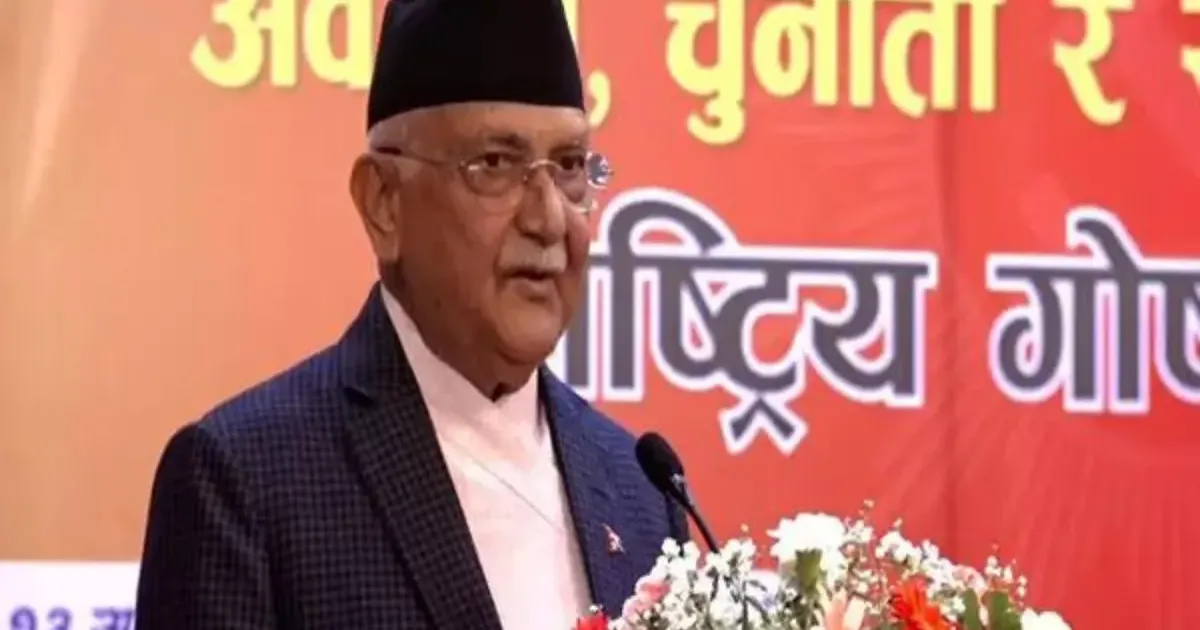
Kathmandu police detained KP Sharma Oli on March 28, 2026, executing a warrant linked to the violent suppression of youth-led demonstrations that paralyzed the nation last year. Officers also took former Home Minister Ramesh Lekhak into custody during a coordinated morning operation at his residence in the capital. Both men face charges of culpable homicide and criminal negligence following a full probe into their roles during the September 2025 anti-corruption movement. Legal documents suggest that the arrests resulted from a judicial commission report that documented systemic failures in the chain of command.

This document specifically highlights the use of lethal force against unarmed civilians during the peak of the unrest. Evidence gathered by the commission indicates that the administration authorized the use of live ammunition to disperse crowds in the New Baneshwor district. Protesters at the time were demanding transparency regarding government infrastructure contracts and judicial independence.

Simultaneously, the political landscape in Kathmandu has shifted toward a younger generation of leaders. These arrests occurred exactly 24 hours after the inauguration of new Prime Minister Balendra Shah. Shah, a former mayor who gained popularity through social media and grassroots organizing, campaigned on a platform of accountability for past government excesses. His administration appears committed to following the recommendations of the inquiry commission without delay. Judicial officials confirmed that the warrant for Oli was signed late yesterday evening.

Local reports indicate that police arrived at the former Prime Minister’s residence before dawn to prevent any organized resistance from his supporters. The arrest indicates a meaningful departure from the traditional immunity often enjoyed by Nepal’s political elite. Oli remains in custody at the Durbarmarg police station.

Nepal Police Launch Culpable Homicide Investigation

Culpable homicide charges in Nepal carry heavy penalties including potential life imprisonment for high-ranking officials found guilty of criminal negligence. Prosecutors allege that both Oli and Lekhak ignored multiple warnings regarding the escalation of violence on the streets. Specifically, the prosecution argues that the former leaders failed to implement non-lethal crowd control measures despite having access to such resources. Instead, the administration relied on paramilitary units to suppress dissent. Records from the Ministry of Home Affairs show a series of directives issued in mid-September that authorized a zero-tolerance approach to public gatherings.

These directives coincided with a spike in civilian casualties across the Kathmandu Valley. Legal experts suggest that the trial will focus on whether the orders to use lethal force came directly from the Prime Minister’s office. Witness testimony from former police commanders has already begun to leak to local media outlets. These witnesses claim they were under immense pressure to clear the streets at any cost.

Historically, Nepali politics has been defined by a revolving door of aging leaders from the Nepali Congress and the CPN-UML. This arrest breaks that cycle by targeting the head of the country’s largest communist faction. Beyond the legal implications, the move is a direct challenge to the CPN-UML’s internal power structure. Party loyalists have already labeled the arrest as a political vendetta orchestrated by the new government. They argue that the judicial commission was biased and lacked the authority to recommend criminal charges against a sitting member of parliament.

By contrast, human rights groups have lauded the move as a victory for the rule of law. They point to the sheer scale of the casualties as justification for the severity of the charges. The Kathmandu District Court is expected to hold a preliminary hearing within the next 48 hours. Security has been tightened around the courthouse to prevent clashes between rival political factions.

Judicial Commission Report Details Gen Z Protest Casualties

Findings from the inquiry commission provide a harrowing account of the violence that erupted during the so-called Gen Z protests. The report confirms that the crackdown resulted in 77 deaths and thousands of injuries, many of which were caused by high-velocity rounds. Children and students included a marked portion of the deceased. Investigators spent six months interviewing survivors and analyzing forensic evidence from dozens of protest sites.

Their final report describes a pattern of deliberate aggression by security forces.

The investigation found that the chain of command failed to exercise restraint, resulting in criminal negligence and avoidable loss of life, the commission report stated.
This quote highlights the central argument of the prosecution as they build their case against the former leadership. Medical reports included in the filing show that many victims were shot in the upper body or head. This evidence contradicts previous claims by the Oli administration that police only fired in self-defense or below the waist.

The commission also identified 21 specific instances where police units blocked ambulances from reaching injured protesters.

Property damage during the unrest was equally sizable, with government buildings and private businesses suffering losses in the millions of dollars. However, the commission focused primarily on the human cost of the state's response. It documented the use of unauthorized chemical irritants and the detention of minors without legal counsel. Several sources within the Nepal Police have expressed a willingness to testify about the lack of clear rules of engagement during the crisis. These insiders suggest that the breakdown in discipline was a direct result of political interference at the highest levels.

Relatives of the deceased have formed a collective to lobby for maximum sentencing. They gathered outside the Prime Minister’s office this afternoon to demand a public apology. The Shah administration has promised to establish a victim compensation fund using assets seized from corrupt officials. The fund aims to support the education of children who lost parents during the demonstrations. The commission’s report is now public record.

Balendra Shah Administration Signals Anti-Corruption Shift

Prime Minister Balendra Shah has wasted no time in dismantling the structures of the previous regime. His victory in the recent elections was a clear mandate for radical change and the prosecution of historic corruption. Young voters, who feel disenfranchised by decades of economic stagnation, see the arrest of Oli as the fulfillment of a key campaign promise. Shah’s cabinet consists largely of technocrats and individuals outside the traditional political mainstream. The composition allows the government to distance itself from the compromises that defined earlier coalitions.

Within the capital, the mood is one of cautious optimism mixed with fear of a backlash from the old guard. The CPN-UML still maintains a powerful organizational network across rural Nepal. If the party decides to mobilize its base, the country could face a fresh wave of instability. Shah addressed the nation briefly this afternoon, urging calm and emphasizing that no individual is above the law. He stated that the judiciary must be allowed to function without executive interference. The stance is a sharp contrast to the frequent meddling seen under previous administrations.

International observers are closely monitoring the situation to see if the legal process remains transparent and fair. Organizations like Amnesty International have called for the proceedings to be broadcast live to ensure public trust. Transparency is particularly essential given the high-profile of the defendants. The Shah administration has invited international legal experts to observe the trial as independent monitors. The move aims to preempt any accusations of a kangaroo court or political show trial. While the focus remains on the protest deaths, the government is also preparing separate indictments related to several major infrastructure projects. These cases involve allegations of kickbacks and money laundering that allegedly occurred during Oli’s tenure. Investigators have already frozen several bank accounts linked to high-ranking CPN-UML officials. The net appears to be widening to include bureaucrats and business leaders who profited from the previous system. Every new revelation strengthens the government's narrative of systemic reform. Corruption remains the primary concern for the average Nepali citizen.

Regional Security and Diplomatic Repercussions in South Asia

Across the border, both India and China are watching the developments with intense scrutiny. Nepal occupies a strategic position between the two giants, and Oli was often seen as a leader who balanced their competing interests. His arrest creates a power vacuum that both New Delhi and Beijing will seek to influence. Indian officials have remained officially silent, though sources in the Ministry of External Affairs suggest they welcome the return of stability. Beijing, which had close ties with the CPN-UML, may view the arrest as a setback for its regional infrastructure goals.

The Trans-Himalayan Multi-Dimensional Connectivity Network could face delays if the new government decides to renegotiate existing agreements. Diplomats in Kathmandu are concerned about the potential for civil unrest spilling over into neighboring regions. Several foreign embassies have updated their travel advisories for Nepal in anticipation of protests. Despite these concerns, the Shah administration maintains that its foreign policy will remain non-aligned. The focus for now is strictly internal justice. Regional stability depends on the peaceful resolution of this domestic crisis. Power shifted decisively on the streets of Kathmandu.

Economic analysts warn that prolonged political theater could deter foreign investment. Nepal’s economy is still recovering from the dual shocks of the protests and global inflationary pressures. The tourism sector, which is an essential source of foreign exchange, requires a stable environment to thrive. If the trial of Oli and Lekhak becomes a driver for further violence, the recovery could stall. Local business leaders have urged the government to ensure a speedy trial to minimize uncertainty. They emphasize that while accountability is necessary, it should not come at the expense of national stability.

Retailers in Kathmandu have already reported a decrease in foot traffic due to the heavy police presence. Within the stock market, shares in companies linked to the former administration have seen serious volatility. Investors are moving capital into more neutral sectors as they wait for the political dust to settle. The Shah administration faces the difficult task of balancing justice with economic pragmatism. Market participants are looking for signs of a clear legislative agenda. The trial will likely dominate the news cycle for months to come.

The Elite Tribune Strategic Analysis

Watch the falling idols of the Himalayan republic. The arrest of KP Sharma Oli is not merely a legal proceeding; it is a ritualistic execution of the old political order. For decades, Nepal has been a playground for a gerontocracy that treated the state treasury as a private checking account and the police force as a personal militia. The rise of Balendra Shah and the subsequent decapitation of the CPN-UML leadership is a populist surge that the established parties failed to predict. It is a classic case of demographic destiny.

A youth population with internet access and global aspirations will no longer tolerate being governed by 20th-century autocrats who use 19th-century tactics. However, the Shah administration is playing a dangerous game. By arresting a former Prime Minister within 24 hours of taking office, Shah has crossed a Rubicon. He has set a precedent for the total criminalization of political failure. If he fails to deliver on his economic promises, the same legal mechanisms he is using against Oli could eventually be turned against him.