Alliance Politics Move Into the Open
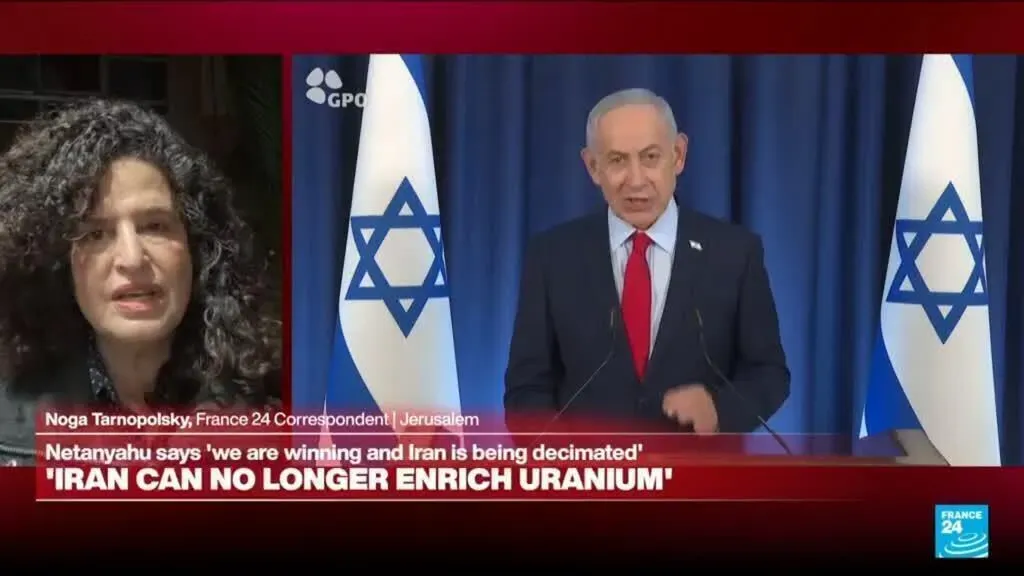
Benjamin Netanyahu rejected claims that he dragged Donald Trump into the Iran war, framing the allegation as an attempt to fracture the US-Israel alliance. The denial came as Israel tried to present its campaign as both militarily successful and strategically necessary. The issue is sensitive because war decisions depend not only on battlefield facts but on public confidence in who is setting the agenda. If voters believe one ally is pulling another into escalation, support can weaken even among people who oppose Iran. Netanyahu's remarks carried the tone of a leader trying to control two narratives at once: that Israel has degraded Iranian capabilities, and that Washington remains a partner rather than a passenger.
Israel Claims Strategic Damage
Israeli officials have argued that strikes damaged Iranian nuclear and missile infrastructure enough to change the regional balance. Those claims are difficult to verify fully in real time, especially when targets, intelligence and battle damage assessments remain contested. The political value of the claim is clear. If the campaign is seen as effective, Netanyahu can argue that escalation carried results. If the claims are overstated, critics will say the war has created cost without durable security. Trump also has an incentive to reject the idea that he was maneuvered. A president cannot easily defend a war posture if the public believes another government shaped the decision more than American interests did.
Escalation Does Not End With Denial
Even if Netanyahu's denial is accepted, the alliance still faces the practical question of what comes next. Damaging sites is different from ending a threat. Iran can adapt, retaliate through partners, accelerate hidden work or shift pressure into energy and shipping lanes. That is why the language around victory matters. Declaring Iran 'decimated' may project strength, but it can also narrow diplomatic options if the conflict does not end quickly. Leaders who describe total success are judged harshly when the next phase proves more complicated.
Netanyahu also has to manage Israel's domestic audience. Supporters want proof that the campaign has improved security, while critics will ask whether the war has expanded Israel's dependence on American cover and regional escalation. The United States faces its own burden. Even close allies do not erase the need for an independent American rationale, especially when the conflict can affect energy prices, troop deployments and wider Middle East stability.
Iran's response options make the endpoint difficult to define. Tehran can avoid a direct symmetrical reply while using proxies, cyber operations, maritime pressure or delayed nuclear steps to keep the crisis alive. That means the alliance narrative has to do more than deny manipulation. It has to explain the objective, the limits of force and the diplomatic offramp that follows any military degradation. The more leaders lean on language of decisive victory, the more they invite scrutiny of what remains unresolved. Missile programs can be damaged, scientists can be dispersed, and facilities can be rebuilt or concealed. Regional governments will read the exchange through their own security needs. Gulf states may welcome pressure on Iran while fearing retaliation against energy infrastructure, shipping lanes or US-linked facilities on their soil.
The denial therefore sits inside a larger credibility contest. Israel wants deterrence restored, Trump wants agency preserved, and opponents want proof that the war was an avoidable expansion. A stable result would require a narrower public message: what was hit, what risk was reduced, and what line would trigger another phase. Without that discipline, every new strike becomes evidence for both sides of the argument. The public argument also affects deterrence. If Iran concludes that Washington is divided or that Israel must fight for American commitment, it may test the alliance through calibrated retaliation rather than direct escalation.
At the same time, a too-unified message can alarm regional governments that want Iran contained but fear a war without a defined stopping point. That tension is why alliance management now matters almost as much as military planning. Netanyahu's denial therefore has an external audience as well as a domestic one. It is aimed at Tehran, Arab capitals, American voters and Israeli critics who are all trying to understand who controls the pace of the conflict.
The most durable answer would be operational transparency where possible and disciplined silence where necessary. Overclaiming battlefield success may win a news cycle, but it can weaken credibility if the next phase exposes unresolved threats. For Trump, the political risk is that denial alone does not answer the cost question. Voters may still ask whether US resources, markets and troops are being pulled deeper into a conflict whose endpoint remains unclear.
The alliance also has to prepare for the day after the most intense phase of fighting. If the campaign reduces Iran's capabilities but leaves no diplomatic framework, the region may simply move into a cycle of rebuilding, retaliation and renewed strikes. That is why the dispute over influence matters. It is really a dispute over strategic authorship: who chose the path, who owns the consequences and who gets to define when the objective has been met. That ownership question will follow every new battlefield claim. If leaders cannot explain the political destination of the campaign, opponents will keep framing tactical success as evidence of a war expanding faster than its strategy.
Who Owns the War Story
The claim challenges Israeli and US narratives that decisions around Iran were coordinated through shared security interests rather than manipulation.
If battlefield success encourages wider aims, the war can become harder to limit even after tactical gains.
The Netanyahu denial is less about one quote than about command of the war story. Israel wants the conflict understood as a shared security campaign. Critics want it understood as alliance capture or strategic overreach.
The real test is whether military action creates a more stable deterrent or a wider regional conflict with higher economic and political costs. If Washington and Jerusalem cannot define the endpoint clearly, every tactical success will raise the same question: success toward what.