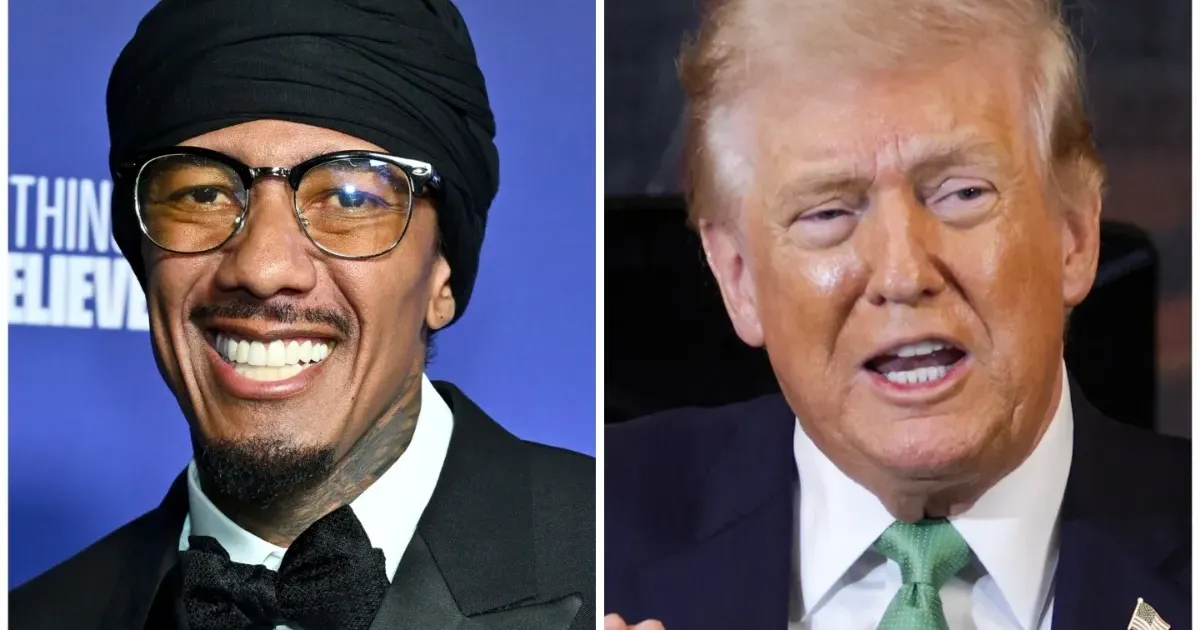
Nick Cannon drew political backlash after telling Amber Rose he supports Donald Trump during a Big Drive interview. The interview mattered because celebrity political statements now move quickly through entertainment and campaign media. Cannon’s comments also reopened questions about how public figures frame support without joining formal politics. The episode was published around March 28, 2026, and mixed celebrity conversation, partisan grievance and a blunt critique of the Democratic Party. Cannon's comments quickly spread because they challenged assumptions about how entertainers with his audience are expected to talk about politics. The strongest supported point is that Cannon said he aligned with Trump in the exchange. Calling it a formal campaign endorsement would overstate what happened unless the statement is treated as casual political support rather than an organized campaign role. That distinction matters in a story built around a viral clip.
Amber Rose Shapes the Exchange
Rose, who had already moved toward public support for Trump and Republican politics, gave Cannon a friendly setting for the discussion. She argued that Democrats take voters of color for granted, and Cannon echoed parts of that critique. The result was less a policy debate than a conversation about identity, frustration and political permission.
Cannon also used the familiar claim that Democrats are tied to the history of the Ku Klux Klan. That argument points to real nineteenth- and early twentieth-century history, but it often omits the later partisan realignment around civil rights. A careful reading has to hold both facts: the historical origin is real, and the modern party system changed substantially. That context is essential because viral politics often turns partial history into a total verdict. Cannon's argument works as provocation, but it becomes less persuasive if it ignores the decades in which civil-rights legislation, Southern political realignment and Black voter coalitions reshaped party identity.
Celebrity Politics Moves Through Clips
Big Drive is built for the short-video environment. A loose conversation inside a car can produce moments that travel faster than a formal interview. That format rewards blunt language and discourages the nuance that would usually be needed for claims about party history, civil rights and racial politics.
That does not make the comments irrelevant. Celebrity politics often works by making a position feel socially acceptable to an audience that may not follow legislative details. When Cannon and Rose discuss Trump in a casual format, they are not writing a platform; they are signaling that crossing partisan expectations is allowed.
The reaction therefore moved quickly from what Cannon said to what it might represent. Supporters treated the clip as proof that entertainment figures are rejecting Democratic expectations. Critics saw a shallow reading of history amplified by celebrity reach.
Political Readout
The backlash reflects a larger fight over Black voters, celebrity influence and the cultural reach of the Republican Party. Trump allies have tried to highlight support from entertainers and influencers as evidence of broader movement among younger or male voters of color. Democrats, meanwhile, often treat such moments as celebrity noise that does not necessarily translate into votes.
The truth is probably more limited but still important. One interview will not realign an electorate. It can, however, add to a pattern in which political identity becomes more fluid in online spaces than in traditional party organizations.
Cannon's comments matter because they show how political messaging now travels through entertainment formats. The risk for both parties is misreading the signal: dismissing it entirely ignores cultural drift, while treating it as proof of mass realignment turns a viral moment into more than the evidence supports.
For Democrats, the clip is a reminder that cultural loyalty cannot be assumed. For Republicans, it is a reminder that celebrity praise is not the same as durable organizing. The political value sits somewhere between those extremes. Cannon has reach, but reach is not the same as persuasion. A fan can share a clip because it is surprising without changing a vote. Still, repeated moments like this can soften the social cost of crossing party lines, especially among audiences that consume politics through podcasts, short video and personality-driven shows. That is why the interview deserved coverage, but also why the language around it had to be careful. The story is not that one celebrity moved an electorate. The story is that political identity is being negotiated in entertainment spaces where a casual sentence can travel further than a campaign speech. The interview also illustrates how political communication has escaped formal campaign settings. A sentence in a celebrity format can be clipped, reframed and argued over by millions before any campaign has to define what it means. That speed rewards provocation and punishes nuance, which is why careful wording matters when covering the fallout. That is the durable media lesson from the Cannon clip, regardless of how much actual voter movement follows from it. That is why the clip is politically useful even if its electoral impact remains unproven. The clip matters because that ecosystem now shapes political permission. That is the story now. That ambiguity is why the interview traveled quickly across both entertainment feeds and political commentary shows.