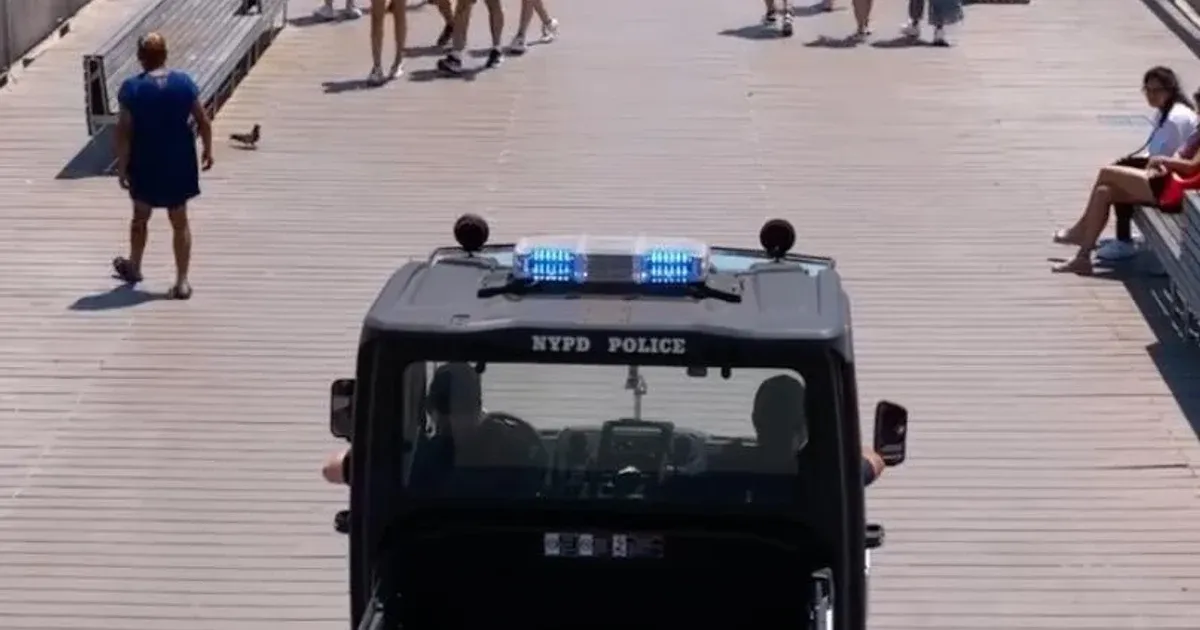
The New York Police Department is using drones to watch for sharks near city beaches, giving lifeguards an aerial view before animals come close to swimmers. The patrols are part of the department’s Technical Assistance Response Unit, which also handles distressed-swimmer rescues, search-and-rescue support and monitoring at crowded beaches.
The system is designed to shorten the time between a sighting and a warning. When a drone operator spots a shark, officers alert lifeguards, who can clear people from the water as a precaution. The approach adds an observation tool to the beach response without treating every sighting as an attack.
The NYPD’s move follows more shark sightings along northeastern beaches this summer. City parks officials recorded 16 sharks off Rockaway Beach between July 1 and July 5. The NYPD drones spotted seven of those animals, according to ABC 7 as cited by the New York Post.
Drone Patrols Turn Sightings Into Faster Warnings
The unit’s role is broader than shark detection. Its drones can scan stretches of shoreline that are difficult to watch continuously from the sand, while the officers operating them can relay information to lifeguards who control beach access and water evacuations.
That division of labor matters. A drone can locate an animal, but it does not decide whether swimmers should leave the water. Lifeguards and beach officials still make the public-safety call, using the aerial view as an early warning rather than as a substitute for judgment at the shoreline.
The same setup can support other emergencies. The NYPD says TARU drones are used for people in distress and search-and-rescue operations, so shark patrols fit into an existing public-safety capability rather than a separate wildlife program.
For beachgoers, the practical change is a faster route from observation to information. That can reduce the time swimmers spend in the water after a sighting, while keeping the response focused on a specific location instead of closing an entire beach whenever a shark is reported.
More Sightings Do Not Mean Attacks Are Common
The New York Post reported that shark attacks in New York remain rare. The Florida Museum of Natural History recorded 12 unprovoked shark bites across more than 150 years before 2022, although recent years brought a temporary increase in non-fatal encounters around Long Island and New York City waters.
That distinction keeps the response proportionate. A sighting can justify moving swimmers out of the water even when the probability of an attack is low. It also means the number of animals seen should not be presented as a count of attacks or as proof that city beaches have become broadly unsafe.
The Drone Is a Safety Buffer, Not a Shark Barrier
The NYPD’s system works by improving what officials can see and how quickly they can communicate it. It does not change shark behaviour, eliminate the need for lifeguards or guarantee that every animal will be detected.
That limit is important as summer crowds continue to use New York’s beaches. The useful measure will be whether the drone warnings help lifeguards make faster, targeted decisions while allowing people to return to the water when the immediate risk has passed. Public safety and the animals’ place in coastal waters still have to be managed together.