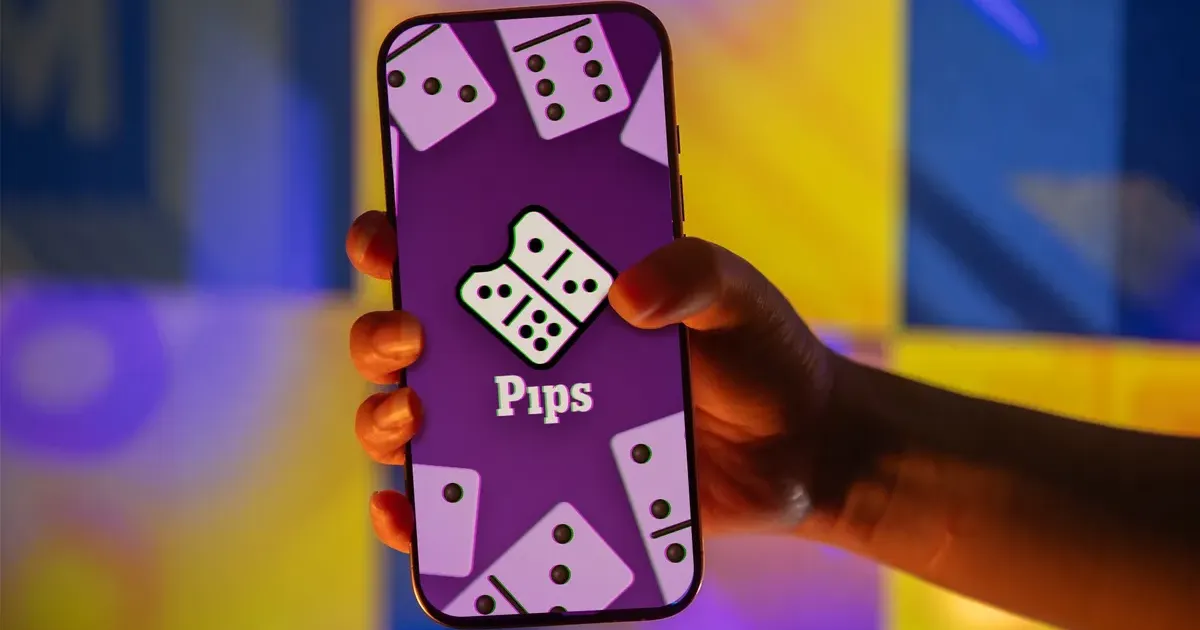
New York Times Games has moved beyond the idea that one word puzzle can carry the whole daily habit. Pips and Connections: Sports Edition show the broader strategy clearly. One asks players to solve domino-style numeric constraints. The other takes the familiar Connections format and narrows it into sports language, player knowledge and league-specific traps.
The wider mix matters because it reaches different players without abandoning the daily ritual that made Wordle powerful. Some users want vocabulary. Some want logic. Some want a puzzle that rewards knowing which sports terms look alike but belong in different worlds. NYT's puzzle portfolio is no longer a single front door. It is a set of short appointments, each asking for a different kind of attention.
Pips Uses a Different Mental Gear
Pips works because it does not feel like a reskinned word game. Players place domino tiles on a colored grid, and each region carries a rule: a total, equality, inequality, a greater-than limit, a less-than limit or another numeric condition. A move can solve one region while blocking another, so the puzzle rewards forward planning rather than fast guessing.
The best solving usually starts with the tightest constraints. A region with only one plausible sum or relationship can anchor the board. Flexible spaces come later. That gives Pips a different tempo from Wordle, Strands or Connections. It is slower, more spatial and more mathematical, but still compact enough to sit inside the same daily routine.
Sports Connections Narrows by Design
Connections: Sports Edition keeps the four-groups-of-four structure that made the original easy to understand. The difference is the knowledge base. A standard Connections board can lean on household words, pop culture, prefixes, word tricks or broad categories. The sports version can ask whether a player recognizes equipment, positions, team names, records, venues, moves or league slang.
The narrower field is the point. It gives sports readers a puzzle that feels made for them instead of merely available to them. It also sharpens the misdirection. Words that seem to fit one category can belong to another sport entirely, and casual fans can be pulled toward the wrong group by surface familiarity.
The Business Is the Habit
Daily games are valuable because they create return behavior. Streaks, shareable results, limited mistakes, spoiler-sensitive hint pages and predictable reset times all make the app part of a user's day. For a subscription news company, that behavior has value far beyond the puzzle grid. Games can bring people into the product when they are not arriving for politics, markets, sports scores or breaking alerts.
The business value does not make the games cynical. A good puzzle earns the habit by being fair, compact and satisfying. Pips feels good when a board snaps into visible order. Sports Connections feels good when a category finally clicks. The commercial value follows the design; if the game is not worth returning to, the streak mechanic becomes pressure instead of pleasure.
More Games Can Become More Chores
The risk is that a growing menu can turn a light ritual into a checklist. Wordle, Mini, Strands, Connections, Sports Connections, Sudoku and Pips do not all serve the same mood. Choice is useful, but too many daily prompts can make players feel managed rather than entertained.
NYT's advantage is that the games still feel distinct when curated well. The danger is overlap, fatigue or a sense that every new title arrives with the same retention language. A puzzle habit works because the player chooses it. Once it starts to feel assigned, the charm thins.
The Best Games Know Their Size
Pips and Sports Connections work best when they stay compact. Their appeal is not that they replace bigger games or deep trivia. Their appeal is that they give one kind of thinking a clean container. Pips offers a few minutes of constraint logic. Sports Connections gives fans a category test without turning the moment into homework.
NYT's expansion carries that lesson. Pips is not another Wordle, and Sports Connections is not just the original game with team names. They widen the daily loop by changing the kind of attention being asked from the player. A puzzle portfolio grows best when variety feels chosen, not assigned.