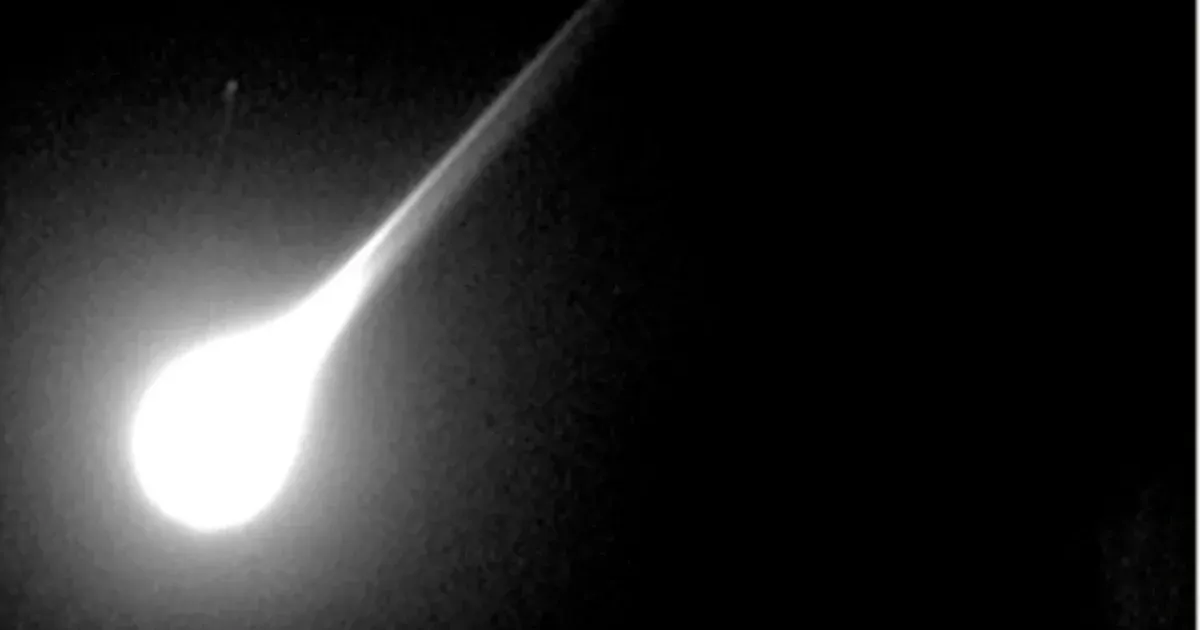
An Ohio meteor explosion rattled residents across parts of the Midwest and turned a brief flash in the sky into a public-alert question. The public reaction showed how quickly uncertainty spreads. Reports of a loud boom and bright streak prompted residents to compare security cameras, dashcam clips and local emergency updates. The event also gives schools and local media a useful science moment. Explaining why a meteor can sound explosive without posing an ongoing threat helps turn a frightening report into public understanding. That is especially important when social feeds fill the gap before experts do. A clear explanation can stop a meteor event from being misread as something industrial, military or ongoing. The same lesson applies to future sky events. Fast, careful explanation can protect public trust without overstating certainty or turning every flash into an emergency narrative.
Meteor events can feel alarming because they arrive without warning and often sound like an explosion. Most are harmless by the time they reach the lower atmosphere, but the sensory impact can be dramatic enough to trigger calls to police, weather offices and local newsrooms.
Scientists look for timing, trajectory, sound reports and possible fragments. Even when no meteorite is recovered, the data can help determine the object’s speed, breakup altitude and direction of travel.
A Brief Flash Becomes a Public Test
The first challenge is separating a natural sky event from industrial accidents, aircraft incidents or military activity. Clear local communication matters because uncertainty spreads quickly when thousands of people hear the same boom. For residents, the practical advice is usually simple: report reliable observations, avoid trespassing in search of fragments and wait for confirmation from meteor networks or weather agencies.
The Midwest has seen similar sky events before, but each one feels new to the people underneath it. A sudden boom can shake windows, trigger alarms and make residents wonder whether something exploded nearby. That uncertainty is why fast confirmation matters.
Meteor networks usually rely on a combination of sensors and public reports. Video from doorbell cameras and vehicles can help triangulate a path, especially when many people report the flash within the same narrow window. Officials also have to manage expectations around fragments. Most objects burn up completely, and a suspected meteorite should not send people onto private land or road shoulders without permission or safety precautions.
The science value comes from details that may look ordinary to witnesses: direction, color, time, sound delay and whether any smoke trail remained. Those reports help researchers estimate the object's behavior. The public lesson is that a frightening event can still be natural and brief. Clear communication turns a night of speculation into a useful science record.
The best public response is fast, plain explanation. Residents do not need speculation dressed up as certainty; they need officials and scientists to say what is known, what is being checked and whether any continuing risk exists. Those details also help local officials decide whether the event requires follow-up or simply explanation. In many cases, reassurance is useful only when it is specific.
Local officials can also use events like this to build trust before a more dangerous emergency. When residents see that a strange boom is investigated and explained clearly, they are more likely to take the next alert seriously instead of treating every official message as guesswork.
The Sky Still Surprises Modern Systems
The useful lesson is not that meteors are new. It is that a short atmospheric event can expose how dependent people are on rapid explanation. A flash, a boom and a few shaky videos can create hours of speculation if officials do not fill the gap quickly. Ohio’s meteor scare was brief, but it showed why public science communication has to be ready for events that arrive faster than the official statement.