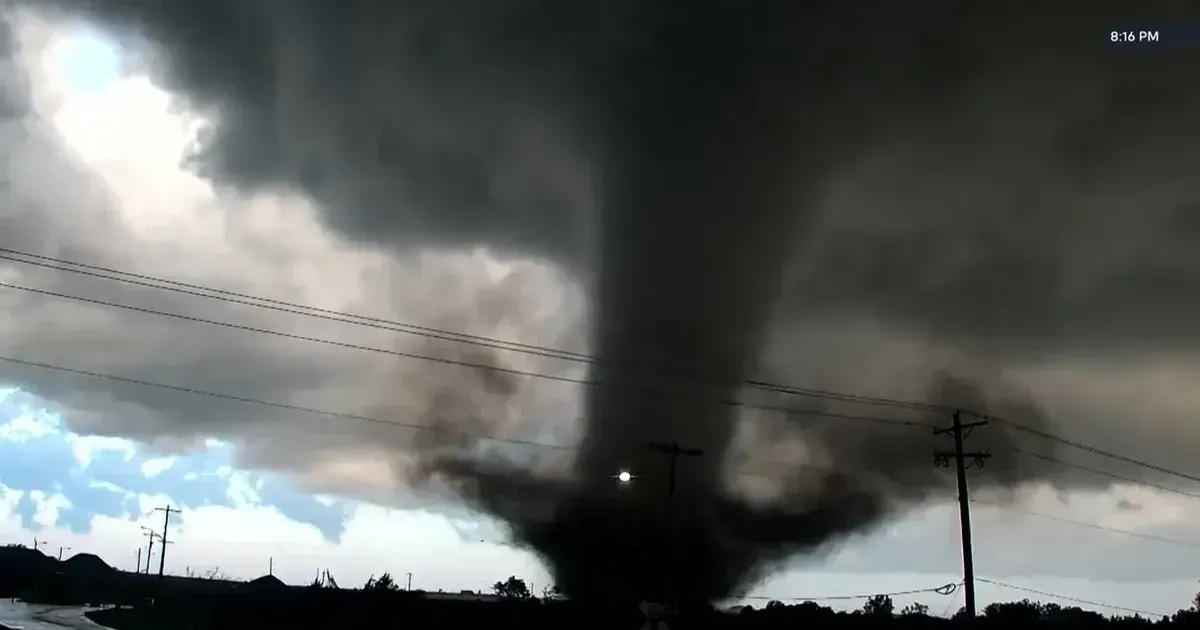
Oklahoma emergency personnel initiated door-to-door search operations on April 24, 2026, after a series of tornadoes devastated rural communities in the northern portion of the state. Severe weather systems developed rapidly during the previous evening, spawning multiple funnel clouds that tracked across agricultural land and residential clusters. Local authorities reported substantial structural damage in Garfield County, where the wind force was sufficient to peel roofs from established dwellings and sever power lines. Search teams moved through debris fields in the early morning hours to verify the safety of residents who sought shelter as the storms approached.
First responders in Enid and surrounding townships faced immediate logistical hurdles due to obstructed roadways. Downed utility poles and scattered building materials blocked primary transit routes, preventing rapid access to the most isolated properties. Utility companies dispatched repair crews to address widespread outages, but the scale of the damage to the local grid required a prolonged restoration timeline. Rural communities often rely on singular access points, making the clearance of these paths a top priority for state transportation departments. Preliminary assessments indicate that dozens of homes sustained irreparable damage during the atmospheric event.
Emergency Services Scour Garfield County
Garfield County deputies conducted thermal imaging sweeps and manual inspections of flattened structures to locate potential survivors. While initial reports from the scene indicated several injuries, the lack of immediate fatalities suggests that early warning sirens provided sufficient lead time for residents. Searchers discovered vehicles tossed into ditches and agricultural equipment mangled by the cyclonic winds. Neighbors began the process of sifting through the remnants of personal property even before the National Weather Service finalized its storm rating. Many families lost entire second stories of their homes, leaving interiors exposed to subsequent heavy rainfall.
Resource allocation became a primary concern as the geographic spread of the damage became apparent. Garfield County officials requested mutual aid from neighboring jurisdictions to maintain a continuous presence in affected neighborhoods. Coordination between the Oklahoma Department of Emergency Management and local fire departments enabled a structured grid search. Volunteers from nearby towns arrived to assist with debris removal, though authorities cautioned civilians against handling downed power lines. Heavy machinery arrived by midday to begin the difficult task of clearing state highways of twisted metal and timber.
"A powerful tornado in Oklahoma on Thursday ripped roofs off buildings, destroyed homes, knocked down power poles and forced an Air Force base to close," reported CBS News.
Meteorological data indicates that the supercell responsible for the most severe damage maintained its intensity for over thirty minutes. Radar signatures showed a debris ball, a visual confirmation that the tornado was lofting physical objects into the atmosphere. Atmospheric instability across the Great Plains frequently creates such conditions, yet the localized intensity of this particular system caught some veteran observers by surprise. Wind speeds likely exceeded the threshold for structural failure in standard residential construction. Historical records for northern Oklahoma show a pattern of frequent spring tornadic activity, but the concentration of damage in Garfield County requires specific investigation.
Operations Cease at Vance Air Force Base
Vance Air Force Base commanders ordered a full suspension of operations on April 24, 2026, to assess the integrity of military infrastructure. This installation is a critical hub for the 71st Flying Training Wing, responsible for training Air Force, Navy, and Marine Corps pilots. Personnel were instructed to remain clear of flight lines while engineering teams inspected runways for debris and potential surface damage. Hangars housing expensive training aircraft became a focal point for safety inspectors, given the vulnerability of large-span structures to high-wind events. The base remains an essential economic driver for the region, employing thousands of civilian and military personnel.
Training missions involving T-6 Texan II and T-38 Talon aircraft were grounded indefinitely. While the Air Force has not yet released a detailed damage report, the closure of such a high-profile facility indicates the severity of the weather impacts. Radar equipment and communication towers at the base are highly sensitive to wind-borne debris, requiring thorough recalibration before flight operations can resume. Logistics officers are currently evaluating the status of supply chains and fuel depots located on the base perimeter. Temporary relocation of flight training to other regional installations is a possibility if the runway damage proves extensive.
Military families living on the base experienced the same harrowing conditions as their civilian neighbors in Enid. Base housing units sustained varying degrees of superficial and structural damage, prompting the activation of family support centers. Security forces maintained strict access controls to prevent unauthorized entry while crews worked to secure hazardous areas. The disruption to the pilot training pipeline has national security implications, as any prolonged closure delays the graduation of new aviators. National Weather Service technicians are collaborating with base meteorologists to analyze the specific path of the vortex through the federal property.
Structural Failures and Power Grid Stability
Physical evidence at the scene suggests that traditional roofing systems offered little resistance to the upward force of the tornado. Engineers observing the wreckage noted that older structures lacked the hurricane clips and reinforced strapping required by modern building codes. This vulnerability resulted in the total loss of roof structures, which in turn compromised the stability of the remaining walls. Debris from these failures became projectiles, further damaging adjacent properties that might have otherwise survived the wind load. Rebuilding efforts will likely face increased scrutiny regarding structural resilience in this high-risk corridor.
Power transmission networks in northern Oklahoma suffered a catastrophic failure during the peak of the storm. High-voltage lines connecting Garfield County to the broader regional grid were severed when utility towers buckled under the wind pressure. Substation damage further complicated the restoration process, as specialized components are often difficult to source on short notice. Utility providers estimate that the cost of rebuilding the local infrastructure could exceed $100 million given the current market for raw materials. Temporary generators have been deployed to essential facilities, including hospitals and emergency dispatch centers, but residential areas remain in the dark.
Logistical challenges are expected to persist for several weeks as the cleanup phase transitions into reconstruction. Insurance adjusters arrived in the region on April 24, 2026, to begin the extensive task of processing claims. Local businesses in Enid reported substantial inventory losses due to water damage and power failure. The regional economy faces a period of volatility as resources are diverted from commerce toward emergency repairs. Recovery depends heavily on the speed with which the Vance Air Force Base can return to full mission capability.
Vance Closure Exposes Gaps in Storm Recovery
Why do we continue to station billion-dollar strategic assets in the heart of the most volatile weather zones on the planet? The closure of Vance Air Force Base is more than a local inconvenience; it is a glaring indictment of the Pentagon's refusal to adapt to an increasingly unstable domestic climate. We are pouring billions into advanced pilot training while housing those very assets in structures that can be dismantled by a single Oklahoma supercell. This incident exposes the fragility of the American military-industrial footprint in the Central United States, where the intersection of aging infrastructure and extreme weather creates a permanent liability.
Strategic planners must acknowledge that the current distribution of pilot training wings is a relic of post-war geography, not a reflection of modern risk management. When a single tornado can ground a significant part of the training pipeline, the vulnerability is systemic. The cost of relocating these facilities to more stable environments would be enormous, but the cost of recurring devastation is even higher. We are essentially gambling with national security preparedness every time a cold front meets warm air over the Plains. It is time to stop viewing these events as unpredictable acts of God and start treating them as predictable infrastructure failures.
Hardened hangars and underground command centers should be the minimum standard for any installation in Tornado Alley. If the Department of Defense cannot secure its own bases against predictable atmospheric events, its ability to project power globally is undermined. The Enid disaster is a warning that our domestic resilience is rotting from the inside out. Fix the infrastructure or move the assets.