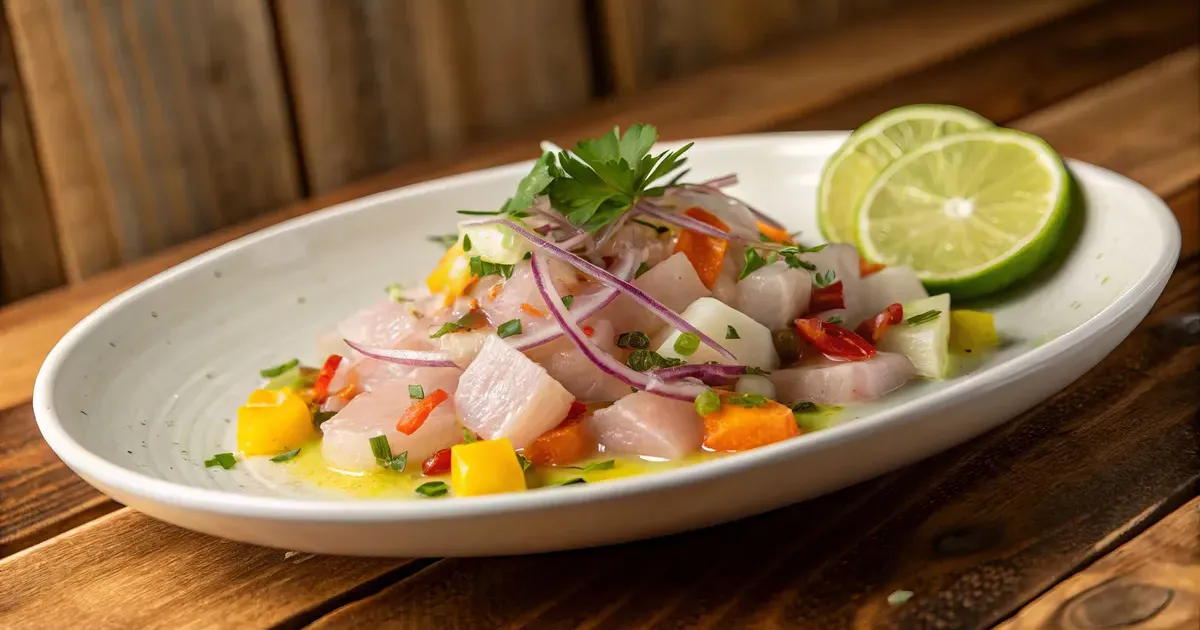
The Chemistry of the Brine Upgrade
Lime juice has long governed the structural integrity of ceviche, acting as the primary agent for denaturing raw fish. Chefs in high-end coastal kitchens from Lima to London are now challenging this citrus monopoly by introducing olive brine into their base liquids. Salt and acid work in tandem during the curing process, but traditional recipes often rely exclusively on fruit-based acidity. Brine introduces a secondary layer of complexity, offering a fermented depth that straight lime juice lacks. This additive offers a shortcut to the savory profiles usually achieved through hours of vegetable steeping. It changes the molecular interaction between the liquid and the protein. While pure lime juice can occasionally toughen the outer layers of delicate sea bass or fluke, the balanced salinity of a brine provides a gentler cure that preserves the buttery texture of the fish. Marine biologists and food scientists have noted that salt-heavy environments alter the way proteins uncoil, suggesting that the brine acts as a stabilizer against the harshness of high-acidity citrus.
Salt remains the most misunderstood component of a successful ceviche.
Most home cooks treat salt as a final seasoning, yet in the context of Peruvian coastal cuisine, it functions as a catalytic mineral. When a chef pours a dash of olive brine into the mixing bowl, they are not just adding salt; they are introducing lactic acid and fermented aromatics. These elements bridge the gap between the sharpness of the lime and the natural sweetness of the seafood. High-end restaurants frequently experiment with different brine concentrations to find the exact point where the fish begins to firm up without losing its moisture. Traditionalists might view this as a departure from purity, but the culinary reality reveals that flavor depth requires more than a single note of acid. Some kitchens utilize the liquid from Castelvetrano olives for a mild, buttery finish, while others prefer the aggressive punch of Kalamata brine to stand up against oilier fish like mackerel or tuna.
Historical Foundations and the Moche Legacy
Pre-Columbian civilizations in what is now Peru laid the groundwork for this chemical approach to food long before the Spanish introduced lemons and limes. The Moche people utilized fermented juice from the tumbo fruit, a highly acidic passionfruit relative, to prepare their raw catch. Archaeologists have found evidence that local chicha, a fermented corn beer, was also used as a marinating liquid. These ancient techniques relied on the same principles of fermentation and salinity that modern chefs are rediscovering through the use of olive brine. The transition to citrus occurred during the colonial era, but the underlying desire for a complex, fermented tang never truly vanished from the Peruvian palate. Modern interpretations are effectively returning to these ancestral roots by seeking out liquids that offer not merely a sour bite. Brine is bridge back to a time when seafood preparation was about harnessing the power of natural fermentation rather than just quick-curing with imported fruits.
Tradition is a moving target.
Ceviche underwent a massive transformation in the 1970s when Japanese immigrants in Peru, proponents of the Nikkei style, shortened the marinating time from hours to minutes. This shift emphasized the freshness of the fish, making the quality of the marinating liquid, or Leche de Tigre, even more critical. Because the fish spends so little time in the bowl, the liquid must pack an immediate punch. This chemical reaction requires a high concentration of flavor molecules that can penetrate the surface of the fish instantly. Olive brine fits this requirement perfectly because its fermented nature allows it to cut through the fats of the fish faster than simple citrus juice. It provides a savory backbone that lingers on the tongue long after the initial brightness of the lime has faded. High-profile kitchens now view the Leche de Tigre as a standalone beverage, often served in a side glass, where the addition of brine adds a sophisticated, cocktail-like quality to the experience.
Global Market Shifts in Specialty Ingredients
European markets are seeing a surge in demand for high-quality canned goods, particularly olives and pickled vegetables, as consumers attempt to replicate restaurant-grade techniques at home. Such a demand has pushed producers in Spain and Greece to market their brines as independent culinary assets rather than waste products. Retailers in New York and San Francisco have reported that shoppers are increasingly looking for olives packed in natural sea salt brines without artificial preservatives. Such high-quality liquids are essential for a successful ceviche upgrade, as chemical additives in lower-end brines can ruin the delicate balance of the fish. Culinary schools have started incorporating fermentation science into their seafood modules, teaching students how to balance pH levels using non-citrus acids. Such a trend reflects a broader move toward zero-waste cooking where every part of a jarred product is utilized to its full potential.
Sustainability remains a core driver of this movement.
Utilizing the brine from a jar of olives reduces kitchen waste and provides a cost-effective way to enhance flavors without purchasing expensive, out-of-season citrus. Some chefs are even creating their own bespoke brines using kelp, sea salt, and distilled vinegar to mimic the oceanic profile of the fish they are serving. Such a decision reflects a growing awareness of how diverse acids can impact the sustainability of a menu. When citrus prices spike due to weather patterns in Florida or Mexico, a pantry-stable brine offers a reliable alternative for maintaining a consistent flavor profile. That consistency is key for commercial kitchens that need to deliver the same experience night after night. By integrating brine into the standard ceviche prep, restaurants can stabilize their costs while simultaneously offering a more complex dish to their patrons.
The Elite Tribune Perspective
Why do we cling so desperately to the idea of culinary authenticity when history proves that every great dish is a product of accidental fusion? The outcry from purists regarding the addition of olive brine to ceviche is a tiresome display of gatekeeping that ignores the very evolution of the dish. Peruvian cuisine did not reach its current global status by remaining static; it climbed to the top through the relentless integration of Japanese techniques, Spanish ingredients, and indigenous wisdom. To suggest that a dash of brine somehow taints the soul of the dish is to ignore the chemistry of flavor. We should be skeptical of anyone who claims a recipe is finished. The reality is that lime juice is often a blunt instrument, a loud, singular note that can easily drown out the subtle oceanic sweetness of high-quality seafood. Brine provides the necessary bass notes to that high-pitched citrus melody. It is a sophisticated, intelligent upgrade that rewards the palate with complexity rather than just a vinegar-like burn. If you are still making ceviche using only limes and salt, you are not honoring tradition, you are simply refusing to evolve with the science of the modern kitchen.