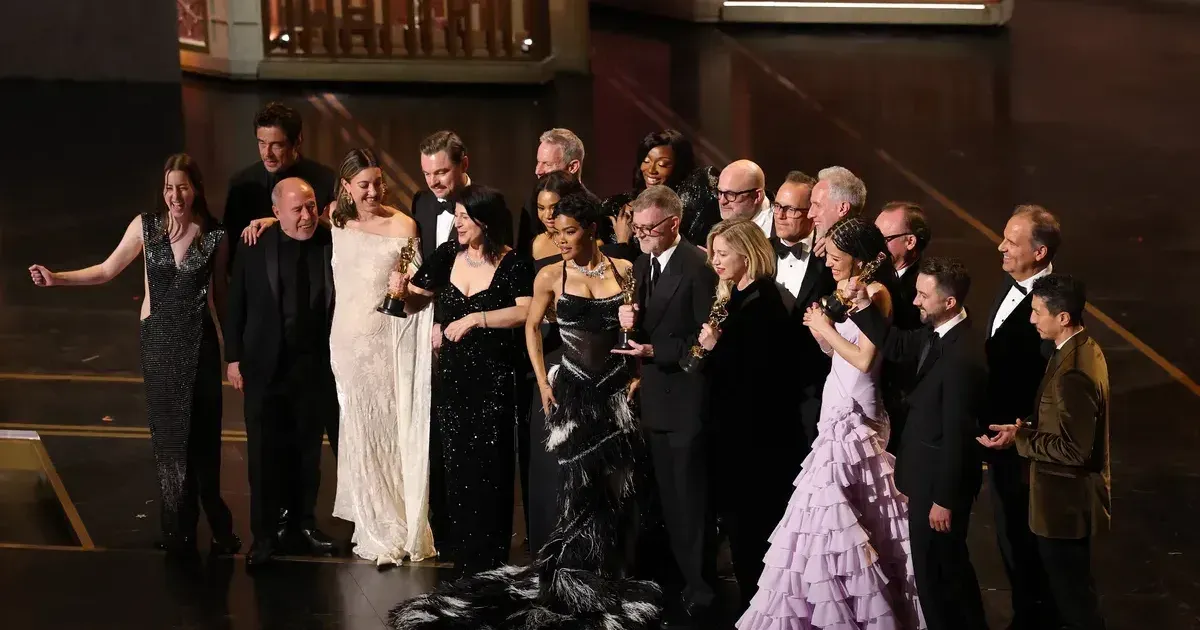
Dolby Theatre lights dimmed as the 98th Academy Awards reached its climax in Los Angeles. One Battle After Another secured the Best Picture title while the Academy Awards celebrated a night of unexpected sweeps and historical milestones. Voters favored the gritty war epic over several high-budget blockbusters. The production team for One Battle After Another stood together on stage to accept the industry's highest honor. Producer Steven Spielberg handed the statuette to the filmmaking team. The film earned five total awards throughout the evening.
Best Picture Goes to One Battle After Another
Michael B. Jordan claimed the Best Actor trophy for his performance in the thriller Sinners. He walked to the stage of the Dolby Theatre while the audience provided a standing ovation that lasted over sixty seconds. His portrayal of a man battling supernatural forces in the Jim Crow South dominated the awards circuit for months. NBC News noted the physical and emotional toll the role took on the veteran actor. The win marks the first time Jordan has taken home an Academy Award despite a decade of critically acclaimed work. He used his time at the microphone to honor those who came before him. His speech included a list of every Black actor who previously won in the category. He named Sidney Poitier and Denzel Washington as his primary inspirations. Jordan looked toward the balcony and raised the gold statue high.
I stand on the shoulders of giants who paved this path when the doors were locked tight, and I share this moment with every storyteller who was told their voice did not matter.
The ceremony highlighted the changing demographics of the voting body. Members of the Academy of Motion Picture Arts and Sciences from 93 different countries participated in the balloting process. This participation led to one of the most diverse groups of winners in the history of the event. The telecast reached an estimated 20 million viewers in the United States alone. Jessie Buckley took the Best Actress honors for her leading role in the Best Picture winner. Her performance provided the emotional anchor for the three-hour war drama. Buckley beat out a crowded field that included several previous Oscar winners and a breakout star from a popular streaming series. She thanked the real-life veterans who consulted on the script during her brief remarks. The competition for Best Actress remained the most debated category among critics leading up to the ceremony. Many analysts predicted a win for the star of the biopic about Janis Joplin. The shift toward Jessie Buckley suggests a preference for ensemble-driven dramas over traditional solo biographies. She clutched the award tightly before exiting toward the press room.
Acting and Directing Wins Shape the Night
Paul Thomas Anderson finally secured his first Best Director win after twelve previous nominations across multiple decades. His work on the winning film showcased a technical precision that peers in the industry have long praised. NPR News highlighted how Anderson managed a cast of thousands while maintaining a focused story. The director appeared visibly moved when his name was announced by last year's winner. Meanwhile, the film industry watched closely to see if Anderson would finally break his losing streak. He had previously been nominated for modern classics like There Will Be Blood and Magnolia. His victory for One Battle After Another provides a crowning achievement for a career defined by idiosyncratic storytelling. He thanked his longtime cinematographer and the local crews in the United Kingdom where much of the film was shot. For instance, the production used practical effects instead of heavy digital imagery to recreate 19th-century battlefields. This choice connected with older Academy members who have pushed back against the prevalence of green-screen filmmaking. Anderson spent three years researching the historical events depicted in the movie. The result was a sharp experience that connected with voters across all branches. The victory for Paul Thomas Anderson solidified the film's status as a modern masterpiece. It is the first time since 2020 that a single film has won both Best Director and Best Picture.
Oscars Add New Recognition
The Academy introduced a new category to honor the professionals who assemble film casts. Cassandra Kulukundis won the first-ever Academy Award for Best Casting. Her work on the night's biggest winner was cited as the primary reason for the ensemble's cohesion. The addition of this category follows years of lobbying by the Casting Society of America. Kulukundis received her trophy during the first hour of the broadcast.
The night included surprises in the supporting categories that kept the audience guessing. Amy Madigan won Best Supporting Actress for her role in the horror-thriller Weapons. Critics from NPR described her performance as weird, funny, and scary all at once. It is rare for the Academy to recognize horror films in the major acting categories. Madigan appeared stunned as she handled the stairs to the stage.
The recognition for Weapons highlights a shift in how voters view genre cinema. The film did not receive a Best Picture nomination, making Madigan's win an isolated success for the production. She is the oldest winner in this category in nearly two decades. Her speech was the shortest of the night at just forty-five seconds.
The largest cultural impact came from the success of KPop Demon Hunters. The South Korean production swept the technical categories including Best Film Editing and Best Sound. NBC News reported that the film is the highest-grossing international feature of the year. Its presence at the Dolby Theatre signaled the continued globalization of the film industry. The director led a group of twenty producers to the stage to celebrate their historical achievement.
The film's victory in the Best Original Song category caused a huge reaction on social media. The performers behind the song did not attend the ceremony, but their pre-recorded video played for the global audience. It is the first time a K-Pop group has won an Oscar for their musical contributions to a motion picture. The track has remained at the top of the global charts for sixteen weeks.
The night concluded with a sense of transition as the old guard of Hollywood met the new international reality. One Battle After Another stood as the traditional choice in a year defined by radical change. Michael B. Jordan and Jessie Buckley became the faces of a new era of stardom. The final curtain fell at exactly 11:42 PM.
Awards Night Rewarded Industry Change
Can we finally admit that the Academy Awards have transformed into a complex marketing machine for streaming algorithms? While the victory for One Battle After Another feels like a return to the prestige dramas of the nineties, the reality is far more cynical. The Academy is not rewarding art so much as it is rewarding the endurance of a specific type of expensive, self-serious filmmaking that survives only because of major corporate subsidies. Paul Thomas Anderson is a master of his craft, but his win feels like a lifetime achievement award delivered ten years too late.
We see the same pattern every decade. The voters ignore a director's most inventive work only to hand them a trophy for their most accessible project. The inclusion of the casting award and the historical wins for Michael B. Jordan are necessary steps, but they cannot mask the fact that the Oscars are struggling for relevance in a fractured media world. If the Academy wants to survive, it must stop treating international hits like KPop Demon Hunters as technical novelties and start recognizing them as the primary drivers of cinematic culture.
The industry is changing, and the gold statues are barely keeping up.