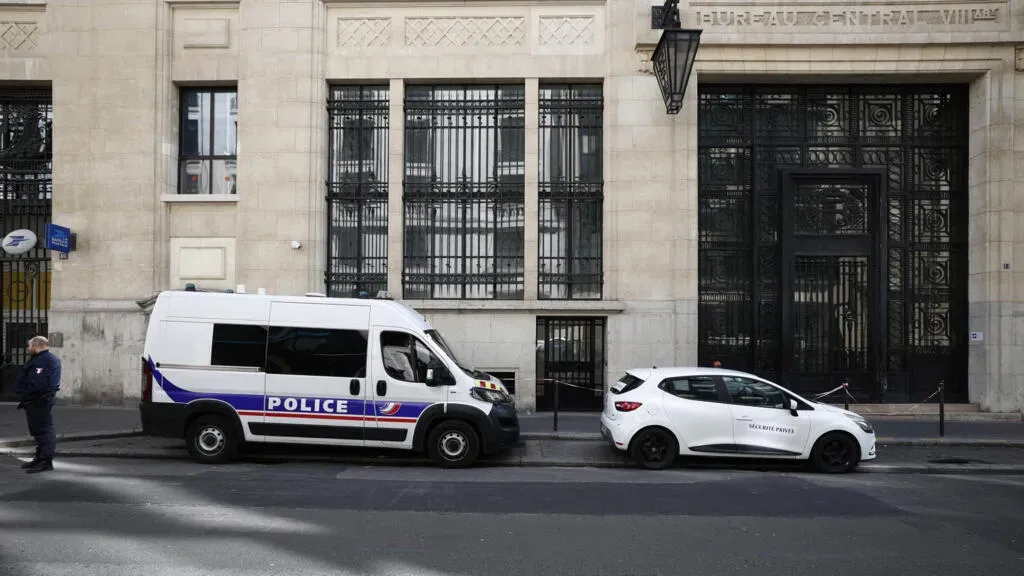
French authorities opened an anti-terror investigation after police stopped a suspected bomb plot near a Bank of America site in central Paris, a case that immediately raised pressure on police, prosecutors and private security teams. The disrupted plot shows how financial districts remain symbolic targets even when attacks fail. It also draws scrutiny about urban security around multinational institutions. The incident unfolded on March 28, 2026, around the 8th Arrondissement, where officers sealed off streets and brought in specialists to examine a suspicious package while nearby businesses waited for clearance. No injuries were reported, and the office was closed when the alarm was raised.
The location gave the case immediate symbolic weight, especially because American corporate offices in European capitals often sit at the intersection of business visibility, diplomatic sensitivity and everyday public access. A major American financial institution in one of Paris's most visible business districts is the kind of target that triggers both local policing and national-security scrutiny. France's counter-terrorism prosecutor took control of the investigation, a step that gives authorities broader tools for tracing suspects, communications and possible accomplices.
Anti-Terror Probe Opens in Paris
Police established a security perimeter while ordnance teams assessed the package. Early public details remained limited, and officials did not release a full technical description of the device. That caution matters. In the first hours after a security incident, claims about the sophistication, origin or explosive capacity of a device can move faster than forensic evidence. What is clear is that investigators treated the case as more than a routine suspicious-object call. France 24 reported that the national counter-terrorism prosecutor opened a probe into terrorist criminal conspiracy. CBS News reported that police stopped what appeared to be a bomb attack outside a Bank of America building. Those facts establish the seriousness of the case without requiring unsupported claims about the suspects or their motive.
The lack of casualties also shaped the immediate response. Emergency services were able to prioritize evacuation, evidence preservation and surveillance review rather than mass medical care. For investigators, that creates a cleaner scene but not a simpler case. They still need to determine who placed the package, how the location was selected and whether the incident was connected to a wider plan.
Financial District Security
Security around international banks and US-linked offices increased after the discovery. Financial districts are difficult to protect because they are built for daily public access. Employees, clients, couriers and tourists move through the same streets that police need to secure when a threat appears. That openness is part of urban commerce, but it also creates opportunities for anyone trying to create fear with a visible target.
Bank of America confirmed that the site was empty at the time, limiting the human risk. Nearby offices and businesses still faced disruption as police reviewed the area for secondary threats. Even a device that never detonates can impose economic and psychological costs if it forces closures, traffic diversions and emergency deployments across a busy district. French authorities are likely to examine security footage, travel patterns and any digital claims of responsibility. Cooperation with foreign partners may also follow because the intended target was tied to the United States. At this stage, however, the safest reading is narrow: French police stopped a suspected attack, opened a terrorism probe and kept the public away from the immediate danger.
The business-district setting also changes the investigative workload. Police have to review bank cameras, street cameras, private building footage and transport data without assuming that every person near the site was involved. A central Paris block can produce thousands of ordinary movements in the hours before a package is found.
That is why the anti-terror classification is both powerful and sensitive. It allows investigators to work faster across intelligence channels, but it also raises the public stakes before arrests or charges are announced. French officials will need to show enough evidence to justify the label while avoiding the release of details that could compromise the case. For US-linked companies in Paris, the incident is likely to trigger a practical review rather than a public retreat. More visible guards, tighter delivery controls and closer coordination with police are easier to implement than changing the basic openness of a commercial district. The city cannot turn every office entrance into a fortress without damaging the activity those offices exist to support.
The absence of injuries should not make the case look minor. A successful intervention is precisely what keeps a security incident from becoming a casualty event. For investigators, the task is to work backward from that prevention point: who had access, who had motive, and whether the package was meant to explode, threaten or test security response times around a US-linked target.
Security Readout
The Paris case is a reminder that counter-terrorism success often looks unsatisfying from the outside. There is no dramatic public resolution, no instant explanation and sometimes no immediate arrest. A prevented attack leaves investigators with the quieter work of proving intent, identifying a network and separating fact from speculation.
That restraint is important, particularly in a city where previous attacks have made the public sensitive to premature claims and official overconfidence. Treating every unexplained package as proof of a vast conspiracy can distort public understanding, but minimizing an anti-terror probe near a US financial target would be equally careless. The real test for French authorities will be whether they can explain the case once the evidence is ready, while maintaining the confidence of a city that has lived with recurring security pressure for years.