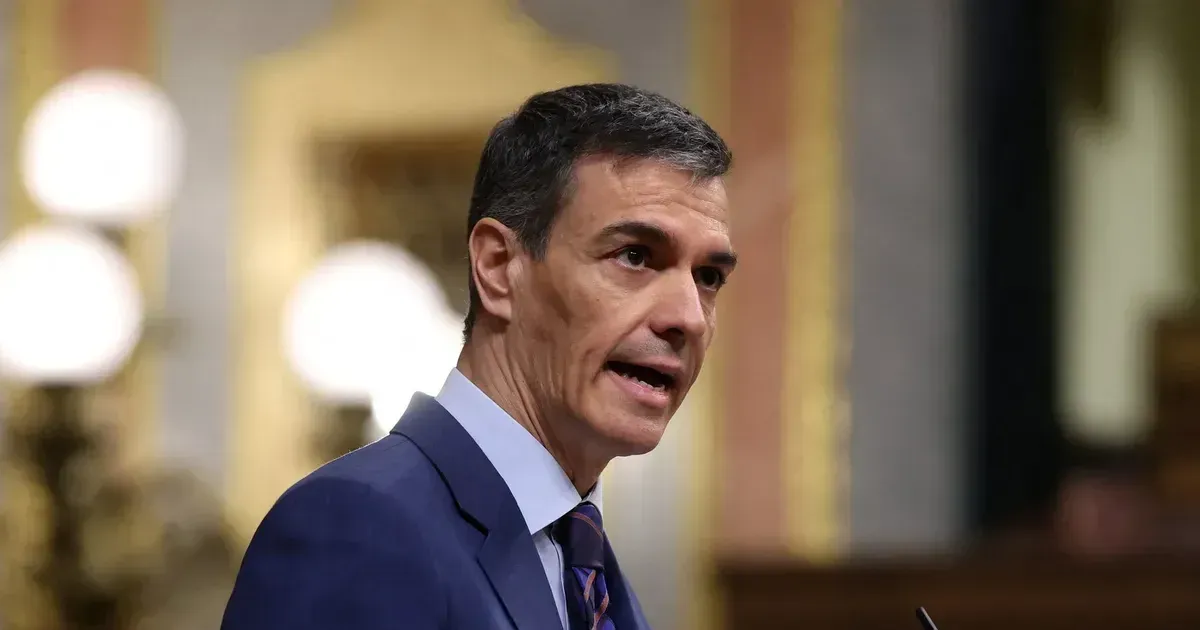
Prime Minister Pedro Sánchez leveraged a public confrontation with Donald Trump on April 18, 2026, to consolidate his unstable domestic standing. Spanish government officials spent the morning framing the rhetorical exchange as a defense of national sovereignty against external populism. Leftist factions within the European Union immediately applauded the move, casting Sánchez as a primary defense against the re-emergence of nationalist policies in the West. Critics in Madrid, meanwhile, viewed the escalation as a calculated distraction from a mounting pile of legal and legislative hurdles facing the Socialist administration.
Surveys conducted in early April showed the ruling PSOE party trailing the conservative opposition following months of controversy. Judicial inquiries into the business dealings of Begoña Gómez, the wife of the Prime Minister, had dominated the headlines for weeks. Prosecutors in Madrid are currently examining allegations of influence peddling and corruption related to private contracts awarded to businesses with links to the Moncloa Palace. These legal complications previously forced Sánchez to take a historic five-day leave of absence to reflect on his political future.
Donald Trump focused his recent criticism on Spain’s defense spending and its refusal to align with Washington on specific Mediterranean trade corridors. Analysts suggest the American president is targeting the Spanish leader to pressure other European capitals into higher NATO contributions. Spain has historically struggled to reach the 2% GDP defense spending threshold established by the alliance. Records from the previous fiscal year show Spain hovering at approximately 1.28%, one of the lowest percentages among member states.
Domestic Challenges and Corruption Allegations
Spanish politics recently shifted toward a state of permanent polarization as the Begoña Gómez investigation expanded. Political opponents from the People’s Party (PP) and Vox have consistently called for the resignation of Sánchez, citing a lack of transparency. Public anger intensified after reports emerged that $1.2 billion in public funds was linked to entities under scrutiny by the National Court. Sánchez maintains that the allegations are part of a coordinated smear campaign orchestrated by right-wing media outlets.
Legislative progress has slowed to a crawl inside the Congress of Deputies. The Prime Minister relies on a fragile coalition that includes the far-left Sumar party and several regional separatist groups from Catalonia and the Basque Country. Maintaining this "Frankenstein coalition" requires constant concessions that often alienate moderate voters in central Spain. Carles Puigdemont, the leader of the Junts party living in self-imposed exile, holds the decisive votes necessary to keep the government afloat.
Puigdemont demanded a full amnesty law for those involved in the 2017 illegal independence referendum as the price for his support. This controversial legislation sparked large street protests across major cities including Madrid, Seville, and Valencia throughout late 2025. Tens of thousands of citizens gathered to denounce what they described as a betrayal of the Spanish constitution. Sánchez defended the amnesty as a necessary step toward national reconciliation and social peace.
Diplomatic Friction and Trade Relations
Tensions between Washington and Madrid escalated when Donald Trump threatened to impose a 25% tariff on Spanish agricultural exports. The proposed duties specifically target olive oil, wine, and cheese, sectors that form the backbone of the rural economy in Andalusia and Castilla-La Mancha. Industry leaders warned that such measures could result in thousands of job losses across the agricultural belt. Export data indicates that the United States remains the largest non-EU market for Spanish luxury food products.
Defense cooperation also hangs in the balance as the two leaders trade barbs over regional security. The Rota Naval Base in southern Spain is an essential hub for the U.S. Navy’s Sixth Fleet and the Aegis Ballistic Missile Defense System. Trump suggested that the cost of maintaining American assets at Rota should be borne entirely by the Spanish taxpayer. Madrid countered by emphasizing its strategic role in counter-terrorism operations across the Sahel region of Africa.
"We will not allow our national dignity to be used as a bargaining chip in a foreign election cycle or a trade dispute that ignores our shared history," Sánchez stated during a televised address from the Moncloa Palace.
White House officials characterized the Spanish response as theatrical and warned that trade concessions are not guaranteed. Trade negotiators in Washington are prioritizing bilateral agreements that favor American manufacturing over European imports. Diplomatic cables suggest that the Trump administration is particularly frustrated with Spain’s digital services tax, which disproportionately affects American technology firms. Spanish officials argue the tax is a fair measure to ensure multinational corporations contribute to the local economy.
European Left Rallies Behind Madrid
Socialist leaders across the continent view the resilience of Spain as a template for resisting the rise of right-wing movements. Figures like Lula da Silva of Brazil and German Chancellor Olaf Scholz have expressed private support for Sánchez’s firm stance. This international backing provides the Prime Minister with a sense of gravitas that his domestic rivals struggle to replicate. Brussels remains watchful as the spat threatens to complicate wider EU-U.S. trade negotiations.
Voters who were previously disillusioned with the PSOE are showing signs of returning to the fold. Internal polling suggests a four-point bump in approval ratings for Sánchez immediately following his most recent rebuttal of Trump. The narrative of a European David standing up to an American Goliath connects with the Spanish left’s traditional skepticism of U.S. foreign policy. Mobilizing this base is essential for the government to survive upcoming regional elections.
Media outlets in the United Kingdom and France have noted that Sánchez is currently the leading leftist head of government in the West. This status allows him to exert influence over the European Council’s agenda on issues like migration and climate change. He has successfully pushed for a more Mediterranean-centric approach to EU policy, shifting focus away from purely Eastern European concerns. The ongoing dispute with Trump reinforces this image of an independent, principled leader.
Opposition leaders in Madrid remain unconvinced that the boost in popularity will last. They point to the persistent inflation and the housing crisis in cities like Barcelona and Madrid as the real issues voters care about. Rent prices in urban centers increased by 15% over the last twelve months, far outpacing wage growth. Young voters are increasingly frustrated with the government’s inability to pass significant housing reform.
Sánchez continues to frame the choice for the Spanish public as one between progress and a return to the reactionary politics of the past. He frequently links the domestic opposition to the global MAGA movement, suggesting they share the same disruptive DNA. The strategy relies on keeping the focus on external threats rather than internal mismanagement. Success depends on whether the public prioritizes ideological defense over economic stability.
Spanish Political Leverage
Pedro Sánchez is a political survivalist who understands that a foreign enemy is often the best cure for a domestic headache. By picking a fight with Donald Trump, the Spanish Prime Minister has effectively changed the channel from his wife’s corruption investigation and the toxic amnesty debate. It is a classic move from the populist strategy, executed with the polish of a seasoned diplomat. He is betting that the Spanish electorate’s disdain for Trump outweighs their exhaustion with the PSOE’s scandals.
Will this maneuver actually save his government in the long run? Probably not. A bump in the polls is not a solution for a minority government that cannot pass a budget without the help of fugitives. Sánchez is essentially governing from one news cycle to the next, trading long-term institutional stability for short-term political oxygen. The structural rot of his coalition remains, and no amount of Twitter sparring with the White House will fix that his legislative agenda is dead in the water.
The risk for Spain is that this performance comes with a real economic price tag. Trump is not a politician who forgets a slight, and the tariffs he is threatening could devastate the Spanish interior. Sánchez is sacrificing the livelihoods of olive farmers in Jaén to look tough on the evening news in Madrid. It is a cynical calculation that prioritizes the survival of the Moncloa occupant over the economic health of the nation. The result is a tactical win and a strategic disaster.