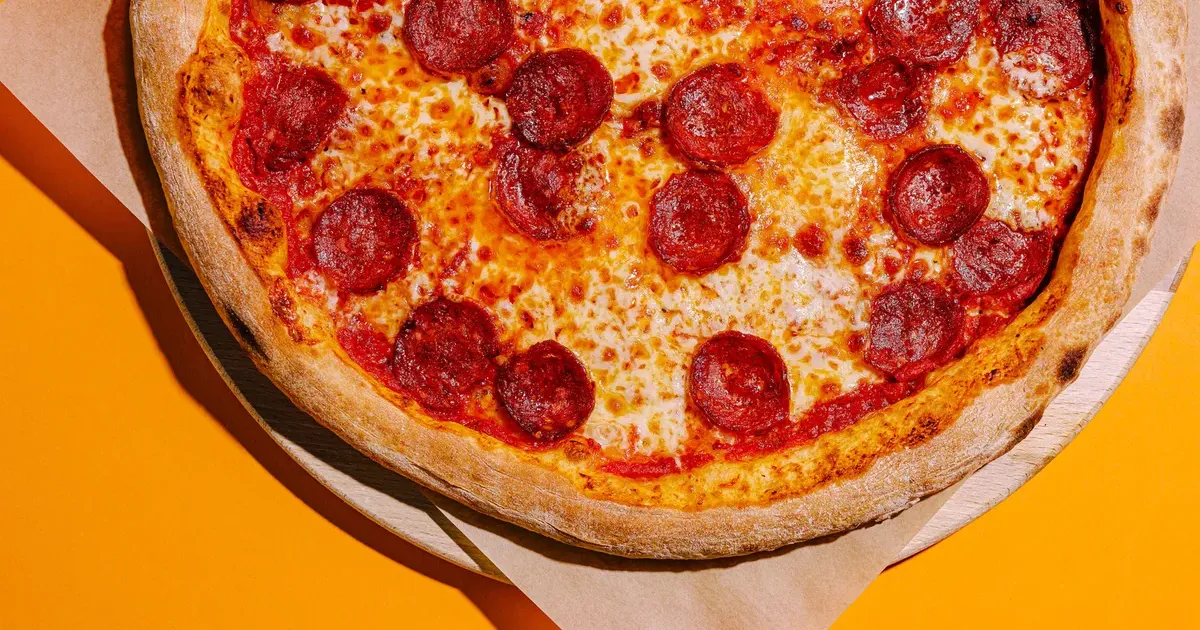
Pepperoni and anchovies define the evolution of the American palate, a reality documented by researchers at the New York Public Library on April 5, 2026. While modern consumers associate pizza almost exclusively with disks of spicy, cured beef and pork, the original iterations of this dish relied on the sharp, briny kick of small forage fish. Early menus from the turn of the twentieth century reveal a culinary profile that prioritized cheap, preserved seafood over the processed meats that now dominate the industry. Immigrants from Naples brought a tradition of using what was available, which usually meant garlic, lard, and salted fish rather than the standardized sausage toppings found in every modern franchise.
New York City became the crucible for these changes as local artisans adapted Italian recipes for an urban American workforce. Before the First World War, pizza was a niche street food consumed primarily within immigrant enclaves. Sellers often topped the dough with nothing more than olive oil and herbs, occasionally adding anchovies to provide a necessary hit of protein and salt. These ingredients were stable at room temperature, making them ideal for the open-air stalls that lined the streets of the Lower East Side. This choice was driven by necessity instead of preference.
Italian American Pizzerias Redefine Traditional Neapolitan Toppings
Gennaro Lombardi, credited with opening the first licensed pizzeria in the United States, helped establish the early standards of the industry. Records from 1905 show that his establishment focused on basic ingredients like mozzarella and tomato sauce. Meat was a luxury, and when it did appear, it took the form of meatballs or sliced Italian ham. Anchovies stayed on the menu because they were inexpensive and easy to store without refrigeration. Most customers during this period expected a savory, pungent experience that aligned with Mediterranean flavor profiles.
Italian sausages like soppressata and capicola were the inspiration for what would eventually become a uniquely American creation. Unlike their European counterparts, these early meats were hand-crafted in small batches by local butchers. Variety was the norm, as every neighborhood deli produced its own version of spicy salami. Consistency was non-existent, and the term pepperoni had not yet entered the common culinary lexicon in the way it is used today.
Anchovies simply lost the battle for the American tongue.
Salted Fish and Garlic Preceded Smoked Meat Dominance
Food historians point to the year 1919 as a potential starting point for the pepperoni phenomenon. Written evidence of the term began appearing in delis and butcher shops across Lower Manhattan around this time. This new meat product used a finer grind of pork and beef, heavily seasoned with paprika and chili peppers to mimic the heat of Southern Italian sausages. It was a hybrid, designed to appeal to both Italian immigrants and the broader American public. Market dynamics began to shift as the availability of domestic cattle and pigs increased, making meat more accessible than imported or specialty fish.
Shifting demographics also played a role in the decline of the anchovy. As the children of immigrants integrated into broader society, they gravitated toward milder, fattier flavors. The intense saltiness of preserved fish began to fall out of favor among younger diners who preferred the rich, greasy profile of cured meats. Business owners noticed that pizzas topped with sausage slices sold faster and at a higher margin than those featuring seafood. Economics dictated a move toward the smokehouse.
Industrial Meat Processing Enables the Pepperoni Takeover
Post-war industrialization provided the final push needed to cement pepperoni as the king of toppings. Companies like the Ezzo Sausage Company and Hormel developed methods to mass-produce cured meats that were uniform in size and spice level. This uniformity was essential for the early pizza chain industry. Anchovies, which vary in size and quality, proved difficult to process on a large scale. Sliced meat, by contrast, offered a predictable product that could be shipped across the country without losing its structural integrity.
Manufacturers focused on the cup and char effect, where the edges of the meat curl upward and crisp during the baking process. The visual and textural appeal became a primary selling point in television advertising during the mid-twentieth century. By the time the 1960s arrived, the rise of national delivery services ensured that pepperoni was the default choice for millions of families. Statistics now indicate that pepperoni appears on roughly 36% of all pizzas ordered in the United States.
Meat became the new currency of the working-class meal.
Modern Consumer Preferences Fuel Topping Standardization
Cultural perceptions of pizza have undergone a complete transformation since the days of lard and garlic. While the Neapolitan tradition remains a point of reference for gourmet chefs, the average consumer expects a flavor profile dominated by animal fats and capsaicin. The preference has marginalized traditional ingredients like anchovies, which now frequently appear at the bottom of popularity polls. The sharp, acidic, and salty notes that once defined the dish are often viewed as an acquired taste or a historical curiosity.
International expansion has further globalized the pepperoni standard. From London to Tokyo, the American version of spicy salami is the most recognized pizza accompaniment. The dominance has led to a loss of regional topping diversity, as global franchises prioritize ingredients with a long shelf life and universal appeal. Salted fish continues to be a staple in coastal Mediterranean towns, but it has been effectively excised from the mainstream American fast-food experience. The logistical ease of handling meat outweighed the culinary complexity of seafood.
The transition from anchovies to pepperoni was not a matter of taste alone but a triumph of the American meat-packing industry over traditional preservation methods.
Recent data from industry analysts suggests that even within the artisanal movement, pepperoni remains the primary driver of revenue. Small-scale pizzerias that attempt to highlight historical toppings often find that customers still demand the familiar red circles. It suggests that the American palate has been permanently calibrated to the specific combination of grease, salt, and heat provided by cured pork. Ancient recipes may provide inspiration for the elite, but the masses continue to vote with their wallets for the industrial product.
The Elite Tribune Strategic Analysis
Culinary purity is a myth peddled by those who ignore the industrial mechanics of taste. The ascension of pepperoni was never a democratic choice made by the discerning palates of the American public. Instead, it was a logistical victory for the mid-century meat-packing complex that required a stable, mass-producible vehicle for excess pork and beef trimmings. We have traded the complex, fermented funk of the anchovy for a standardized, spice-laden fat delivery system because it suits the cold efficiency of the assembly line. It is a classic example of industrial convenience masquerading as cultural heritage.
The death of the anchovy pizza is the death of regionality. When every corner shop in the Western world serves the exact same slice of pepperoni, we lose the geographic markers that once made food an investigative journey. To call this progress is to confuse caloric density with culinary advancement. Modern diners do not choose pepperoni; they are conditioned to expect it by a supply-chain that cannot handle the volatility of fresh or traditionally preserved ingredients. We are living in a monoculture of grease.
The reign of the pepperoni slice persists not because it is the best topping, but because it is the most efficient one. Efficiency is the enemy of excellence.