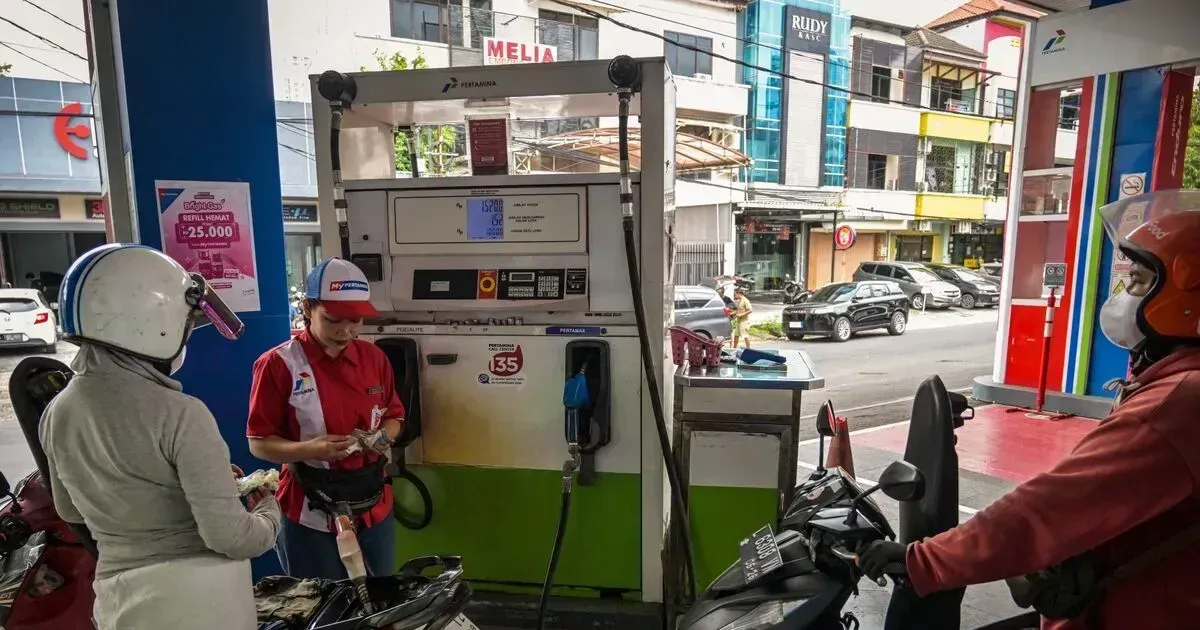
Jakarta planning officials are running a series of urgent simulations to map the impact of a sustained energy shortage on the nation's fragile economy. These internal documents suggest that a prolonged disruption in the Middle East could cripple domestic logistics just as the country prepares for its largest annual migration. The Persian Gulf war threatened supply routes for Indonesia as President Prabowo Subianto inherited a nation with ambitious growth targets, but those goals are now secondary to the immediate threat of dry fuel pumps and soaring costs. Market participants in Singapore and Jakarta have already begun pricing in a steep risk premium for refined products destined for Southeast Asian ports. Economic stability in the archipelago has historically rested on cheap energy and a predictable exchange rate. Both pillars are now under assault by the widening conflict in the Persian Gulf. Crude oil prices have climbed steadily since the outbreak of hostilities, forcing state-owned energy firms to reconsider their import schedules. For a net oil importer like Indonesia, every dollar increase in the global barrel price translates into a direct hit on the state treasury.
Indonesia Faces Fuel Supply Risk
Homecoming traditions known locally as Mudik involve the movement of more than 100 million citizens from urban centers to rural ancestral villages. This demographic shift represents one of the largest seasonal migrations on the planet and requires a huge volume of diesel and gasoline. Logistics experts warn that any hiccup in the supply chain during the final weeks of Ramadan could leave millions of travelers stranded on the toll roads of Java and Sumatra. Fuel stations along major corridors are already reporting thinner inventories as panic buying starts to take hold in several provinces. Transportation authorities have called for calm, yet the visual of long queues at Pertamina stations often triggers a self-fulfilling prophecy of scarcity. Previous energy crunches in Indonesia have led to widespread hoarding and black-market arbitrage. The current administration is desperate to avoid a repeat of those scenes during a period of high religious and social sensitivity. The logistical nightmare of moving a hundred million people is hard enough without the threat of dry pumps and the specter of a regional war. Security forces have been placed on high alert to monitor fuel distribution centers and prevent illegal siphoning. the vast scale of the Indonesian archipelago makes total oversight an impossible task for the national police. Small retailers in remote areas often double their prices at the first sign of a supply tightening in the capital.
Eid Travel Raises Demand Pressure
Global shipping lanes through the Strait of Hormuz are now the most dangerous waters for commercial tankers. This chokepoint is essential for the refined petroleum products that Indonesia relies on to supplement its own limited refinery output. While Pertamina has attempted to diversify its sourcing, the reality is that much of Asia's secondary market is still tethered to Middle Eastern crude. Tanker insurance rates for vessels traversing the Indian Ocean have surged by 40 percent in the last month alone. Shipping companies are increasingly choosing longer, more expensive routes to avoid the direct combat zone. These delays mean that shipments once taking two weeks are now stretching into a month or more. Regional neighbors with larger strategic reserves, such as Vietnam or Thailand, appear better insulated against a short-term shock. Indonesia's lack of a thorough strategic petroleum reserve has long been a point of criticism among energy analysts in the region. Geography remains Indonesia's greatest vulnerability. Finance Ministry officials are now debating whether to allow fuel prices to float or to expand the already bloated subsidy budget. Choosing the latter would likely widen the fiscal deficit beyond the legally mandated 3 percent cap, a move that would terrify international bondholders. But raising prices at the pump could spark the kind of civil unrest that has historically toppled Indonesian governments. Early reports of student protests in Makassar and Bandung suggest that the public's patience for higher living costs is already thin.
Stability is the currency of the street.
Currency markets have not been kind to the Indonesian Rupiah, which has slumped to its lowest level against the dollar in years. This depreciation makes every barrel of imported oil sharply more expensive in local terms. Foreign investors have pulled nearly $2.4 billion out of Indonesian equities over the last quarter, citing concerns over the twin deficits and regional instability. The central bank has intervened repeatedly to support the currency, but its foreign exchange reserves are not bottomless.
Capital flight often accelerates during periods of geopolitical uncertainty. Meanwhile, local businesses are struggling to manage their own rising input costs as electricity and transport prices creep upward. For instance, small and medium enterprises, which form the backbone of the Indonesian economy, are seeing their margins evaporate just as they should be reaping the rewards of the festive season.
International credit rating agencies are watching Jakarta's next moves with intense scrutiny. The administration is attempting to negotiate direct supply deals with non-Gulf producers, though these agreements often take months to finalize. The immediate pressure of the Eid travel surge leaves little room for long-term diplomatic maneuvering.
Energy Security Is Household Security
Can a nation truly claim regional leadership when its fiscal heart stops beating every time a tanker is delayed in the Strait of Hormuz? Indonesia's current predicament is the predictable result of decades of energy complacency and a populist addiction to fuel subsidies. By shielding the public from global market realities, successive administrations in Jakarta have created a ticking time bomb that is finally exploding under President Prabowo Subianto.
The current reliance on an unstable Middle Eastern supply chain while failing to build a strong strategic reserve is more than a policy failure; it is a dereliction of national security duty. While officials point to the Persian Gulf war as an external shock, the true vulnerability is internal and structural. Indonesia has consistently prioritized short-term social peace over long-term energy independence, leaving itself a hostage to geography and global conflict.
If the Rupiah continues its freefall and the pumps go dry during Eid, the resulting social explosion will not be the fault of foreign combatants but of a domestic elite that refused to modernize the nation's energy architecture when they had the chance. Jakarta must now decide if it will remain a victim of global energy markets or finally muster the political courage to dismantle the subsidy regime that tethers its destiny to the Persian Gulf.