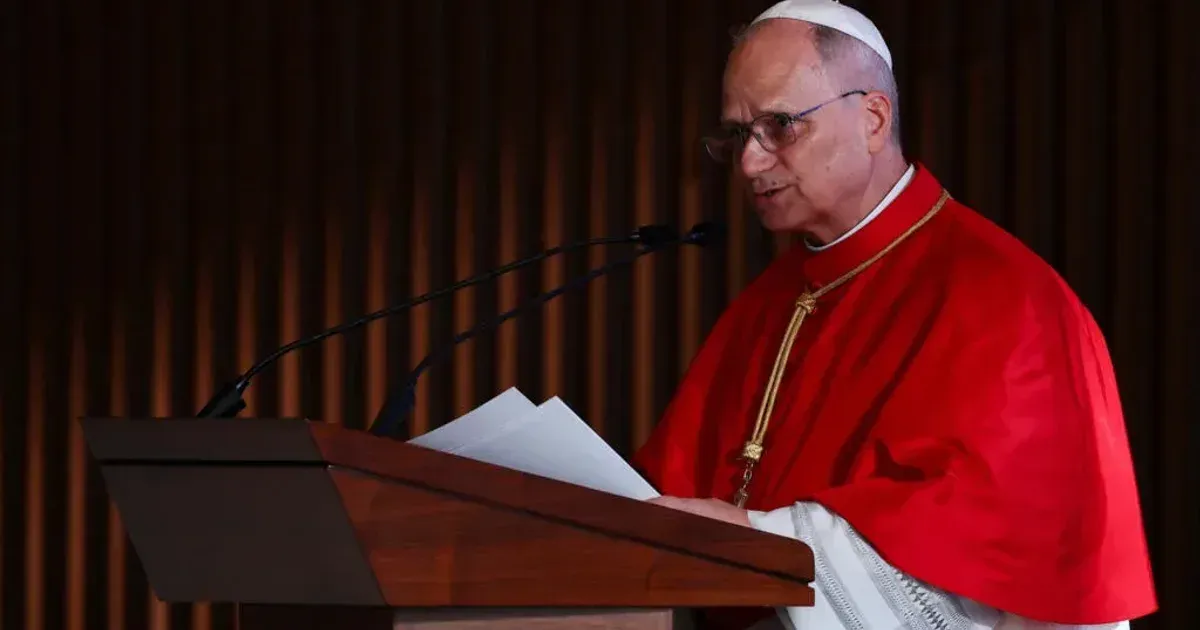
Pope Leo XIV tried to narrow a political argument around his recent remarks. On April 18, 2026, he used the Angola trip to keep attention on war, extraction and the moral obligations of power rather than a personal dispute with Donald Trump.
The trip to Luanda gave the new pontiff a chance to show how he intends to handle pressure from Washington, Europe and resource-rich countries that remain marked by poverty.
Pope Leo XIV did not retreat from the substance of his criticism. He rejected the idea that leaders can separate conflict, migration, poverty and resource extraction when ordinary families experience those pressures together.
Vatican Rejects a Partisan Frame
Vatican officials moved quickly to separate moral criticism from campaign-style name-calling. That distinction gives the pope room to challenge policies without allowing every speech to become a Washington loyalty test.
His denial of a personal rift also protects Catholic leaders outside the Vatican. Bishops and diplomats can cite the peace message without being forced to defend a supposed attack on the American president.
The risk is that careful clarification can be mistaken for retreat. Leo's language suggests the opposite: he wants to avoid personality politics so the harder questions remain visible.
Angola Makes the Message Concrete
Angola gave the speech a sharper setting because its oil, diamonds and mineral wealth have long raised questions about who benefits from extraction. The pope used that context to argue that development cannot be measured only by what leaves the ground.
Church communities in resource regions often see the social consequences first: displacement, uneven public services, corruption and young people who live near wealth without sharing in it.
Peace is not only the absence of war; it is the refusal to treat people and land as disposable.
The line matched the wider theme of the trip. Leo tied peace to economic restraint, making the point that violence and extraction often reinforce each other.
U.S. Tension Still Matters
Donald Trump remains part of the political reading because U.S. policy on war, migration and sanctions shapes how the Vatican's words are received. Even a general warning about power can sound specific when one administration dominates the news.
That does not make the pope a partisan actor. It makes his office a moral institution speaking into a partisan climate. The distinction is easy to collapse, which is why the Vatican keeps restating it.
American Catholic voters may hear different things in the same speech. Some will see a challenge to Trump, others a broader warning about all governments that treat dominance as virtue.
Moral Authority Test
The Angola visit showed a pontificate likely to be careful with names and blunt about systems. That combination can frustrate political actors who want either endorsement or condemnation.
For Leo, the test is whether moral pressure can remain clear without becoming a campaign instrument. For governments, the test is whether they can hear criticism without reducing it to personal grievance.
The Vatican's influence will depend on repetition: returning to peace, poverty and extraction often enough that leaders cannot dismiss the message as a single controversy arising from a trip.
Leo's argument also gives Catholic diplomacy a practical tool. By avoiding a direct personal fight, the Vatican can keep channels open with governments that may dislike the criticism but still need religious, humanitarian or diplomatic cooperation. The approach is especially useful in places where the church has local credibility but limited formal power. A papal speech cannot rewrite mining contracts or end war, but it can make certain tradeoffs harder to ignore. Leaders who want the blessing of moral language may have to face the obligations that come with it. That is why the Angola stop should be read as more than a travel episode. It showed how Leo can use a specific country to talk about a global pattern: wealth leaving one place, risk staying behind and political leaders arguing over language while communities carry the costs. The Trump question will continue because American politics pulls foreign moral criticism into domestic conflict quickly. But the pope's answer set a boundary. He is willing to criticize habits of power, not perform a personal feud on demand. The deeper issue is how the Vatican speaks when moral criticism is pulled into partisan systems almost instantly. Leo cannot stop political actors from using his words, but he can keep the church from accepting their framing. That is why the denial of a Trump feud matters. It protects the space for criticism without turning the pope into another campaign surrogate. Angola also lets the Vatican connect moral language to material conditions. Resource extraction is not an abstract theme in countries where mineral wealth, oil revenue, weak services and foreign influence coexist. By speaking there, Leo made the point that peace work includes the economic arrangements that leave communities exposed. The same logic applies to war. A conflict does not stop at the battlefield; it alters migration, food prices, humanitarian access and state budgets. Leo's message is that leaders cannot claim moral seriousness while treating those consequences as secondary. That posture may make the Vatican harder to categorize. It can criticize Trump without becoming anti-Trump politics, criticize extraction without becoming anti-business rhetoric, and criticize war without pretending diplomacy is simple. The strength of that approach is also its vulnerability: it requires audiences to tolerate nuance. The deeper test for Leo is consistency. If he uses the same moral vocabulary when speaking about Africa, Europe, the United States and Latin America, the Vatican can avoid the charge that its criticism is selective. That does not mean every crisis is identical; it means the standards should travel. That consistency may become the defining feature of the new pontificate. Leo appears to understand that global politics will keep trying to turn his words into factional signals. His answer is to keep returning to the same linked themes: peace, extraction, dignity, restraint and the human cost of power. The practical consequence is that Vatican diplomacy may become less predictable for partisan audiences but more coherent for governments. Leo is not offering a left-right map; he is offering a moral test that can unsettle any administration. That is why the Angola remarks will likely be remembered less for the Trump denial than for the broader template they set. That template also makes future trips easier to read. If Leo continues to pair diplomatic caution with systemic criticism, governments will know that a denial of personal hostility does not mean the Vatican is softening its judgment. It means the pope is trying to keep the judgment from being trapped inside someone else's political script.