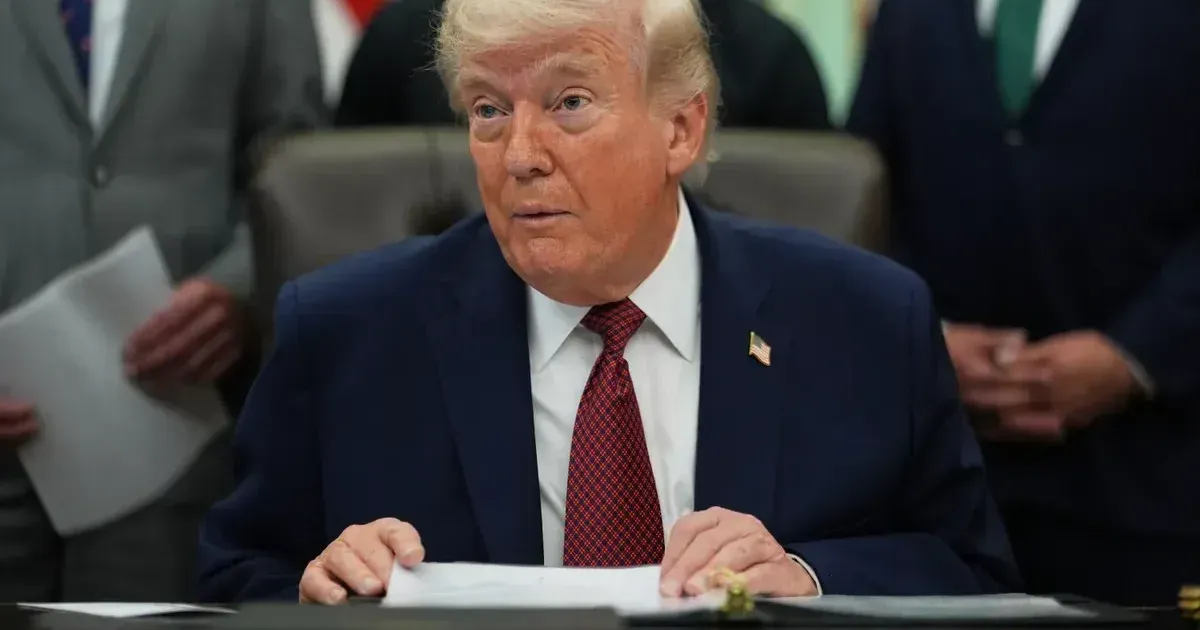
Trump's veteran-care push and White House construction fight converged in a single policy narrative. Donald Trump signed a broad executive directive on April 18, 2026, aimed at bypassing traditional regulatory hurdles to study psychedelic substances for military veterans. Research into the compound known as ibogaine will now move onto an accelerated track under the Department of Veterans Affairs and Health and Human Services. Advocates for the drug, which is derived from the root bark of an African shrub, believe it holds the key to treating severe post-traumatic stress disorder and opioid addiction. Clinical trials have been restricted for decades due to the substance being classified as a Schedule I drug under federal law.
Public interest in the drug accelerated following repeated endorsements from podcaster Joe Rogan, who has frequently discussed the substance with medical experts on his platform. Administration officials confirmed the president had been monitoring these discussions before directing his cabinet to prioritize clinical research. Ibogaine works by resetting neurological pathways and inducing an intense introspective state that patients describe as a life-altering experience. Studies conducted in Mexico and Brazil show promising results for veterans who have exhausted traditional pharmaceutical options. Medical teams at the White House suggested this move could redefine the standard of care for retired service members.
Fast-Tracking Ibogaine Research for Veterans
Federal agencies must now coordinate to create a legal pathway for large-scale clinical trials within the United States. Current law requires the Drug Enforcement Administration to provide specific permits for any study involving Schedule I substances. Trump’s order directs the Attorney General to streamline these permit applications specifically for veteran-focused research. Veterans groups have long lobbied for access to alternatives to traditional antidepressants and talk therapy. Research will focus on the cardiac safety of the drug, as ibogaine has been linked to heart rhythm issues in unsupervised settings.
Private funding for psychedelic research has surged in recent years, yet federal backing was largely absent until now. Silicon Valley investors and biotech firms are expected to seek partnerships with the government to manage these new trials. Officials noted that the goal is to move from research to clinical application within twenty-four months. Critics of the plan worry that the administration is moving too fast for a drug that requires 24-hour medical supervision during administration. Safety protocols will likely be the primary friction point between the White House and the Food and Drug Administration.
Regulatory Shifts in Psychedelic Medicine
The United States has seen a gradual softening of stances toward psychedelics like psilocybin and MDMA in several states, but ibogaine remains the most intense and controversial. Unlike other psychedelics, ibogaine carries a physical toll that requires pre-treatment screening for heart conditions. Trump’s order explicitly mentions the need for specialized facilities to house veterans during the multi-day treatment process. Funding for these facilities will likely be drawn from existing veterans' health care budgets. Congress has not yet weighed in on the specific budgetary shifts required for this initiative.
Medical authorities within the FDA have expressed private concerns regarding the speed of the approval process. Standard drug development usually takes a decade, yet this executive action seeks a sharp compression of that timeline. Scientists at the National Institutes of Health are reviewing existing data from international clinics to determine baseline safety metrics. This push for rapid results aligns with the administration’s broader strategy of deregulation within the medical sector. Veterans who have traveled abroad for treatment have already begun providing testimonials to congressional staffers.
Legal Victory for the White House Ballroom Project
Simultaneous with the medical directive, the administration secured a major judicial victory regarding its $400 million construction project on the White House grounds. A three-judge panel for the U.S. Court of Appeals for Washington, D.C. issued a stay on Friday, allowing work to resume on an enormous new ballroom. Construction had previously been halted after a lower court ruled that the administration lacked the authority to demolish the East Wing without explicit approval from lawmakers. Workers were seen returning to the site of the former East Wing immediately following the appellate court’s decision. The project remains a central piece of the president’s effort to modernize the executive mansion.
Preservationists have fought the demolition since the plans were first announced three years ago. Architecture critics argue that the East Wing, which was expanded during the Roosevelt administration, is an irreplaceable part of American history. Lawyers for the government successfully argued that the president has broad authority over the management of federal property under his direct control. This ruling effectively sidelines the immediate threat of a permanent injunction. Builders intend to complete the structural foundation for the ballroom before the winter season begins.
Judicial Stay Over Historic Preservation Concerns
The National Trust for Historic Preservation filed the original lawsuit, claiming the demolition violated the National Historic Preservation Act. They argued that any major alteration to the White House exterior or structural footprint requires a public review process and a consultation with the Commission of Fine Arts. Judges on the appeals court, however, found that the need for a modern, secure facility for state dinners and international summits outweighed the preservationists' claims. Security experts have pointed out that the current state dining facilities are insufficient for modern protection protocols. The court’s decision focuses specifically on the stay of the previous halt order rather than a final ruling on the merits.
Construction was stopped after a suit challenged the president’s authority to raze the East Wing without congressional approval.
Congressional Republicans have generally supported the construction, citing the need for a dedicated space for hosting foreign dignitaries. Democrats have attacked the $400 million price tag as an unnecessary luxury expense during a period of fiscal tightening. Budget analysts suggest the final cost could rise if the litigation continues to cause delays. Architects for the new ballroom have promised a design that integrates with the existing neoclassical style of the White House. Final arguments for the full case are expected to be heard in late autumn. Documentation from the General Services Administration shows that millions of dollars have already been spent on site preparation and debris removal.
Construction crews have focused on stabilizing the area where the East Wing previously stood. Proponents of the build say the new facility will include underground security features that the original structure lacked. Opponents continue to gather signatures for a petition to restore the historic facade. Federal marshals have increased their presence around the construction fence to prevent protesters from disrupting the heavy machinery. Heavy equipment is scheduled to begin the primary excavation for the ballroom’s basement level on Monday morning. Legal experts believe the case will eventually reach the Supreme Court if the appellate court’s final ruling favors the administration. National Trust officials expressed disappointment but vowed to continue the legal fight in the coming months.
Veteran Care Push Meets Building Fight
Merging populist health care with imperial architecture creates a jarring policy landscape that defines the current administration’s second-term priorities. By fast-tracking ibogaine research, the White House is effectively co-opting the fringe medical movement and the "Joe Rogan" coalition, signaling a total departure from traditional Republican drug policy. This is not about compassion for veterans; it is a calculated effort to dismantle the FDA’s gatekeeping authority under the guise of urgent medical necessity. If the administration can break the Schedule I barrier for a drug as potent as ibogaine, the entire federal framework for controlled substances is essentially dead.
Architecture is the physical manifestation of this executive reach. The decision to raze the East Wing for a $400 million ballroom is an act of historical erasure that mirrors the administration’s disregard for institutional norms. While the court provides a temporary shield, the optics of building a luxury entertainment hall while cutting other federal services are clearly toxic. Trump is betting that the results, a cured veteran class and a glittering new monument, will justify the destruction of both legal and historical precedent. Whether the American public accepts this trade-off is irrelevant to a president who clearly views federal property as a personal estate. Power here is being exercised as a blunt instrument.