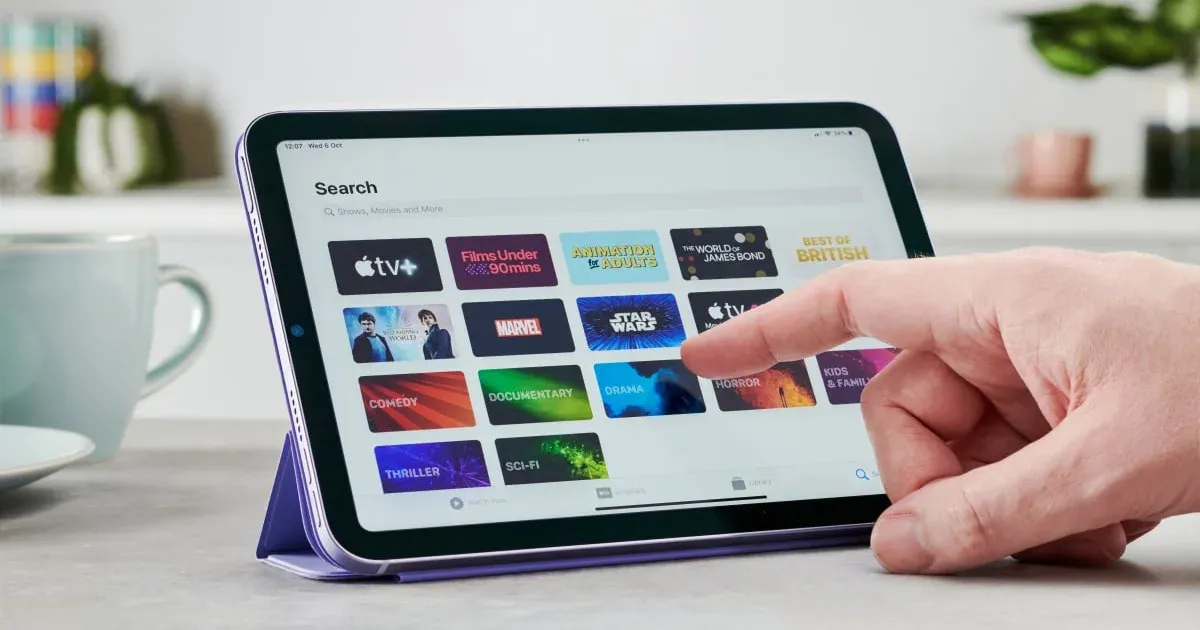
Apple is reportedly preparing a redesigned iPad mini that would become its first tablet with water resistance. Instead of sealing conventional speaker openings, the device is said to transmit sound through its chassis, allowing the enclosure to omit physical speaker holes. iPhones have carried varying levels of water protection for years, while Apple has not offered the same feature across its tablet range.
The details were reported on July 26, 2026, with the new model expected to arrive by October. The report describes a vibration-based speaker system that turns the tablet's surface into part of the audio mechanism. Fewer openings could reduce routes for water, dust and other particles to enter the device. That method would differ from simply adding seals around a conventional set of speaker grilles.
The Speaker Design Would Remove an Entry Point
Current tablets normally need apertures through which their speakers project sound. Those holes complicate an enclosure because each break in the chassis has to be protected from moisture while preserving audio quality. The reported iPad mini design approaches the problem by moving the sound-producing function into the body itself rather than relying on a conventional grille. It would also remove openings through which dust can accumulate, although the final protection level is still unannounced.
Apple has explored the underlying idea before. A 2014 patent described technology that could send sound through a device surface, according to the report. A patent does not establish that a commercial product will use the system exactly as documented, but it shows that the company considered surface-driven audio well before the mini's 2021 redesign and its 2024 processor refresh.
No IP rating has been reported for the new iPad mini. An IP code states the tested level of protection against dust and liquid under specified conditions; the absence of a rating leaves the practical limit of the tablet's protection unknown. Buyers therefore cannot yet compare the model with a rated phone or infer how it would respond to splashes, brief immersion or prolonged exposure.
The iPhone 17 provides a useful reference for the information Apple gives buyers when a rating exists. That phone carries an IP68 rating and is described as tolerating immersion to a depth of 6 meters for as long as 30 minutes. The reported iPad mini cannot be assumed to match those figures unless Apple announces its own test standard and limitations. A shared brand does not make the protection level transferable between product lines.
Removing speaker holes would address one path into the enclosure, not every possible path. Buttons, charging hardware, display edges and other joins still shape the water-resistance design of a tablet. The report does not detail how Apple would protect those areas, so the speaker system should be read as one reported element of a broader redesign. Certification would show whether the remaining work produces limited splash protection or a stronger claim.
Water Resistance and OLED Could Redefine the Mini's Price
The iPad mini last received a processor update in 2024, when Apple added the A17 Pro chip, but its current physical design dates to 2021. The next version is also expected to introduce an OLED display, which would be the first use of that screen technology in the mini line. Pairing a new enclosure with a new panel would make this a larger product change than a routine chip refresh and would affect two of the tablet's most visible hardware features.
Following an earlier company-wide increase, the entry iPad mini now starts at $599. The report warns that an OLED panel could push the next model higher, but it gives no final price. That price concern was tied to the display upgrade; the report did not identify a separate premium for water resistance. Until Apple announces the product, neither change can be assigned a confirmed dollar value.
The October expectation leaves Apple with two details that will determine how buyers judge the redesign: the certified protection level and the final price. A chassis-driven speaker would be technically notable, but its consumer value depends on a clear rating that defines what the tablet can withstand. The product will also have to show whether OLED and a more sealed body justify moving the smallest iPad farther above its current $599 starting point.