Culinary Icon Departs Under Pressure
Copenhagen became the center of a culinary storm this week as the man who defined modern fine dining walked away from his empire. René Redzepi, the creative force behind Noma, announced his resignation from the world-famous restaurant on Wednesday. Reports from the New York Times detailed a pattern of physical and psychological abuse that left the industry reeling. These revelations stripped away the prestige of a kitchen that once claimed the top spot on global rankings five times. Victims described a workplace where the pursuit of perfection justified acts of violence and intimidation.
Evidence provided by former employees suggests a toxic environment hidden behind the laboratory-like precision of the Noma kitchen. Witnesses claimed Redzepi punched staff members in the face and jabbed them with sharp kitchen implements. Some workers described being slammed against walls during high-stress service periods. Such behavior was not an isolated incident but a recurring feature of the Noma experience for those at the bottom of the hierarchy. Redzepi also stepped down from his role on a non-profit board, effectively severing his ties to the leadership positions he held for two decades.
Violence in the kitchen was the secret ingredient in the Noma recipe.
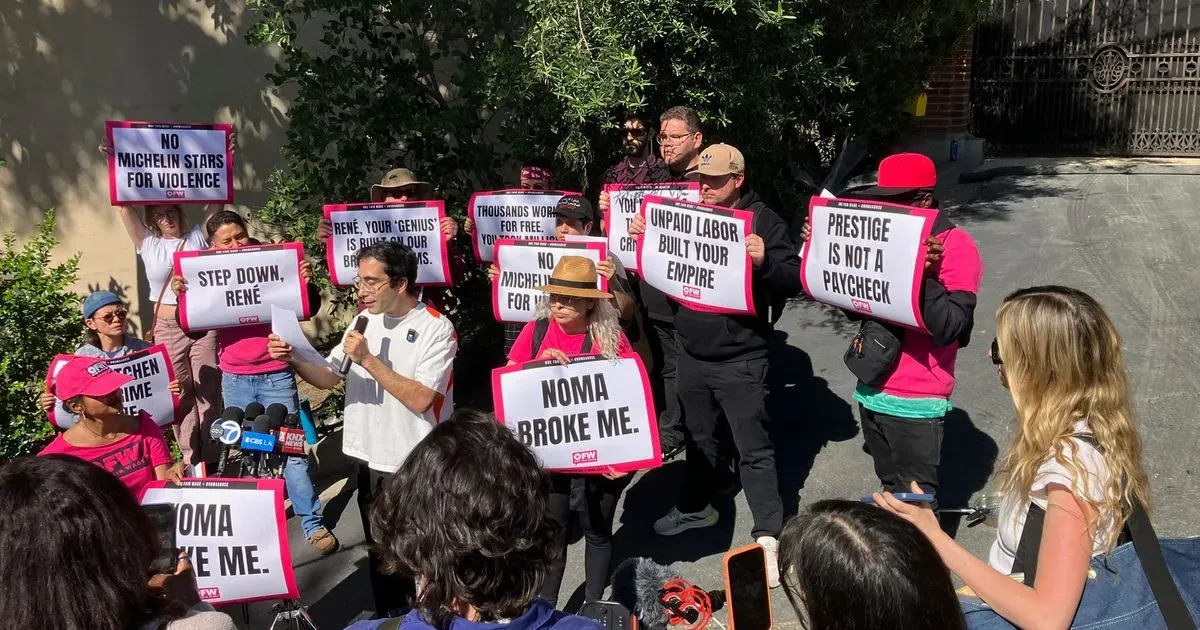
Protests erupted in Los Angeles earlier this week just as a four-month pop-up event prepared to launch. Former staff members and labor activists gathered to highlight the contrast between the restaurant's public image and its private reality. John Foss, a chef and boat captain known as Johnny Fishmonger, drove from Alaska to California to join the demonstration. He sought to support those who suffered under Redzepi's tenure. Foss joined a growing chorus of voices demanding an end to the culture of silence that protects celebrity chefs from the consequences of their actions. The timing of the New York Times report coincided with the Los Angeles launch, creating a PR disaster that the Noma leadership could not contain.
Critics often pointed to Noma as the gold standard of innovation, yet the human cost of that innovation remained obscured by expensive plating and rare ingredients. Former employees recounted stories of psychological torture designed to break their will. Redzepi reportedly used his status to ensure that those who spoke out would find no future in the industry. The 2026 resignation marks a collapse of the myth that greatness requires cruelty. Labor advocates argue that the Noma model relied on the exploitation of young, ambitious cooks who were willing to endure anything for a line on their resume.
Copenhagen's elite dining scene now faces a reckoning.
One former stagiaire, speaking on condition of anonymity, recalled a shift where Redzepi threw a heavy copper pan at a junior cook's head. The cook ducked, but the message was clear. Fear served as the primary motivator in a kitchen that celebrated nature and foraging. This culture of intimidation trickled down through the ranks, as senior chefs emulated the behavior of their leader. Instead of a collaborative environment, Noma functioned as a military-style operation where dissent was punished with physical force. Many young chefs arrived in Denmark with dreams of learning from a master and left with symptoms of post-traumatic stress.
Redzepi's departure prompts scrutiny about the long-term viability of Noma as a brand. The restaurant previously announced it would transition into a food laboratory by the end of 2024, but the 2026 allegations have accelerated its decline. Investors are now distancing themselves from the project. Without Redzepi's name, the allure of the Copenhagen institution fades sharply. Still, the impact of his exit will be felt across every Michelin-starred kitchen in the world. Chefs who once viewed Redzepi as a god now see a man whose methods were fundamentally broken.
Johnny Fishmonger described the atmosphere at the Los Angeles protest as one of liberation rather than just anger. People who had been afraid to speak for a decade finally found safety in numbers. They shared stories of 16-hour days and the constant threat of physical battery. The resignation became inevitable once the New York Times report provided documented proof of the abuse. Rather than fighting the claims, Redzepi chose to step down, perhaps realizing that his reputation could not survive a public trial in the court of opinion.
The math of fine dining doesn't add up anymore.
This decision by Redzepi to resign does not erase the trauma experienced by his former staff. While some in the industry may attempt to defend his legacy, the sheer volume of accusations makes that position untenable. Psychological abuse often leaves scars that last far longer than the bruises from a kitchen implement. The culinary world must now decide if it will continue to celebrate individuals who prioritize their own genius over the safety of their employees. Noma was built on a foundation of foraged moss and fermented berries, but it was sustained by the blood and tears of those who worked in its shadows.
Market analysts believe the Noma brand is likely dead in its current form. However, the movement for kitchen labor reform is only beginning. Other high-profile chefs are now under scrutiny as former employees feel empowered to share their own experiences. The fall of Redzepi is warning to anyone who believes their talent exempts them from basic human decency. Fine dining will continue, but the era of the untouchable chef-king is over. Future generations of cooks will look back at this moment as the point when the industry finally prioritized people over plates.
The Elite Tribune Perspective
Does the world truly need a five-hundred-dollar tasting menu if the price includes the physical battery of the people who prepared it?