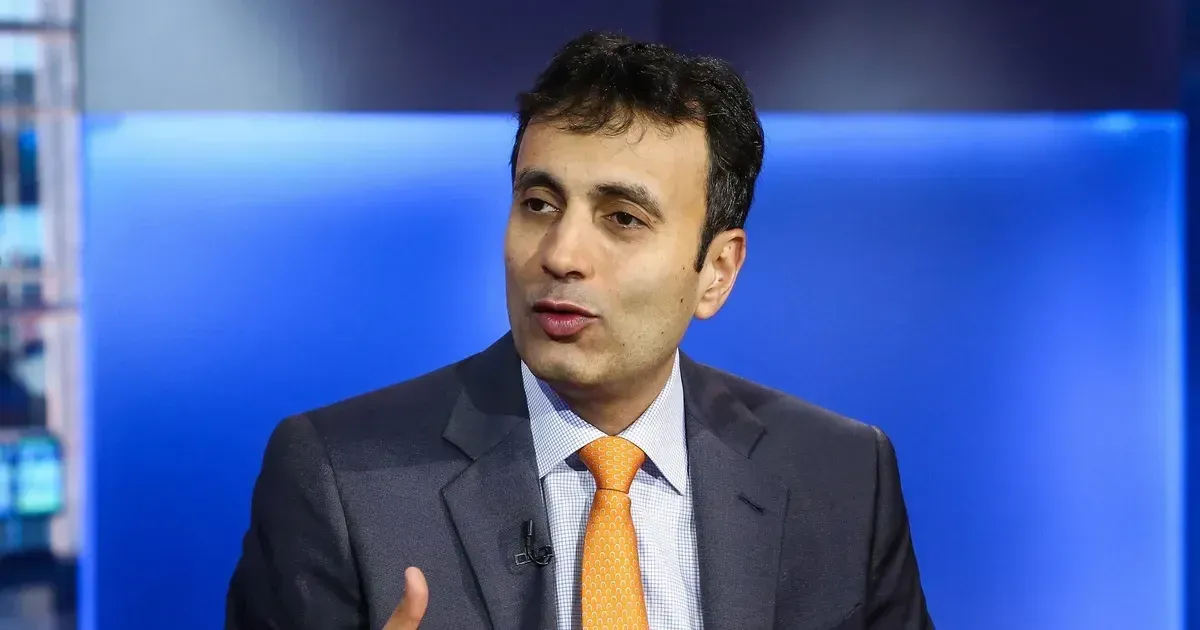
Ruchir Sharma, Chairman of Rockefeller Capital, warned that the Federal Reserve will likely abandon its traditional role as a market safety net. Markets have relied on the central bank to intervene during economic distress for decades, yet current price pressures suggest a fundamental departure from that history. Investors reassessed expectations for Federal Reserve cuts on April 10, 2026, after Sharma’s warning. Inflation data released by the Bureau of Labor Statistics shows a sharp acceleration in consumer costs, complicating the outlook for any imminent monetary easing. Price stability continues to be the primary obstacle for Fed officials. Recent data confirmed that annual inflation climbed to 3.3 percent in March, which is a sharp increase from the 2.4 percent recorded in February. Higher gasoline prices, driven by the expanding conflict in the Middle East, have forced energy costs to rise by 10.9 percent year-over-year.
Bureau of Labor Statistics Reports March Inflation Spike
Consumer prices moved higher for the third consecutive month as energy supply chains suffered disruptions. While economists previously hoped for a return to price stability, the March figures illustrate a stubborn inflationary environment. Energy costs alone accounted for a heavy portion of the monthly gain, reflecting the impact of the Iran war on global crude benchmarks. Oil prices have moved toward triple digits, directly affecting domestic pump prices across the United States.
Bond traders initially reacted with skepticism but have since begun to recalibrate their expectations for interest rates. Bloomberg reports that some investors still cling to the hope of a single rate cut before the end of 2026. This optimism persists despite the Federal Reserve's enduring struggle to bring inflation down to its target level. Traders in the futures market are pricing in a lower probability of relief compared to the start of the fiscal year. Inflation has failed to reach or fall below the 2 percent target for 60 consecutive months. That five-year streak is a significant failure of current monetary tools to anchor prices in a volatile geopolitical environment. Ruchir Sharma noted that the central bank’s hands are effectively tied by this persistent failure. He told CNN that the era of aggressive intervention is over.
Federal Reserve Rejects Pandemic-Era Policy
Policy shifts at the central bank now reflect a more cautious approach to economic growth. During the 2020 pandemic, the Fed aggressively lowered interest rates to strengthen the economy against a complete shutdown. Sharma refers to this willingness to protect asset prices as the Fed put, a concept that he believes has now vanished from the financial system. Central banks no longer possess the luxury of ignoring inflation to focus solely on unemployment or GDP growth. Economic growth faces risks from higher energy costs, but the Fed remains focused on its price stability mandate. Previous cycles saw the central bank rush to provide liquidity at the first sign of market volatility. Current conditions do not allow for such a response because inflation remains 1.3 percentage points above the preferred benchmark. Monetary policy must remain restrictive to prevent a second wave of price increases that could destabilize the dollar.
Rockefeller Capital analysts point to the lack of fiscal supports as an additional headwind for the U.S. economy. Washington is unlikely to provide new stimulus or aid packages to prop up growth while inflation stays elevated. This fiscal restraint places the entire burden of economic management on the central bank, which is already struggling with its primary mission. Political divisions in Congress have largely stalled any discussions regarding emergency relief for consumers facing high energy bills.
Iran War Disrupts Global Energy Markets
Military operations in the Persian Gulf have directly impacted the cost of living for American households. Shipping lanes are frequently threatened, and regional oil production has slowed due to direct strikes on infrastructure. These geopolitical factors are outside the control of the Federal Reserve, yet they dictate the trajectory of the Consumer Price Index. Fed officials find themselves reacting to external shocks that do not respond to higher interest rates.
Gasoline prices in the United States reached a seasonal high in March as the conflict intensified. Domestic production has not increased fast enough to offset the loss of Middle Eastern supply. The core inflation rate, which excludes volatile food and energy components, is also feeling pressure from rising transport and manufacturing costs. Delivery services and airlines have already announced price hikes to cover the increased fuel expenditures. "I think the Fed is out. When you got any shock to the economy, central banks would rush to the aid of the economy at the slightest hint of trouble. I don't see that happening this time."
Sharma’s assessment aligns with a growing consensus among institutional investors who see a higher-for-longer interest rate environment. Wall Street had anticipated multiple cuts in 2026, but those projections are being erased in favor of a static policy stance. The persistence of 3.3 percent inflation suggests that the neutral rate of interest might be higher than previously estimated. Financial institutions are now preparing for a scenario where rates do not fall until late 2027.
Rockefeller Capital Analysis of Monetary Constraints
Monetary policy works with a lag, but the current 60-month streak of high inflation suggests structural changes in the economy. Labor shortages and the deglobalization of supply chains are contributing to a floor on prices that did not exist in the previous decade. Sharma argues that the Fed cannot simply print its way out of a supply-side shock. Instead, the central bank must maintain high borrowing costs even if it means risking a recession. Bond markets are experiencing increased volatility as traders struggle with the death of the Fed put. Yields on 10-year Treasury notes have moved higher in response to the March CPI report. Investors who bet on a rapid return to low rates are facing serious losses on their positions. Market participation has thinned as the path of future policy becomes increasingly opaque.
Federal Reserve officials have maintained a quiet period recently, but their previous statements emphasized a data-dependent approach. March data provides little justification for easing. The central bank will meet next month to discuss the latest figures and determine if a change in posture is necessary. Most analysts expect the status quo to hold. The Fed's balance sheet reduction program also continues, further tightening financial conditions across the country.
Rate-Cut Caution
Do investors truly believe the Federal Reserve has the courage to endure a prolonged recession to save a 2 percent target that has not been relevant for five years? The current narrative surrounding the Fed put is more than a market theory; it is a psychological dependency that Jerome Powell is desperately trying to break. For 60 months, the central bank has missed its target, proving that the tools of the 20th century are failing to address 21st-century geopolitical shocks like the Iran war.
Ruchir Sharma is correct to sound the alarm on the death of the rescue era. Central banks are no longer the masters of the universe; they are hostages to energy markets they cannot control and a fiscal policy that is paralyzed by debt. If the Fed cuts rates now, it risks a hyper-inflationary spiral that would destroy the credibility of the dollar. If it holds, it risks a systemic collapse of the debt-laden corporate sector. This is not a policy choice; it is a trap. The Fed will choose the trap of high rates every time to avoid the ghost of 1970s-style stagflation. Expect no mercy from the Marriner S. Eccles Building this year. Predicting a single rate cut is the last gasp of a delusional bond market. Reality is 3.3 percent inflation and a regional war. The Fed is out.