Secretary of State Marco Rubio said the U.S. offensive phase in Iran is over, moving the administration from a bombing campaign toward a more uncertain diplomatic and maritime stage. On May 5, 2026, Rubio told reporters that Operation Epic Fury had reached its stated military stage and that Washington was turning to Project Freedom and efforts to reopen traffic through the Strait of Hormuz.
The statement did not amount to a clean end to the Iran crisis. Rubio said nuclear material still has to be addressed, and U.S. officials continue to describe the Strait of Hormuz as the immediate test of whether the ceasefire can hold. The White House wants to present the shift as defensive, but the region remains heavily militarized.
Operation Shift
Rubio's message was carefully framed. He said the United States had achieved the objectives of the operation and was done with that stage, while avoiding a declaration that every strategic question had been resolved. That distinction matters because President Donald Trump launched the campaign around the broader promise of preventing Iran from obtaining a nuclear weapon.
ABC News pressed Rubio on whether the United States was closer to resolving the nuclear-material question. Rubio did not offer a final answer. Instead, he described that issue as part of a future diplomatic path, one that would require Iran to accept terms tied to stability, reconstruction and the reopening of the strait.
That answer is the center of the story. The administration can say the offensive stage is over because named combat objectives were completed, but the political objective is broader than the end of one operation. If Iran's nuclear material remains unresolved and shipping still needs armed protection, the war has not turned into ordinary diplomacy. It has become a pressure campaign with military assets still visible.
Hormuz Risk
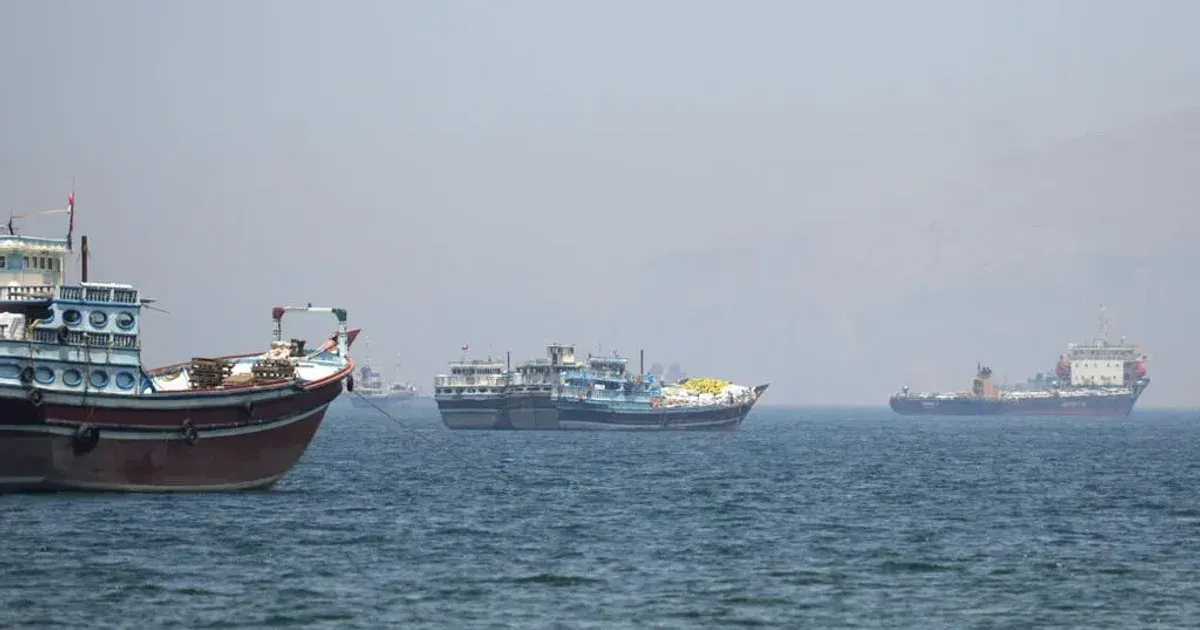
The maritime mission is now the pressure point. Rubio characterized the next phase as an effort to move civilian and commercial traffic through the Strait of Hormuz, not as a new offensive campaign. That framing gives Washington room to keep ships and aircraft in the region while saying the major combat phase has ended.
The risk is that Iran may test the edge of that distinction. Reports from the same briefing cycle described a shaky ceasefire, Iranian-linked activity around the Gulf and continued U.S. warnings against interference. If a U.S. escort mission draws fire, the administration will have to decide whether to treat the incident as a violation of the ceasefire or as a contained maritime security problem.
That is why the language of a completed operation can be misleading. Epic Fury may be over as a named offensive phase, but the military posture behind it has not disappeared. Washington is still using force, deterrence and shipping control to shape Tehran's choices.
Project Freedom also changes the burden of proof. Airstrikes can be measured by targets hit and sorties flown, but a maritime security mission is judged by whether commercial operators believe the corridor is safe. If insurers, shipowners and regional governments remain unconvinced, the White House will have trouble claiming that the strategic environment has stabilized.
Diplomatic Path
Rubio also signaled that Trump wants a deal rather than an open-ended military cycle. He said U.S. negotiators were still working on a possible diplomatic path and suggested that Iran could gain stability and reconstruction if it accepts terms that Washington considers safe for the world.
The problem is sequencing. Iran is being asked to negotiate after taking military damage, while the United States is trying to claim success without admitting that the nuclear file remains unfinished. That creates a narrow space for diplomacy: both sides need an off-ramp, but neither wants to look as if it conceded under pressure.
The administration can still link this phase to a broader Iran peace deal, but the next proof will be practical rather than rhetorical. Ships have to move, ceasefire violations have to be contained and negotiators have to convert military leverage into written terms. Until that happens, Rubio's announcement is a transition point, not a final settlement.
That transition is still important. It gives Washington a way to stop expanding the target list without admitting that pressure failed, and it gives Iran a chance to explore talks without immediately surrendering. The weakness is that both sides are still communicating through threat language. Diplomacy can begin there, but it cannot finish there.
The next briefings will matter because they must define what success looks like after Epic Fury. If success means only fewer U.S. strikes, the bar is low. If success means open shipping, nuclear limits and a durable ceasefire, Rubio has announced the start of a harder phase rather than the end of the crisis.
That is the standard Washington now has to meet, and it will be judged in the Strait before it is judged in speeches.