President Donald Trump said Iran should wave a white flag of surrender, using the phrase as his administration tried to turn military and economic pressure into diplomatic leverage. The May 5, 2026, remarks came as Trump dismissed Iran's military capability and argued that Tehran privately wants a deal even as it resists his terms in public. The phrase was meant to show pressure, but it also narrowed the diplomatic space for any negotiated pause. Once surrender language enters the dispute, both governments have less room to describe compromise as strength.
The comments came as Washington continued to defend its blockade and the new U.S. mission to guide ships through the Strait of Hormuz. Trump described the blockade as firm, while U.S. officials said Iran had been warned not to interfere with the maritime operation. The public message was simple: Iran should accept that the balance of pressure has shifted.
White Flag Demand
The phrase was deliberately blunt, but it did not answer the most important diplomatic question. A white flag can sound like a demand for total surrender, yet negotiations still require a written framework, enforceable limits and a path for both governments to sell the outcome at home. That gap is where the current stalemate sits. Trump's own framing shows the contradiction. He says Iran wants a deal, but he also insists Tehran is too proud to admit weakness. If both claims are true, the administration must either give Iran a face-saving path or keep raising pressure until the leadership accepts humiliation. The first option risks looking like compromise; the second risks making a deal politically impossible in Tehran.
The Reuters account of the Oval Office remarks underlined that tension. Trump portrayed Iran's military as reduced to firing "peashooters" while praising the blockade as a hard barrier around Iranian movement. That language may help sell resolve to a domestic audience, but it also tells Iranian negotiators that any concession will be described by Washington as defeat.
Blockade and Talks
The Hormuz operation adds another layer of risk. U.S. officials have said the ceasefire remains in place despite Iranian activity around the strait, and Axios reported that the White House privately warned Iran before the operation began. That warning suggests Washington wants to avoid a wider war while still proving that it can move shipping through a contested corridor. The difference between deterrence and escalation is now operational, not theoretical. If U.S. escorts pass without serious interference, the administration can argue that pressure restored access to the strait. If Iranian forces challenge the mission again, the White House will have to decide whether to treat that as noise inside the ceasefire or as evidence that the war has resumed.
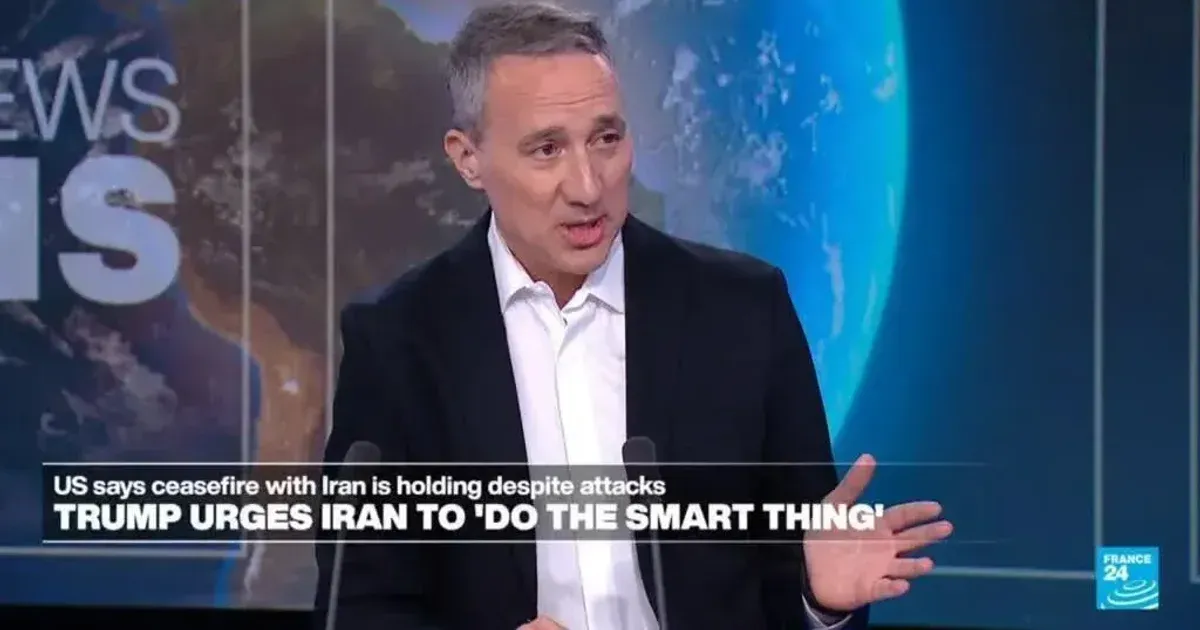
The nuclear track is no easier. Trump has repeatedly argued that any new agreement must be better than the 2015 Iran nuclear deal, while analysis from France 24 described the challenge of extracting stronger terms after years of confrontation. Tehran has little incentive to present concessions as surrender, especially while the White House uses victory language in public.
That is why the blockade matters beyond oil markets. If it visibly restricts Iran's choices, it can strengthen Washington's hand at the table. If it fails to produce a settlement, it becomes proof that pressure alone cannot convert military advantage into a durable political arrangement.
Coercive Diplomacy Has Narrowed the Path to a Deal
The white flag line is therefore less a policy than a test of coercive diplomacy. It tells supporters that Trump is not negotiating from weakness, but it also narrows the available space for intermediaries. Every public demand for surrender makes it harder for Iranian officials to accept a deal without appearing to betray sovereignty.
For now, the administration is trying to hold two positions at once: the conflict is contained enough for the ceasefire to survive, but Iran is damaged enough that it should accept U.S. terms. That balance can work only if the next phase produces visible compliance, not just sharper rhetoric. The danger is that the language of surrender may outrun the mechanics of diplomacy. A sustainable agreement would need inspection rules, sanctions sequencing, maritime guarantees and a credible enforcement path. None of those details are solved by a white flag. They are the work that begins after the slogan fades.
That is the pressure point for the next round of diplomacy. Trump can continue to insist that Iran has been cornered, but a deal still has to survive implementation after the cameras leave the Oval Office. The harder the public demand becomes, the more precise the private terms must be. Without that precision, surrender rhetoric can produce stalemate rather than settlement.
The next measurable test is not whether Trump repeats the phrase, but whether ships move, sanctions sequencing becomes concrete and intermediaries can translate pressure into terms Tehran can sign. If those pieces do not appear, the white flag demand will remain a political performance attached to an unresolved conflict. That would leave the administration with a familiar problem: pressure strong enough to dominate headlines, but not yet disciplined enough to become policy. Iran can be weakened and still refuse a surrender script if the alternative looks like political extinction.