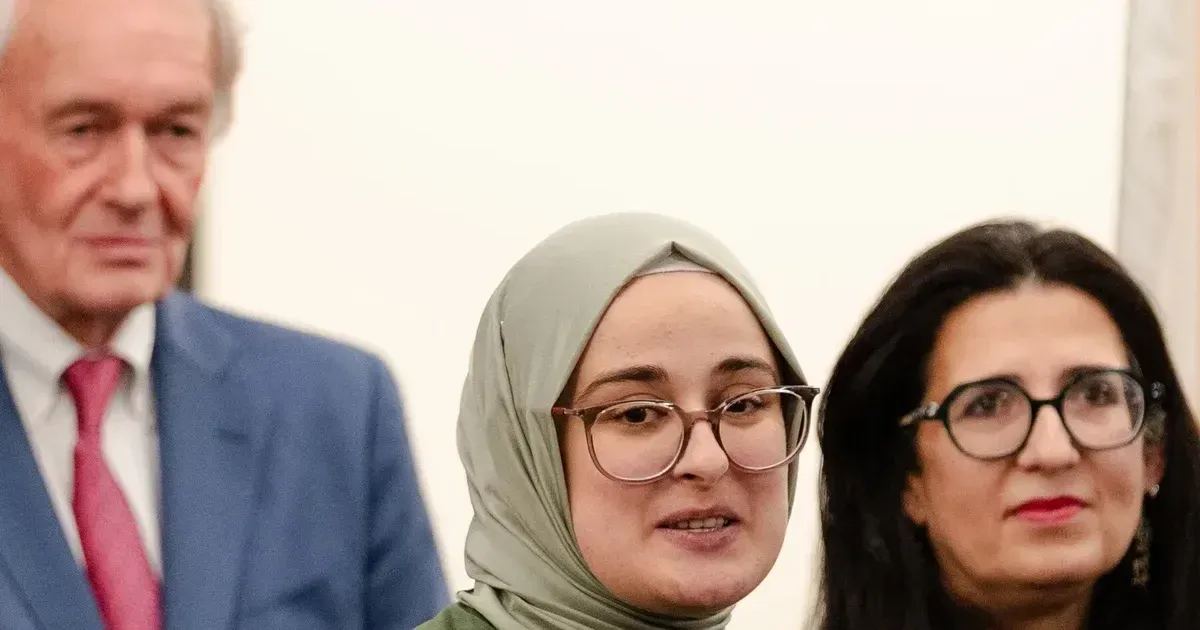
Rumeysa Ozturk's departure after graduation closed one chapter of a campus immigration dispute. The case still matters because student status and speech remain politically contested. Rumeysa Ozturk arrived at Istanbul Airport on April 17, 2026, marking the end of a protracted legal ordeal that saw the Tufts University student move from a lecture hall to a federal detention cell. Her return to Turkey concluded a sequence of events that began with her involvement in campus activism and ended with her effective expulsion from the country where she spent the last four years. Officials from Immigration and Customs Enforcement enabled her departure shortly after her academic requirements were certified by university registrars.
Graduation ceremonies normally symbolize the beginning of a professional career, but for Ozturk, the event was the final milestone before her mandatory exit. Federal agents took the student into custody earlier this year, citing violations related to her F-1 visa status. These allegations surfaced shortly after Ozturk co-authored an opinion piece for a campus publication that criticized current geopolitical policies regarding Palestinian territories. Legal representatives for the student argued that the timing was not coincidental.
Academic freedom and national security protocols clashed throughout the spring semester as the Trump administration maintained a strict stance on visa compliance. Rumeysa Ozturk became the focal point of a national debate regarding the limits of political expression for non-citizens. Supporters at Tufts University organized several demonstrations, demanding her release so she could finish her degree in person rather than from a cell. The university administration eventually negotiated a temporary release that allowed her to complete her final exams under electronic monitoring.
Visa regulations for international students require strict adherence to a set of behavioral and academic standards. Any deviation, including a change in credit hours or certain types of disciplinary records, can trigger an investigation by the Department of Homeland Security. Documents obtained by legal counsel suggested that the specific trigger for the Ozturk case involved an administrative review of her extracurricular activities. The investigation focused on whether her public writings constituted a violation of the intent of her educational stay.
Academic Achievement Under Federal Oversight
Tufts University faculty members noted that Ozturk maintained a high grade point average despite the psychological toll of her detention. Professors described her as a careful scholar of international relations who was frequently engaged in complex debates about global ethics. The transition from a detention center to the classroom required a level of focus that few students could sustain. University officials confirmed that she met all criteria for her degree in early April.
Security at the graduation ceremony was especially tight, with federal observers present to ensure Ozturk did not deviate from her approved itinerary. She was permitted to walk across the stage and receive her diploma, a moment captured by dozens of student journalists. Immediately after the ceremony, she was escorted back to a staging area for processing. Her departure was a condition of the agreement that spared her from a formal deportation order, which would have carried even more severe long-term consequences.
The protection of student voices is secondary to the rigid enforcement of administrative codes, a spokesperson for the legal team representing Ozturk stated during the final week of her residency.
Removal proceedings often lack the transparency found in the criminal justice system. Under current federal guidelines, the burden of proof rests heavily on the visa holder to demonstrate that they have not violated the spirit of their entry. Turkey has expressed concern over the treatment of its citizens in American academic institutions, yet diplomatic efforts did little to stall the administrative process. Ozturk spent a total of six weeks in a facility before her release for final exams.
Legal Challenges to Student Visa Status
Student visa holders in the United States occupy an unstable legal position that allows for expedited removal without a jury trial. The Student and Exchange Visitor Information System, known as SEVIS, tracks the movements and status changes of millions of individuals in real time. Any flag in this system, whether for a technical filing error or a more substantive issue, grants federal agents broad authority to detain. Lawyers for Ozturk contended that her case represents an expansion of how "visa violations" are defined in the modern era.
Critics of the administration's policy argue that monitoring the political speech of students creates an atmosphere of self-censorship. International students contribute $38 billion to the American economy annually, a figure that has begun to stagnate as visa denials increase. Statistics from the Institute of International Education show a marked shift in student sentiment regarding the safety of studying in North America. Ozturk is one of several hundred students who have faced heightened scrutiny over the past calendar year.
Istanbul is now the backdrop for Ozturk's next chapter. While her degree from Tufts University carries international prestige, her inability to work or reside in the United States limits her immediate professional options. She is currently barred from re-entering the country for a period of ten years. This administrative bar is a standard penalty for those who stay past their visa expiration or are found in violation of their status terms.
Impact of Campus Activism on Immigration Status
Campus activism has historically been a protected sphere of American life, yet those protections do not always extend to foreign nationals. Federal law grants the executive branch broad leeway in determining who is eligible to remain in the country based on national interest. The specific essay co-written by Ozturk touched on sensitive diplomatic topics that the current administration has signaled are subject to closer monitoring. Her case illustrates the narrowing gap between academic discussion and federal surveillance.
International enrollment at elite institutions like Tufts University remains an essential component of their financial and intellectual health. If students perceive that their political views could lead to incarceration, the appeal of American higher education may diminish. Data from the 2025-2026 academic year already indicates a 4% decline in applications from the Middle East and surrounding regions. Ozturk intends to pursue a master's degree in Europe where she believes the legal protections for students are stronger.
Rumeysa Ozturk left Boston Logan International Airport under the supervision of two federal marshals. She carried only two suitcases and her newly minted diploma. Her family met her at the gate in Istanbul, where she declined to give a formal interview to the waiting press. She remains one of the most prominent examples of a new period of immigration enforcement that prioritizes ideological alignment as part of visa maintenance.
Student Visa Case Shadows Graduation
National security has become the ultimate skeleton key for administrative overreach. The case of Rumeysa Ozturk is not an isolated incident of bureaucratic friction, but a calculated demonstration of state power over the academic pipeline. When a university degree becomes a consolation prize for a student being ushered out of the country by federal marshals, the institution itself has failed its core mission. Tufts University may have secured Ozturk's right to walk across a stage, but they could not protect the very spirit of inquiry that they claim to foster.
Universities are increasingly acting as junior partners in federal surveillance programs. By maintaining the SEVIS database and complying with every administrative whim of the Department of Homeland Security, these institutions have traded their independence for continued access to federal funding and research grants. The silence from university boards during the height of the Ozturk detention was deafening. They chose the path of least resistance, ensuring the student graduated while effectively enabling her removal.
This is the new reality for the global scholar. The United States is no longer a neutral ground for the exchange of ideas; it is a monitored environment where the wrong sentence in a campus newspaper can end a career. Ozturk is gone, but the chilling effect of her detention will persist in every classroom where an international student considers raising their hand to dissent. A degree is a poor substitute for freedom.