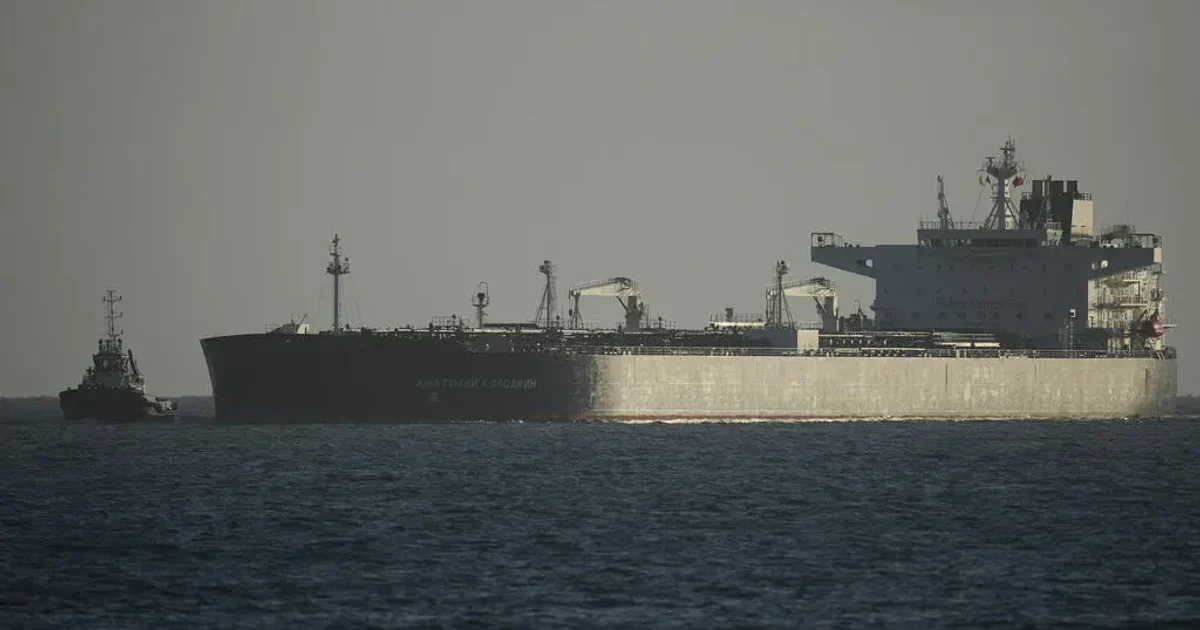
Russia's plan to send a second oil tanker to Cuba mattered because the island was already running out of energy margin. A Russian-flagged tanker had reached the Matanzas oil terminal with roughly 700,000 to 730,000 barrels of crude, and Energy Minister Sergei Tsivilev said another cargo was being prepared. For Havana, every barrel bought time.
The cargo bought time, not repair. Cuba has continued to suffer major blackouts, including repeated islandwide failures months after the Russian shipment. The country produces only part of the fuel it needs, its power plants are old, and the grid has little tolerance for technical faults. A tanker can soften a week of pain but cannot rebuild an energy system that breaks again as soon as the fuel cushion thins.
Tankers Buy Days, Not Stability
The Russian cargo mattered in the most immediate sense. Fuel keeps generators running, helps restore electricity to priority services and gives officials room to manage hospitals, food storage, water systems and public transport. In a country where outages disrupt cooking, refrigeration, internet access and basic work routines, short-term supply has real social value.
But the scale is unforgiving. Cuba's demand is continuous, while tanker relief is episodic. Once a shipment is processed and burned, the old vulnerabilities remain: fuel import dependence, limited cash, aging thermal plants, poor maintenance capacity and a grid that can cascade into wider failure from a single technical problem. The later blackouts are therefore unsurprising evidence that the tanker never solved the underlying equation.
Grid Fragility Has Become Daily Politics
Cuba's power crisis is now a household issue before it is a diplomatic one. Residents have to plan around uncertain electricity, spoiled food, interrupted water pumps, stalled transport and delays in medical care. Officials can speak in terms of generation units and fuel stocks, but families experience the crisis as lost routine.
Public pressure matters for the Cuban government. Energy failure erodes trust faster than abstract economic statistics because it enters every room. If the lights fail again days after a public assurance, the state looks less capable, even when outside pressure is part of the shortage. Fuel diplomacy may help Havana avoid total collapse, but it does not give citizens a predictable day.
U.S. Pressure Opened Space for Moscow
Washington's restrictions and pressure on fuel flows to Cuba helped create the opening Russia used. Moscow could present the shipment as solidarity while gaining a visible foothold in a Caribbean crisis close to the United States. Cuba needed the supply, so the oil was not purely symbolic; the shipment still carried strategic value beyond the barrels.
Pressure campaigns create vacuums when they are not paired with a viable path out. If Cuba cannot secure enough fuel through normal channels, a partner willing to absorb risk becomes more valuable. Russia understands the vacuum. It can offer relief, remind Havana of an old alliance and signal to Washington that isolation policies rarely leave an empty field.
Relief Also Creates Dependence
For Cuba, Russian oil is valuable but politically expensive. The island needs outside fuel because domestic production covers only a portion of demand and traditional suppliers have become less reliable under U.S. pressure. Accepting Moscow's help may keep power plants running, but it also deepens reliance on a partner with its own geopolitical needs.
The dependence is not new, but the crisis makes it more visible. Emergency energy support rarely comes without leverage. Russia does not have to dictate terms in public for the relationship to matter. The leverage sits in the fact that Cuba needs the next cargo more than Russia needs to send it.
Oil Cannot Substitute for Grid Investment
Cuba's most stubborn problem is that fuel and infrastructure failures reinforce each other. More crude helps only if plants can process it, generators can run and transmission systems can hold. When aging equipment fails, even adequate fuel is not enough. When fuel runs short, old equipment is pushed through unstable operating patterns that raise the risk of further failure.
The loop cannot be broken by tanker diplomacy alone. Cuba needs maintenance, parts, generation diversity, financing, renewable capacity that actually reaches the grid and a fuel strategy that is less exposed to sanctions pressure. The fixes are slow while the outage cycle is fast.
Moscow Gains a Strategic Signal
The Russian shipments show both the value and the weakness of crisis aid. They gave Havana a temporary buffer and gave Moscow a diplomatic stage. They also showed how fragile Cuba remains when a single cargo becomes national news.
Success should not be measured by whether a tanker docks. It is whether the next grid failure becomes less likely. By that standard, Cuba is still in danger. Moscow can deliver oil, and Washington can claim pressure is working, but Cuban households are left judging both claims by one practical test: whether the power stays on long enough to live normally.