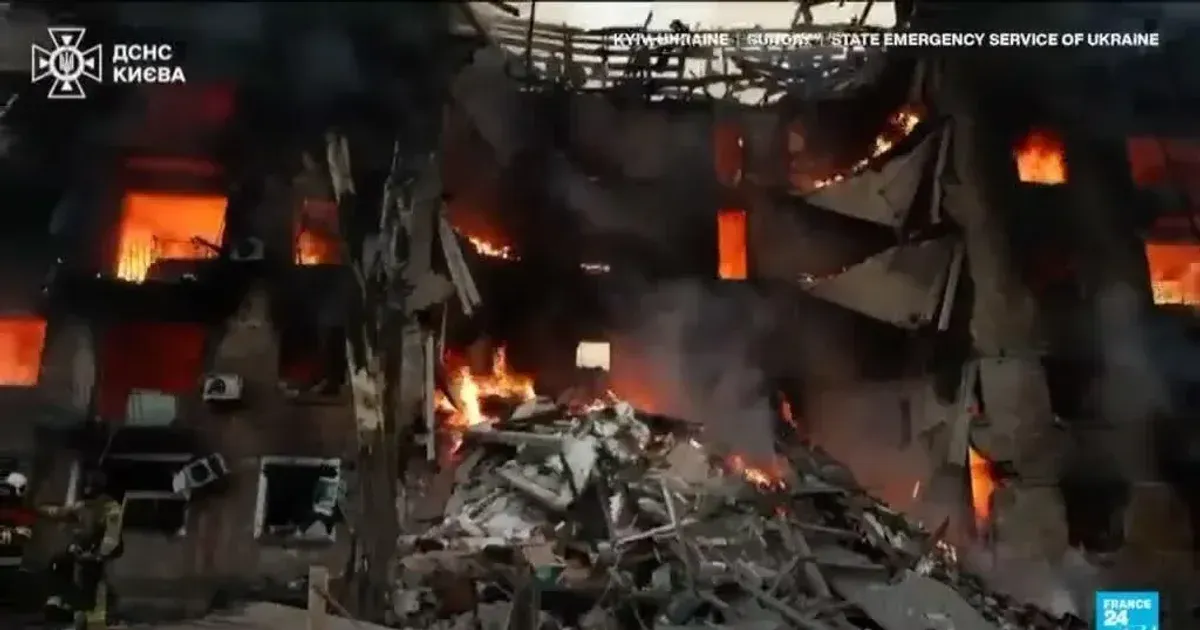
Russia deployed its Oreshnik hypersonic missile during a large overnight bombardment of Kyiv, adding a more advanced weapon to a strike that already combined ballistic fire and drones. The Oreshnik strike added another layer of escalation to the overnight pressure on Kyiv. It also forced Ukrainian officials to explain a weapon profile many civilians had only heard about in warnings. Emergency responders confirmed the deaths of at least four people after the May 24, 2026, assault. Preliminary reports from the scene described damage to residential areas and critical infrastructure as crews worked through the morning.
The bombardment tested the capital's defense architecture by forcing Ukrainian crews to sort high-speed missiles from slower drones in the same window. Military analysts said the strike involved a class of weaponry designed to evade conventional interceptors at high velocity. Kyiv emergency services confirmed that the death toll reached four by dawn, while local hospitals treated civilians injured by blast pressure, debris and shattered glass.
Investigators recovered wreckage from the Oreshnik system across several districts. Unlike standard cruise missiles, the ballistic units travel at several times the speed of sound, reducing the reaction time for air defense batteries. Local authorities in the surrounding region reported that the kinetic energy of the impacts caused secondary fires in industrial zones. Witnesses described the sound of the missile impact as distinct from the drone explosions that have characterized much of the war.
Technical Escalation Through Oreshnik Deployment
Ballistic technology has taken a central role in the Kremlin's current strategy. Oreshnik missiles operate on a flight path that complicates tracking by traditional radar systems. Such hardware allows Russia to threaten hardened targets while maintaining a higher probability of penetration. Military records and battlefield reporting suggest that these weapons are also being used to pressure European neighbors by demonstrating a capability that can bypass existing shield technologies.
Ukrainian defense sources said the mixture of high-speed ballistic fire and slow-moving drones forced their systems to prioritize targets under extreme duress. While many drones were reportedly downed, the volume of incoming fire allowed some high-speed projectiles to reach their coordinates. Engineering teams are analyzing metal fragments found at impact sites to determine the specific variant used in the strike. Those findings will likely influence future defensive purchases across the continent.
Casualties and Urban Impact in the Capital
Residential sectors bore the brunt of the collateral damage during the overnight barrage. Recovery crews worked through the early morning hours to extract survivors from a partially collapsed apartment block. Hospitals in the capital reported treating injuries related to flying glass and structural failure. Local government officials arranged temporary housing for families displaced by the fires.
Kyiv residents spent several hours in underground shelters as sirens remained active until daybreak. Casualties included at least one minor, according to police reports filed Sunday morning. Security cordons stayed in place around the primary impact craters to allow forensic investigation. Officials also restricted public access to several sites because unexploded drone components were still being cleared.
Infrastructure repair crews began restoring power to affected districts by late morning. The coordination of the strike suggested a high level of planning intended to maximize pressure on the capital's civilian routines as well as its defense systems. For residents, the practical effect was familiar: another night underground, another morning of damaged homes, and another round of uncertainty over when the next alert would sound.
European Response and Drone Warfare Claims
French President Emmanuel Macron, EU foreign policy chief Kaja Kallas and German officials condemned the use of the Oreshnik system. European officials characterized the strike as an escalation that raises new questions for air defense cooperation within the bloc. Diplomatic channels in Paris and Berlin expressed concern over the technological leap represented by the deployment of hypersonic ballistic assets. International observers also noted that the timing coincided with high-level security discussions in Brussels.
Foreign ministries in several neighboring countries requested urgent briefings on the missile's capabilities. Berlin cited the threat to regional stability caused by weapons that can strike European capitals with limited warning. The French government indicated that it would increase support for Ukrainian air defense systems in the coming months. These reactions show how one strike on Kyiv can quickly become a wider European procurement and deterrence issue.
Separate reports also indicate that Moscow has developed methods to seize control of Ukrainian-designed drones while they are in flight. This kind of electronic interference could allow Russian forces to redirect drones toward unintended targets or neutralize them before they reach planned coordinates. The ability to subvert autonomous weapons in midair complicates the battlefield for both sides and adds another layer of uncertainty to an already crowded aerial environment.
What the Strike Changes
The introduction of Oreshnik into active combat operations challenges the assumptions behind current Western air defense planning. Most existing systems were designed to intercept subsonic cruise missiles or more predictable ballistic threats. The high-velocity and potentially maneuvering nature of hypersonic weapons creates a gap in the security umbrella covering Ukraine and parts of Eastern Europe. The strike also demonstrates that the Kremlin is willing to spend expensive, high-end munitions for political and psychological impact.
Strategic planners must now account for two related problems: faster missiles and more contested drone control. If Ukrainian assets can be disrupted or redirected in real time, reliance on low-cost autonomous swarms will require stronger encryption and electronic hardening. Future investments may shift toward next-generation radar, electronic warfare protection and interceptors built for high-speed ballistic profiles. The immediate message from Kyiv is clear enough: the air war is becoming more technical, more expensive and more dangerous for civilians far from the front. Ukrainian officials will also use the strike to press allies for faster air-defense deliveries. Air-defense commanders will now compare debris patterns with earlier Russian missile salvos.