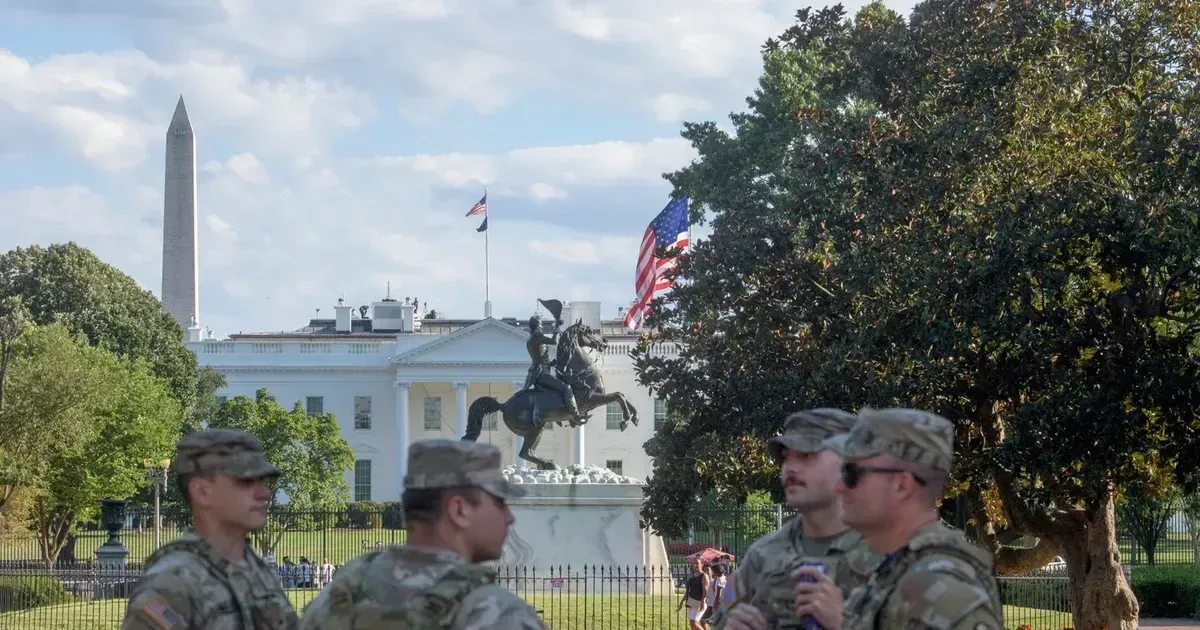
The overnight report triggered a security response before the public had details. Investigators first had to establish proximity and intent. The location made the report urgent because Lafayette Park sits directly across from the White House perimeter. Officers treated the area as both a public square and a sensitive security boundary. Secret Service agents launched the investigation on April 5, 2026, after reports of gunfire prompted officers to cordon off part of the area and search for evidence.
Investigation efforts began within minutes of the first report, with Uniformed Division officers scouring the dense vegetation and monuments of the park. Reports of gunfire in such a high-security zone usually trigger a sequence of automated defense protocols, including the locking down of all executive exits and the activation of thermal surveillance arrays. While various witnesses in the area reported hearing the discharge of a firearm, the darkness and the sprawling layout of the park provided enough cover for the perpetrator to evade the initial dragnet.
Lafayette Park has a complex security profile due to its proximity to the North Portico. Security sensors, including acoustic gunshot detection systems known to be installed throughout the District of Columbia, likely recorded the precise timing and location of the shots. Agency officials confirmed that a thorough search of the park and its surrounding sidewalks yielded no immediate suspect. Personnel remained on the scene for several hours to collect potential ballistic evidence and review footage from the hundreds of cameras that monitor the perimeter of the 1600 Pennsylvania Avenue complex.
Overnight Security Response in Lafayette Park
Officers from the Secret Service conducted a methodical grid search of the park throughout the early morning hours. Search teams looked for spent shell casings, impact marks on the historic statues, or discarded weapons that might lead to a forensic breakthrough. Lafayette Park contains several influential bronze statues of Revolutionary War heroes, including the large equestrian monument of Andrew Jackson, which has often been a focal point for security incidents in the past.
Metropolitan Police Department units provided support to the federal agents by closing off nearby streets such as H Street and 16th Street. Disrupting the flow of traffic in the heart of Washington D.C. allowed investigators to operate without the interference of early morning commuters. National Park Police also assisted in the operation, given their jurisdiction over the federal parkland that sits directly across from the presidential residence. Despite this coordinated effort, the individual or individuals responsible for the gunfire remained at large as sunrise approached.
"No injuries were reported and no suspect was found after a search of the park and the surrounding area after midnight," the US Secret Service stated in an official announcement.
Ballistic evidence collection remains a priority for the forensic teams assigned to the case. Evidence technicians were seen using metal detectors near the northern fence line of the White House, checking for any projectiles that might have traveled toward the mansion. The distance from the center of Lafayette Park to the North Portico is roughly 200 yards, a range that puts the residence well within the reach of most modern handguns and rifles. Records from the agency indicate that the perimeter was never breached during the incident, and the residential quarters of the First Family were never in direct danger.
Secret Service Search Operations and Protocol
Security at the executive mansion was sharply upgraded in 2021 with the installation of a taller, stronger fence designed to prevent intruders from scaling the barrier. Current protocols for gunfire incidents involve an immediate assessment of the path of the shots to determine if the White House was the intended target. In this case, the agency has not yet confirmed if any buildings were struck by the rounds fired. Secret Service spokespeople have remained tight-lipped about the specific number of shots heard or the caliber of the weapon used.
Past incidents provide a framework for how such investigations unfold. On November 11, 2011, Oscar Ortega-Hernandez fired a semi-automatic rifle at the White House from a vehicle on Constitution Avenue, striking the glass of the residential floor. That event led to enormous reforms in how the agency monitors the surrounding streets. Today, the density of electronic surveillance around Lafayette Park is among the highest in the world, making the escape of a suspect a meaningful point of concern for security analysts.
Patrols intensified in the hours following the shots as the agency sought to determine if the event was an isolated criminal act or a coordinated attempt to test response times. Security experts often look for patterns in such incidents, noting that gunfire in a restricted zone is frequently a precursor to more aggressive actions. Every person found in the vicinity of the park after the shots was stopped and questioned, though none were detained as suspects. The search area eventually expanded to include the entrances of the Eisenhower Executive Office Building and the nearby Treasury Building.
Past Threats Shape White House Security
Pennsylvania Avenue has been closed to vehicular traffic since the 1995 Oklahoma City bombing, creating a pedestrian buffer zone that is easier for the Secret Service to monitor. This buffer zone, however, does not eliminate the threat of long-range small arms fire. Recent upgrades to the White House glass and structural reinforcements are specifically designed to reduce the risks posed by such incidents. Beyond the physical barriers, the agency relies heavily on a network of undercover agents who blend into the crowds of tourists and protesters who frequent the North Lawn area.
Law enforcement officials are currently reviewing license plate reader data from the streets surrounding the White House to identify any vehicles that fled the area at high speed. While the park itself is pedestrian, the surrounding intersections are constantly monitored by a vast array of digital eyes. Digital forensics experts are also scouring social media for any videos or posts that might have been uploaded by witnesses who were in the park at the time of the shooting. The investigation continues as a high-priority matter for the Washington Field Office.
Public access to Lafayette Park was partially restored by midday on April 5, 2026, though a heavy police presence stayed behind to monitor the crowds. Pedestrians were allowed to pass through the park, but certain areas remained cordoned off with yellow tape where evidence technicians were still working. The agency has not issued any specific alerts for the public, suggesting that they do not believe there is an ongoing threat to the city. No further shots were heard during the remainder of the night.