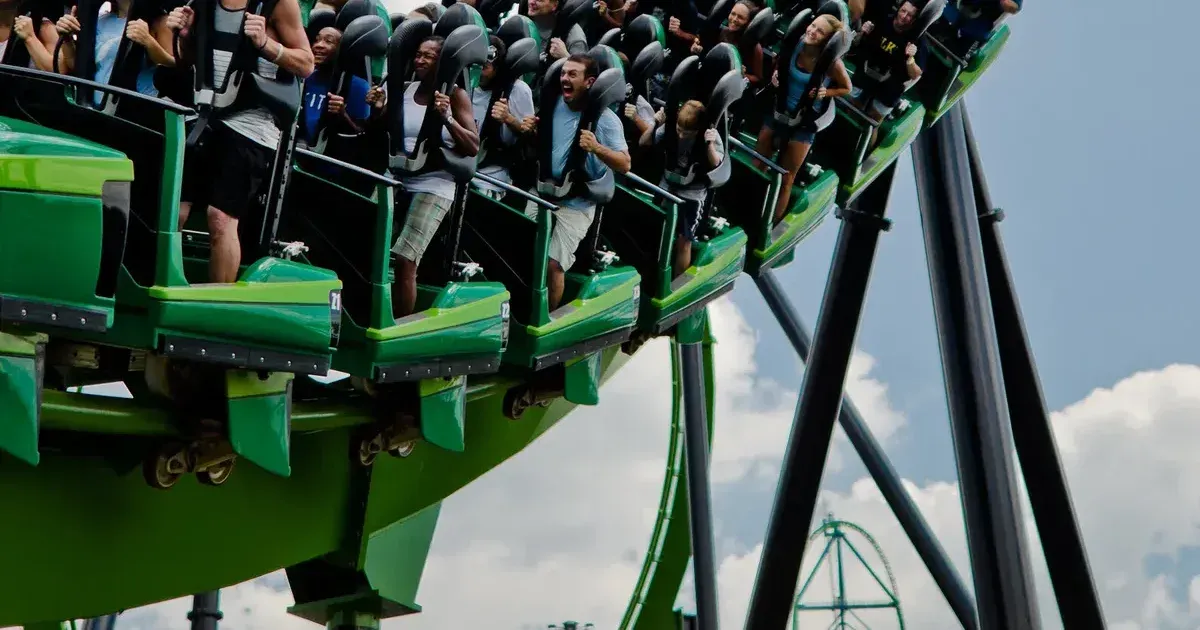
Six Flags Entertainment Corporation announced a series of operational adjustments designed to win back middle-income families who have migrated toward niche theme parks and Disney properties. Executives identified a widening gap between their regional park model and the premium experiences offered by national competitors. The shift has forced the company to address pricing, maintenance complaints and family perceptions together. Cedar Fair integration adds scale, but it also raises expectations for visible improvements. The April 5, 2026 update showed how difficult that turnaround could become. Market share for regional theme parks continues to erode. Internal attendance figures from the previous fiscal year show a consistent decline in the under-ten demographic. Analysts from Cedar Fair, which completed its merger with the company in late 2024, reported that family-tier season pass renewals fell by 14 percent across their portfolio. Maintenance costs for legacy attractions have simultaneously increased as several known wooden roller coasters reached an operational lifespan of 40 years. Investors reacted to these reports by demanding a clearer plan for capital expenditures. Years of underinvestment in non-ride amenities like dining quality and shade structures have pushed families toward higher-priced but more comfortable alternatives. Revenue per guest rose slightly due to aggressive pricing, but the total volume of visitors failed to meet the targets set during the merger negotiations.
Cedar Fair Merger Impacts Regional Operations
Consolidation within the industry was supposed to create a powerhouse capable of challenging the dominance of coastal destination parks. Instead, the $8 billion merger between the two largest regional operators created a debt-heavy entity that must now prioritize interest payments over park improvements. Management originally promised 600 million dollars in annual efficiencies, but bureaucratic friction between the legacy Texas and Ohio corporate cultures slowed the integration of digital ticketing systems.
Families often find themselves caught in the middle of these technical transitions. A family of four visiting a property in Georgia or New Jersey now encounters a pricing structure that mirrors a premium destination without the accompanying level of service. Standard parking fees at major locations now often exceed 40 dollars.
One executive at the combined firm admitted that the core mission drifted too far from the local visitor. Seasonal labor shortages have led to the closure of mid-tier attractions and food stalls during peak summer weekdays. Guest satisfaction scores reached a five-year low in the third quarter of 2025.
Infrastructure Decay Hurts the Guest Experience
Physical assets at several flagship locations show visible signs of neglect. While Disney invests billions in narrative-driven attractions, the regional model relies on the placement of enormous steel structures in vast parking lots. This approach no longer satisfies a generation of parents who expect air-conditioned queues and high-quality food options. Peeling paint and broken animatronics were cited as top complaints in a recent consumer sentiment survey conducted by the International Association of Amusement Parks and Attractions.
Operational reliability became a focal point for the board of directors this spring. Ride downtime at the Great Adventure and Magic Mountain properties averaged 12 percent during the last operating cycle. Parents frequently express frustration on social media when the signature attractions they traveled to experience are closed for unscheduled maintenance.
"Our strategy is simple: we want to be the preferred choice for families who want to have a great time," according to a recent corporate filing from the newly combined Six Flags-Cedar Fair entity.
Capital is being redirected toward smaller, family-oriented rides rather than record-breaking giga-coasters. The company recently announced plans for several new "Kid Flash" racing coasters across four different states. These attractions require a smaller footprint and much lower maintenance budgets than the 300-foot-tall structures that defined the previous decade.
High-Income Competition From Disney and Universal
Competition for the leisure dollar has moved into a more specialized phase. High-income families increasingly opt for the total immersion of Universal Orlando or specialized niche parks like Legoland. These competitors offer a cohesive theme that spans from the hotel room to the dessert menu. The regional model, which relies on a disparate collection of DC Comics and Looney Tunes licenses, struggles to compete with the unified storytelling found in Florida or California.
Universal's upcoming Epic Universe expansion threatens to draw even more traffic away from regional hubs in the Southeast. Market research indicates that families are willing to save for two years for one premium trip to Orlando instead of taking three annual trips to a local park. The perceived value of a 150-dollar day at a world-class destination outweighs the 70-dollar day at a park with limited family amenities.
Debt obligations remain a primary hurdle for any rapid transformation. The combined company carries nearly $11 billion in total liabilities. Every dollar spent on a new carousel or a renovated bathroom is a dollar that cannot be used to pay down the high-interest loans taken out during the 2024 restructuring.
Strategic shifts in the coming months will determine if the regional park can survive as a family destination. Failure to address the basic comfort of the guest will likely result in a permanent shift toward a teen-only demographic. Six Flags must prove it can provide more than adrenaline to justify its rising ticket prices.
Regional Park Pressure
Theme parks once functioned as the egalitarian Town Squares of the American summer. Families from various socioeconomic backgrounds converged on regional hubs for a predictable, affordable escape. That social contract is now broken, and no amount of corporate restructuring can hide that the regional model is physically falling apart.
The regional park is dying because it forgot its middle-class mandate.
Merging with Cedar Fair was an act of survival for a company that had run out of ideas. By consolidating, they created a monopoly in several regional markets, which allowed them to hike prices while simultaneously cutting labor costs and maintenance. This is the private equity strategy applied to roller coasters. They are squeezing the remaining life out of aging assets instead of building something for the next generation of parents who have been trained by Disney to expect excellence. If a family has to pay 100 dollars for a ticket and 45 dollars for parking, they will eventually realize they are being overcharged for a subpar product.
Six Flags is a real estate play disguised as a circus. If the company cannot fix its infrastructure by 2028, expect the most valuable parcels of land to be sold for suburban residential development. Adrenaline is no longer a sustainable business model. Families have checked out.