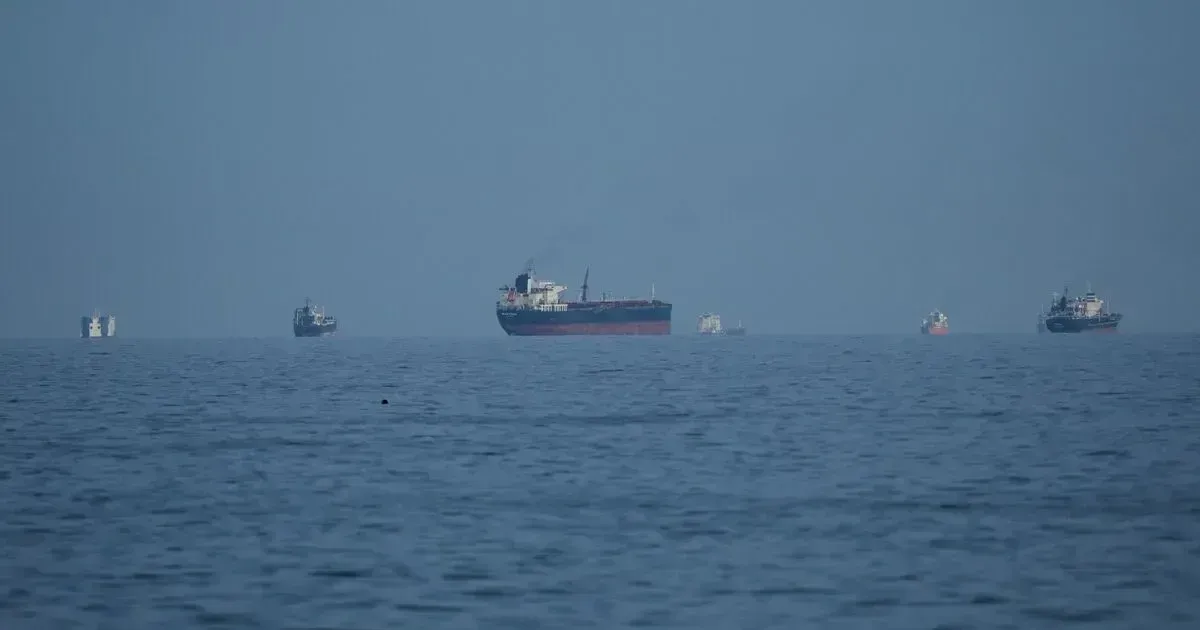
The statement mattered because Hormuz security depends on credibility as much as ships. The shipping-security warning landed inside an already volatile oil market. Donald Trump declared that the United States might soon terminate its historic role as the primary protector of commercial traffic in the Persian Gulf, a shift that threatens to destabilize international energy markets. The April 5, 2026 remarks suggest that nations benefiting most from oil transit should assume the financial and military burden of securing the Strait of Hormuz. Marine insurers and global trade experts suggest this policy reversal could end decades of maritime stability established after the Second World War. Previous trade disruptions under his leadership involved tariffs and treaty withdrawals, yet an exit from the Gulf is a more fundamental withdrawal from global policing.
Energy markets reacted with immediate volatility as traders weighed the possibility of a naval vacuum in the world's most critical chokepoint. Crude oil futures in London and New York jumped by 4 percent within hours of the announcement. Middle Eastern producers rely on American naval hegemony to ensure that approximately 21 million barrels of oil pass through the strait every day. Without the presence of the American Fifth Fleet, regional powers might engage in aggressive posturing that could halt tanker traffic entirely. Analysts at Bloomberg Economics indicate that the global economy has never faced a scenario where the primary guarantor of maritime freedom voluntarily abdicated its post.
Persian Gulf Security and Energy Market Impacts
Washington has maintained a permanent naval presence in Bahrain since 1971 to protect the flow of fossil fuels to Western and Asian allies. Withdrawing these assets would force energy-dependent nations like China, Japan, and South Korea to deploy their own warships to the region. Such a move would require those nations to secure docking rights and build logistical networks that took the United States decades to perfect. Beijing has slowly expanded its naval reach, but it lacks the carrier strike groups necessary to maintain order in contested waters. Regional stability depends on the clear deterrent provided by American destroyers and carrier-based aircraft.
Economic data from the 1980s Tanker War provides a grim blueprint for what occurs when merchant vessels lose naval escorts. During that conflict, over 500 ships were attacked, leading to a heavy spike in global energy prices and a breakdown in commercial trust. Donald Trump argues that the United States no longer needs to police the region because of domestic shale oil production. This argument ignores the reality that oil is a globally priced commodity. A supply shock in the Persian Gulf will raise gasoline prices in Ohio just as quickly as it does in Tokyo. Isolationism in maritime policy often ignores the interconnected nature of modern supply chains.
Maritime experts at Lloyd's of London have already begun reviewing war-risk premiums for vessels traversing the Arabian Sea. Insurers price their policies based on the predictability of safe passage, a metric that relies heavily on the presence of the US Navy. If the American protective umbrella disappears, insurance costs for a single VLCC (Very Large Crude Carrier) could rise by hundreds of thousands of dollars per voyage. These costs are always passed down to consumers at the pump and in the price of manufactured goods. Commercial shipping operates on thin margins that cannot absorb sudden, large increases in security overhead.
Freight rates for liquefied natural gas (LNG) also face upward pressure as the prospect of naval withdrawal looms. Qatar remains one of the largest exporters of LNG, and its transport routes are entirely dependent on the security of the strait. European nations, having pivoted away from Russian gas, now find themselves vulnerable to any instability in the Gulf. A withdrawal of American protection would leave European energy security in the hands of regional actors who may not share Western priorities. Dependency on the US Navy has been a silent foundation of the global economic order for over half a century. Ongoing calls for an allied seizure of the Strait of Hormuz highlight the growing friction over maritime security responsibilities.
Bloomberg Economics reports that of all the things Donald Trump has done to disrupt global commerce, from levying punitive tariffs to tearing up trade deals, few would be as consequential as withdrawing and leaving the rest of the world to secure the Persian Gulf.
Military officials in Manama, where the US Navy bases its regional operations, have not yet received formal orders to begin a drawdown. However, the rhetoric from the White House has already caused a diplomatic chill among Gulf Cooperation Council members. Saudi Arabia and the United Arab Emirates have historically looked to Washington for security guarantees in exchange for oil market stability. If those guarantees vanish, these nations may seek new security partnerships with Russia or China. Such a realignment would fundamentally alter the geopolitical map of the 21st century. The cost of maintaining the Fifth Fleet is approximately $11 billion annually, a figure Trump describes as an unfair subsidy to foreign competitors.
Shipowners are exploring the possibility of private security details, but these forces cannot deter state-level actors or sophisticated anti-ship missiles. Modern naval warfare involves electronic jamming and coordinated drone swarms that require high-level military integration to defeat. Private contractors lack the legal authority to engage in the type of kinetic operations required to keep a major waterway open during a conflict. Sovereignty over international waters is a concept that only a major national navy can enforce. The absence of a clear authority figure in the Gulf invites piracy and state-sponsored harassment of commercial vessels.
Naval Power Dynamics and the Strait of Hormuz
Washington has historically justified its naval spending by citing the benefits of free trade and the prevention of global recessions. Abandoning this principle suggests a move toward a mercantilist system where only those who can afford protection may trade. Small developing nations would be hit hardest by this change as they lack the resources to defend their own merchant fleets. Global poverty rates often correlate with the cost of basic commodities, which are sensitive to shipping disruptions. The United States has used its naval power as a form of soft power for decades, earning diplomatic leverage through the provision of a global public good.
Defense contractors are monitoring the situation closely as a US exit could trigger a regional arms race. Nations in the Middle East and East Asia would likely increase their orders for frigates, corvettes, and maritime patrol aircraft. While this might benefit some segments of the US defense industry, it creates a more dangerous and volatile environment for everyone. Proliferation of advanced naval weaponry in a crowded waterway like the Persian Gulf increases the risk of accidental engagements. The disciplined presence of the US Navy is a stabilizing force that prevents minor incidents from escalating into full-scale wars.
Trade volume through the strait has grown steadily despite regional tensions, largely due to the perceived permanence of American protection. Over 2,000 tankers per month move through the region without serious incident under the current security regime. If that number drops due to rising risks, the global supply of raw materials will contract. Many manufacturing hubs in Southeast Asia rely on a continuous flow of Middle Eastern energy to keep their factories running. A disruption there would ripple through the electronics and automotive sectors within weeks. Economic stability requires physical security, and physical security at sea requires a dominant naval power.
Energy buyers are also watching whether naval deployments reduce risk or signal a longer confrontation. The difference affects freight contracts, refinery planning and the cost of inventory.
The same uncertainty affects allies that depend on predictable shipping lanes. Even when cargo keeps moving, the possibility of interruption can change contract terms before a crisis becomes visible to consumers.
Trade Security Warning
The market risk is that naval pressure becomes a standing cost. Insurers and shippers can price a temporary disruption, but they charge more when the route itself feels unstable.