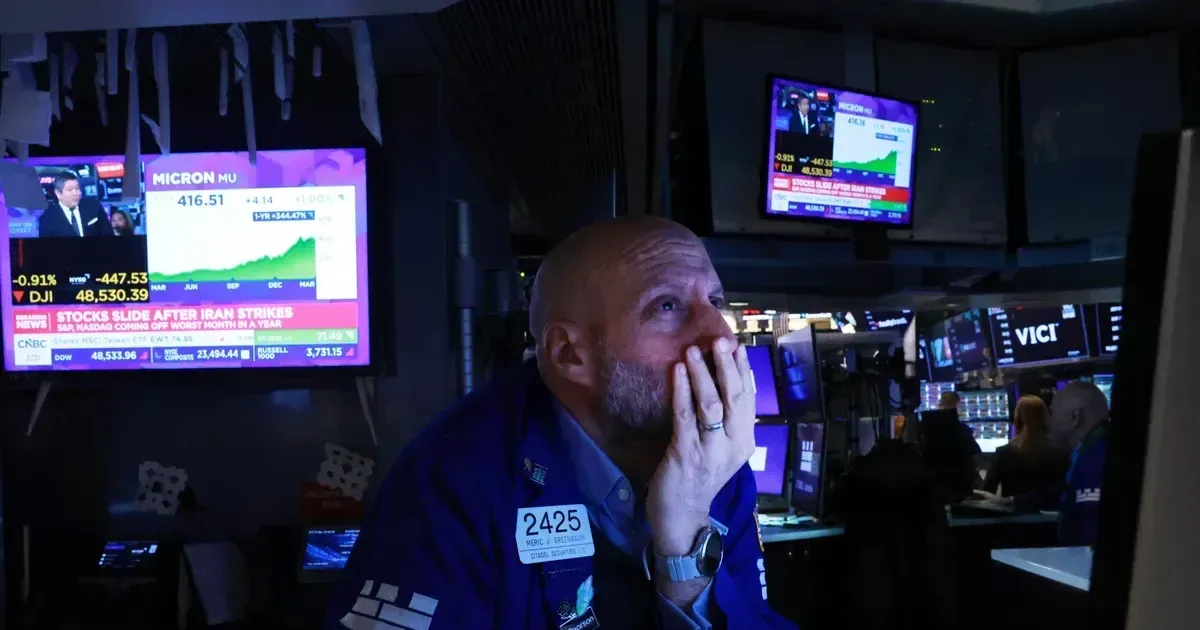
Investors who spent months leaning on technology momentum began rotating toward energy, defense and geopolitical hedges as Iran conflict risk moved to the center of market strategy. Oil volatility changed the discussion around inflation, shipping routes and corporate margins. The market narrative was no longer built around software growth alone. Joe Ciolli analyzed the shift on April 5, 2026, describing a market in which artificial intelligence remained important but no longer dominated every trade. The result was a sharper contest between growth narratives and hard geopolitical risk.
Iranian Conflict Triggers Record Oil Supply Disruptions
Escalation in the Middle East is the primary catalyst for market instability. Since late February, energy markets have entered a phase of extreme sensitivity, reflecting the deepest supply disruption on record. Global shipping routes face constant threats, forcing tankers to take longer, more expensive paths around the Cape of Good Hope. These logistical hurdles have pushed the price of Brent crude to $135 per barrel.
Energy costs are hitting businesses and consumers directly. High fuel prices act as a regressive tax, dampening discretionary spending and complicating the inflation targets set by central banks. Manufacturers are reporting higher input costs for the first time in three quarters. Industrial production in the Midwest and northern Europe is slowing as electricity prices climb. The Iranian military presence in the Strait of Hormuz is the main game for institutional traders right now.
The Iran war is the main game right now and has been since the end of February. We're during the biggest oil disruption in history. The war has rocked markets, stocks, bonds, currencies, and hit businesses and consumers directly. It's having an immediate impact, so it's commanding attention.
Capital is flowing toward defensive assets and commodities. Gold and government bonds are seeing increased inflows as equity risk premiums become harder to justify. Investors are treating the current geopolitical crisis as a real threat to corporate margins across all sectors. Risk models that previously prioritized interest rate cuts are now being adjusted to account for prolonged kinetic conflict. Markets are reacting to physical shortages rather than psychological shifts.
Artificial Intelligence Narrative Takes Secondary Market Position
Long-term enthusiasm for artificial intelligence is taking a breather from its role as the dominant market narrative. While the technology promises to be the defining theme of the decade, its immediate influences on stock prices have diminished. High-growth software companies are finding it difficult to maintain their premiums while the broader economy braces for an energy shock. Investors are questioning if the productivity gains promised by generative models can arrive fast enough to offset rising operational costs.
Tech valuations are stabilizing after a period of intense speculation. Many firms that branded themselves as AI-first during the previous cycle are now facing scrutiny over actual revenue generation. Shareholders are demanding proof of concept instead of just promises of future automation. Enterprise spending on digital transformation is being weighed against the need for cash preservation. This transition marks a cooling period for the sector.
Productivity gains are still the core of the bull case for tech stocks. Analysts believe that AI will eventually boost profit growth across a wide array of industries. Earnings growth continues to be the primary driver of equity performance over a multi-year horizon. Most institutional players expect the labor force to evolve through these technological shifts instead of face a total extinction event. The market is looking for a reshuffling of winners and losers.
Magnificent Seven performance also began tracking labor-market data more closely as investors weighed whether artificial-intelligence enthusiasm could keep outrunning macroeconomic pressure.
Performance among the collection of stocks known as the Magnificent Seven is diverging. Companies with strong hardware moats or huge cash reserves are weathering the storm better than those reliant on advertising or discretionary consumer apps. The labor market is also showing signs of adaptation as firms integrate automated workflows. Initial fears of mass unemployment have been replaced by a more complex reality of skill migration. Corporate leaders are focusing on the efficient use of human capital in a higher-cost environment.
Labor force participation remains steady in key demographics despite the rapid rollout of autonomous tools. Companies are using AI to fill gaps in the workforce instead of to replace existing staff at scale. This trend supports a more resilient consumer base, which in turn provides a floor for the S&P 500. Wage growth has moderated, but it has not collapsed as some bears predicted. The focus has shifted toward the sustainability of these profit margins.
Market participants are watching how these tech giants manage their capital expenditures. Building the infrastructure for the next digital era requires billions in upfront investment during a time of high-interest rates. If the Iranian conflict persists, the cost of financing these projects could become a serious drag on earnings. Debt markets are already pricing in a higher for longer scenario for the federal funds rate. Cash flows are being scrutinized with renewed intensity.
Emerging Analytical Voices Shape Contemporary Investment Strategy
New pockets of influence are emerging as traditional financial media faces increasing competition. Platforms like Substack have become a force for high-level market commentary and investigative analysis. High-profile economists like Paul Krugman and legendary investors such as Michael Burry are using these channels to speak directly to the public. Their insights often provide a counter-narrative to the consensus found in major newsrooms. Individual researchers are gaining followers by focusing on niche data sets.
Information discovery is changing the way retail and institutional investors react to news. Real-time updates from independent analysts often precede official government reports. This decentralized flow of information has shortened the reaction time for market moves. Traders are increasingly looking for alpha in the corners of the internet where specialized expertise is shared without traditional filters. Transparency is increasing as a result of this digital shift.
Ciolli and his team look for these emerging voices to gauge sentiment and find hidden risks. The concentration of intellectual capital on independent platforms is creating a new hierarchy of influences. Traditional gatekeepers no longer hold a monopoly on market-moving insights. The shift in how news is consumed is a permanent part of the modern investment terrain. Data points are now gathered from a wider variety of sources than ever before.
Energy Risk Reprices Tech
Relying on geopolitical strife to explain away the recent stagnation in technology valuations is a convenient but dangerous distraction for modern investors. While the Iranian military maneuvers in the Persian Gulf provide a visible and violent catalyst for the current oil price spike, the underlying issue is the exhaustion of the artificial intelligence hype cycle. The market was already reaching a point of diminishing returns for speculative tech before the first tanker was diverted. The pattern is clear: a collision between the digital future and the fossil-fuel past.
The narrative that the labor force will simply reshuffle instead of face an extinction event is an optimistic fairy tale designed to keep retail capital in the market. Genuine productivity gains from automation have historically resulted in painful periods of structural unemployment that market commentators tend to ignore. When Ciolli suggests that investors believe the labor force will evolve, he is actually describing a desperate hope that consumer demands will not collapse. If the cost of energy stays at these levels, the AI-driven productivity gains will be swallowed by the inflation of physical goods. Strategic positions must now favor physical assets over digital promises. Sell the hype.