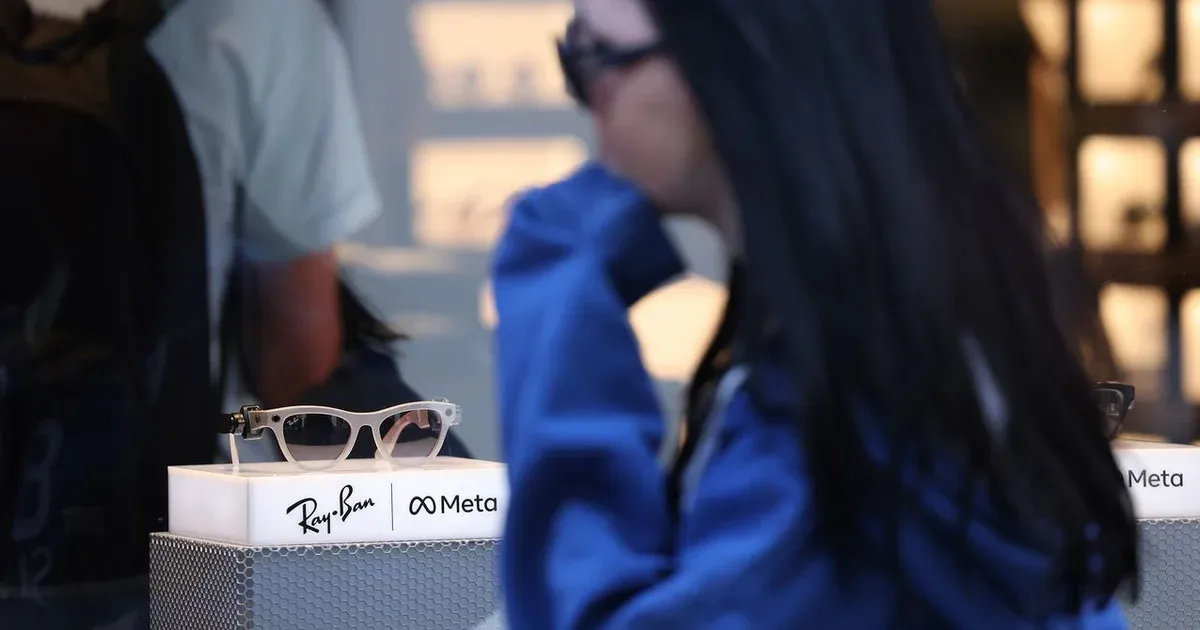
Smart glasses put a camera at eye level while trying to look like ordinary eyewear. That combination creates the product's central privacy conflict: the more successfully the device disappears into a familiar frame, the less information a nearby person has about whether audio, video or images are being captured.
The privacy question was concrete by August 2, 2026: not every wearer records people secretly, but every bystander faces hardware they do not control. A small light may be the only notice available, and its value falls sharply if the owner can cover it or disable it. Privacy therefore depends on more than a manufacturer's stated intent; it depends on a warning that survives the person operating the camera.
WIRED examined that tension as Meta, Google, Samsung and Apple moved at different speeds toward a broader smart-glasses market. Meta's camera-equipped glasses already combine image, audio and video capture, while other designs remove the camera or give owners a physical way to cover it. Those choices show that “smart glasses” is not a single privacy model.
The Bystander Problem Is a Design Problem
A phone camera usually requires a visible gesture: someone takes out a device, aims it and begins recording. Glasses can keep the lens aligned with the wearer's gaze without that motion. Thorin Klosowski of the Electronic Frontier Foundation identified that quiet appearance as the key difference between wearable cameras and the cameras people already carry.
“The fact that they are designed to be innocuous is the biggest difference,” Klosowski said.
Making the hardware unmistakable could improve notice. A brighter indicator or a conspicuous lens housing would tell more people that a camera is present. Yet the history described by WIRED points to a commercial tradeoff. Early camera glasses and Google Glass drew ridicule in part because they looked unusual, while buyers now favor frames that resemble regular eyewear.
That creates opposing design pressures. The market rewards devices that blend in, while meaningful bystander notice requires a signal that stands out. A manufacturer can make the frames subtle and the warning obvious, but only if the indicator remains visible from useful angles and cannot be treated as optional decoration.
Privacy Features Need to Survive the Owner
Meta includes a recording indicator, but users have found ways to bypass earlier safeguards and disable the light. The company later added anti-tamper behavior that can disable the glasses after interference. That sequence matters because it shifts the standard from merely providing a warning to enforcing the warning when the person wearing the device would prefer to hide it.
Software also changes what the camera can infer. Meta developed an optional face-recognition feature called Name Tag, according to WIRED. The code was removed from the company's app after the publication reported on it, and Meta technology chief Andrew Bosworth later confirmed that the feature had existed. A visible light would notify someone about capture; it would not, by itself, explain whether the system was identifying the face in view.
Other products reduce the risk by narrowing the hardware. Even Realities sells glasses without cameras, and Solos offers a shield that can cover its lenses in sensitive settings. Both approaches are legible choices, but they solve different problems. Removing a camera prevents visual collection at the device level. A movable shield works only while it is actually in place, leaving its privacy effect under the wearer's control.
Useful Features Keep the Camera in Demand
The camera remains attractive because it does more than record social video. Wearers can capture a scene without holding a phone, and artificial intelligence can provide live captions for conversation. Meta's work with Be My Eyes uses the camera to help visually impaired people understand and interact with their surroundings. These are concrete benefits, not side effects of surveillance.
Demand makes a camera-free future unlikely to become the only answer. WIRED reported that Meta had sold tens of millions of glasses, while Google and Samsung were expected to enter the category later in the year. Apple was reportedly developing glasses for a possible 2027 arrival and had delayed production to address privacy concerns. Meta had also discussed the possibility of camera-free models, suggesting that the market may split by capability rather than settle on one design.
The useful and invasive functions share the same sensor. A camera that describes a room for someone with impaired vision can also record a stranger who never agreed to appear in a clip. The relevant design question is therefore not whether the lens has legitimate uses. It is which controls remain trustworthy when the interests of wearer and bystander diverge.
The Real Test Is Who Controls the Signal
California lawmakers are considering a measure backed by Consumer Reports specialists Stacey Higginbotham and Justin Brookman. It would set two obligations for record-capable wearables: give people nearby a visible notice and keep the user from shutting that notice off. The combination targets both halves of the problem: notice must exist, and the owner must not be able to remove it.
“Policy needs to come in,” Brookman said.
Such a rule would not make every recording consensual, stop every misuse or reveal what artificial intelligence does after capture. It would establish a minimum observable fact for people nearby: the device is recording. Camera-free frames, physical covers and anti-tamper shutdowns can go further in particular situations, but each depends on who controls the relevant switch.
A privacy-friendly design is therefore better understood as a control chain than as a label. The lens determines what can be collected, the indicator tells bystanders when collection happens, anti-tamper behavior protects that signal and law can make the protection nonoptional. If any link belongs entirely to the wearer, the person being observed still carries a risk they cannot inspect or refuse.