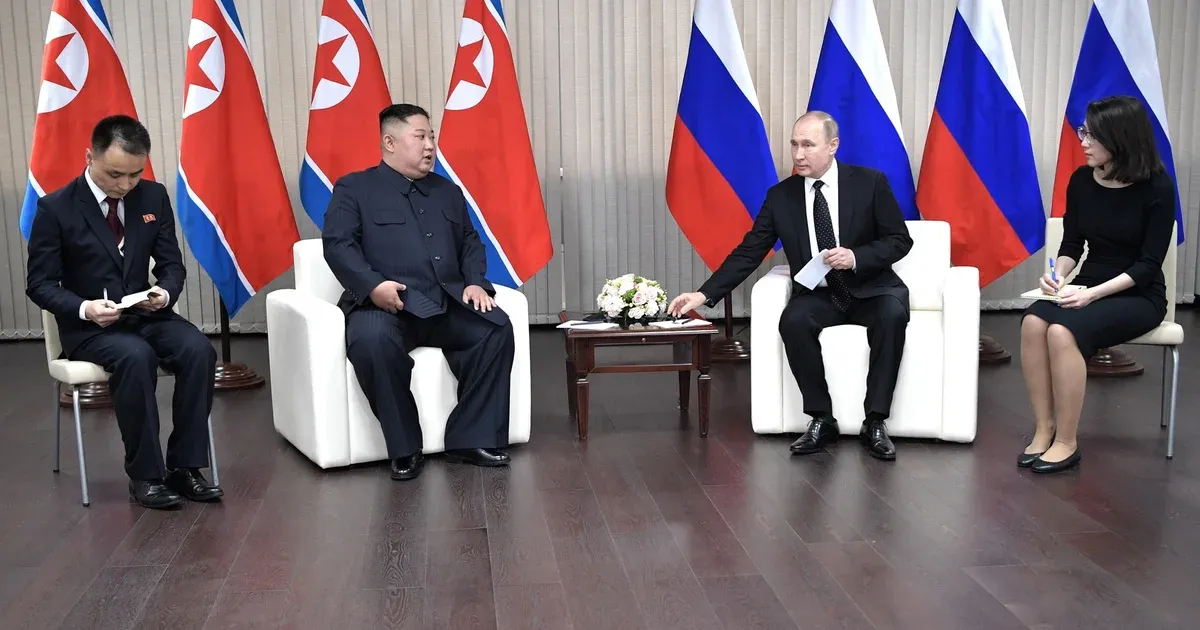
South Korea's pressure on Russia over its defense pact with North Korea is not just a response to one document. It is a fight over whether alliance language that once belonged to the Cold War can become a live military risk again. The 2024 Russia-North Korea strategic partnership brought back mutual-assistance language strong enough to alarm Seoul, Washington and Tokyo.
For South Korea, the danger is ambiguity. A defense pledge does not need to map every battlefield scenario to affect behavior. It can shape how Pyongyang reads a crisis, how Moscow signals support, how allies plan deterrence and how markets price instability on the peninsula. Seoul therefore wants Russia to pay a cost for standing too close to North Korea. Even if Moscow never intends automatic intervention in every clash, the impression of a major-power backstop has operational value for Pyongyang.
The 1961 Shadow Still Matters
North Korea's original security relationship with Moscow was anchored by the 1961 Treaty of Friendship, Cooperation and Mutual Assistance with the Soviet Union. That Cold War pact included a mutual-defense commitment and helped Pyongyang believe it had great-power protection behind its own risk-taking.
After the Soviet collapse, that structure weakened. Russia's later relationship with North Korea became more limited, and the 2000 treaty omitted the automatic military-assistance clause that had made the 1961 arrangement so significant. Seoul remembers that shift because it reduced one layer of uncertainty in any peninsula crisis. A more cautious Russia gave South Korea more room to manage deterrence without assuming Moscow would immediately enter the frame.
The 2024 Pact Reopens the Question
The 2024 comprehensive strategic partnership changed the conversation because it restored strong mutual-assistance language. The treaty was signed in Pyongyang and later ratified, coming into force after both sides completed their procedures. Its core defense clause says the parties will provide military and other assistance if one is put into a state of war by armed invasion, within the framework each side cites under international and domestic law.
The wording is not identical to a detailed war plan. It still matters. Treaties shape assumptions before a shot is fired. North Korea can use the pact to claim it is less isolated. Russia can use it to signal that pressure on Pyongyang may carry wider consequences. South Korea has to plan for the possibility that ambiguity itself becomes part of North Korea's deterrent.
Ukraine Changed Moscow's Incentives
The Ukraine war made North Korea more useful to Moscow. Russia needed ammunition, political support, labor channels, diplomatic defiance and partners willing to absorb sanctions pressure. North Korea needed money, technology, food, fuel, diplomatic visibility and a way to make itself look central again after years of isolation.
The wartime exchange changed the value of the relationship. Moscow may not want a Korean Peninsula war, but it does benefit from a pressure point against the United States and its allies. Pyongyang gives Russia a way to complicate U.S. attention in Asia while Russia complicates NATO's position in Europe. Seoul's problem is that arguments about regional stability may not move a Kremlin that sees instability as leverage.
Seoul's Pressure Has to Raise Costs
South Korea cannot simply persuade Russia to abandon North Korea by saying the pact is dangerous. It has to make the relationship less clean. Raising the cost requires sanctions coordination, intelligence sharing, defense-industrial cooperation with allies, closer work with Ukraine where politically possible, and tighter messaging with Washington and Tokyo.
The goal is not only punishment. It is to reduce the usefulness of the pact. If Russia pays diplomatic, economic and military costs for enabling North Korea, the treaty becomes a heavier instrument to carry. If Moscow can stand beside Pyongyang without consequence, the pact becomes easier to use as a standing threat.
Deterrence Is About Perception Before Action
South Korea is right to treat treaty language as operational, not decorative. Alliances shape calculations before bullets move. A vague promise can be enough to make an adversary bolder or an ally more cautious. It can affect crisis signaling even if no one knows exactly how the clause would be implemented.
Seoul therefore has to communicate both resolve and restraint. Overstating the pact could help Pyongyang by making Russian backing look larger than it is. Understating it could invite North Korea to test the gap. The safer approach is to call out the risk, strengthen deterrence and avoid giving the treaty more mythic power than its text supports.
The Pact Is a Standing Ambiguity Problem
Russia's pact with North Korea may be most dangerous before it is ever activated. It gives Pyongyang a story of protection, gives Moscow a pressure lever, and forces Seoul to plan for contingencies that were less central after the old Soviet-era guarantees faded.
South Korea's task is not to make Moscow suddenly value peninsula stability over its own wartime strategy. That is unlikely. The task is to make the Russia-North Korea alignment costly, bounded and less credible as a blank check. If Seoul and its partners fail to do that, the pact becomes a permanent invitation for North Korea to test how far ambiguity can be pushed.