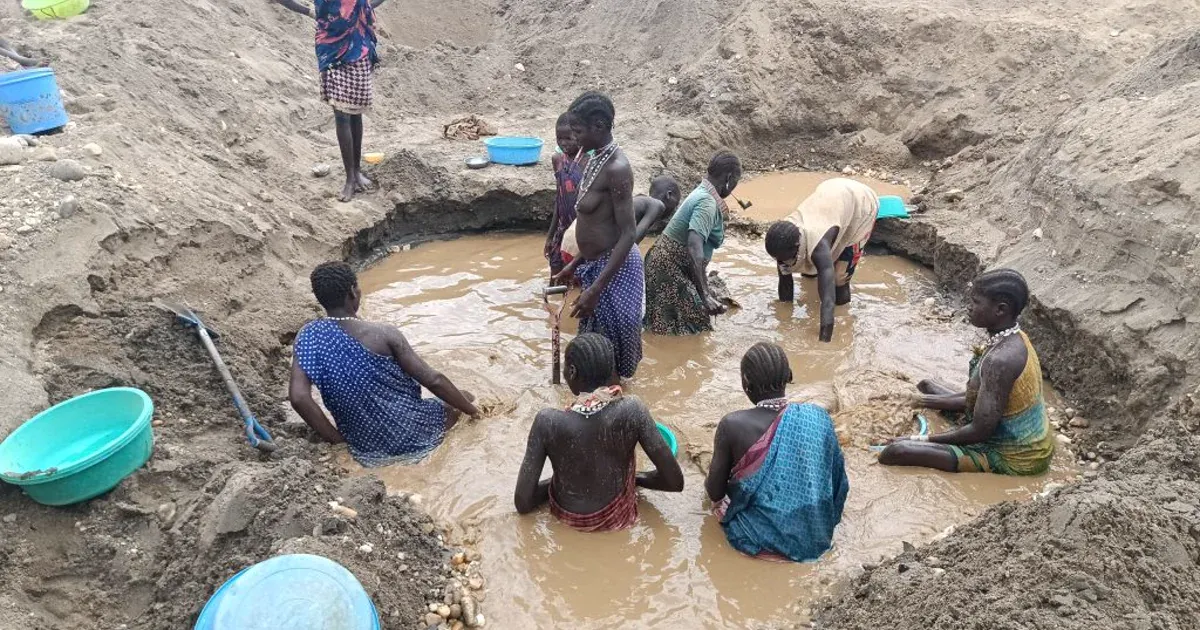
The killing of more than 70 people near a South Sudan gold mine was not only a local security failure. It exposed how quickly an informal resource dispute can become mass violence when authority is contested, armed groups are close and mining sites operate outside reliable protection.
Police said gunmen attacked people after a dispute connected to gold mining near Juba, with reports placing the violence around the Jebel Iraq area. The full chain of responsibility still requires investigation. Caution is essential because South Sudan's political and military environment makes accusation easy and proof harder.
The Death Toll Shows A Security Collapse
The scale of the attack is what turns the case from a mining dispute into a national warning. More than 70 people were reported killed, with others injured or forced to flee. A site that should have been economically valuable became a killing ground.
The proximity to the capital makes the failure more alarming. If a mining area near Juba can be exposed to that level of violence, remote gold sites face an even weaker safety net. Families, small traders and informal workers carry the first cost because they depend on the mine for income but usually have the least power over who controls it.
Gold Sites Are Political Territory
Informal mining sites are never only workplaces in fragile states. They are cash points, labor markets, checkpoints, tax bases and symbols of local authority. Whoever controls access to the pit can influence wages, trade routes, protection payments and community power.
A dispute over gold can escalate faster than an ordinary commercial argument. South Sudan's long conflict left many communities armed and suspicious of central authority. In that setting, a disagreement over land, permits, labor access or proceeds can become a wider confrontation before police or courts can impose order.
Attribution Must Stay Careful
Opposition-linked voices and local actors have made allegations about who was responsible, while official accounts have not produced a clean public record that answers every question. Those allegations should not be treated as settled fact. The central verified point is that unidentified gunmen carried out a deadly attack tied to a mining row.
Restraint is not softness. It is necessary because resource violence in South Sudan often sits inside overlapping rivalries: community disputes, military alignment, local command structures, informal taxation and national political tension. A premature label can obscure the network that made the attack possible.
Calls to formalize mining are often treated as economic reform. In this case, formalization is also a security issue. Clearer licensing, visible site management, accountable local policing and protected transport routes can reduce the space for armed actors to impose their own rules.
But formalization cannot become another extortion channel. If permits, police posts and checkpoints are used mainly to collect money, miners will stay vulnerable and smuggling networks will adapt. The goal has to be protection and traceability, not simply more officials standing between workers and gold.
The Humanitarian Response Cannot Stop At Counting Bodies
Survivors need medical care, families need identification of the dead, and nearby communities need credible assurance before work resumes. If people return to the same site with the same unclear authority and the same armed pressure, the recovery is cosmetic.
The state also has to show that mine security matters before foreign investors, insurers or politically connected operators ask for protection. Local workers should not be treated as disposable until a commercial project becomes large enough to attract international attention.
The Vacuum Is The Real Story
Gold can finance survival and violence at the same time. A mine that feeds families can also attract armed competition when the state cannot regulate access, protect workers or resolve ownership disputes. The death toll is therefore more than a crime statistic. It is evidence of a resource-security vacuum.
The investigation now has to answer two questions at once: who carried out the attack, and why the site was exposed enough for a massacre to happen. The second question may be harder because it points beyond one group of gunmen to the way South Sudan's informal economy is protected, taxed and fought over.