March 20, 2026, marks the day Thailand and the Philippines began enforcing new high-yield tourism quotas to preserve their natural assets. Regional officials reported a surge in luxury bookings as travelers pivot toward remote, ecologically sensitive destinations. These seven wonders highlight a departure from the crowded urban hubs of Bangkok and Manila. Meanwhile, infrastructure spending across the Association of Southeast Asian Nations reached a combined $12.4 billion to support remote access. Private aviation firms in Singapore noted a 40 percent increase in flight requests to secondary airports in the region.

Still, the economic pressure to accommodate millions of visitors persists. Governments are balancing the need for foreign currency with the mandate to protect fragile ecosystems from degradation. Public records indicate that entrance fees for national parks in Indonesia and Malaysia rose by an average of 150 percent this fiscal year. For instance, the komodo dragon habitats saw a price hike that redirected casual tourists toward less sensitive coastal areas. Luxury eco-resorts now dominate the development pipelines in Palawan and Phuket.

Vietnam Infrastructure Drives Luxury Tourism Surge

Vietnam occupies a central position in this transformation with its heavy investment in the Son Doong cave system and the surrounding karst formations of Quang Binh. Logistics firms completed a new regional terminal in early 2026 to enable direct arrivals from Tokyo and London. This development effectively bypassed the congestion of Ho Chi Minh City. In fact, the luxury hospitality sector in the northern mountains now generates more revenue per room than established beachfront properties in Da Nang. Boutique operators offer guided excursions that cost upwards of five thousand dollars per person for a three-day trek. Access remains strictly controlled by the Ministry of Tourism to prevent the erosion of lime-scale structures.

Yet, the rise of Phu Quoc as a high-end hub presents a different set of challenges. Rapid construction of five-star villas has strained the local water supply and waste management systems. And civil engineers are currently retrofitting the island with desalination plants to meet the demands of a projected 2 million annual visitors. By contrast, the nearby Con Dao islands remain largely inaccessible to mass tourism by design. Strict aviation limits ensure that only twenty flights land on the archipelago daily. These constraints have turned the former prison colony into the most exclusive retreat in the South China Sea.

Philippines Conservation Limits Daily Island Visitors

Siargao and Palawan serve as the primary anchors for the Philippines in the new travel hierarchy. Local councils on Siargao implemented a digital permit system on March 20, 2026, to cap daily surfers at exactly one thousand. So, the once-bohemian atmosphere is rapidly shifting toward an enclave for the global elite. Property values in General Luna have tripled since 2023. Investors from the Middle East and Europe are snatching up beachfront lots for private estates rather than commercial hotels. Small-scale fishing communities have transitioned into high-end maritime guides for deep-sea excursions.

International travelers no longer seek the familiar comforts of global hotel chains, opting instead for architectural marvels that disappear into the jungle canopy of Southeast Asia.

In turn, the UNESCO world heritage site of the Underground River in Puerto Princesa has restricted foot traffic to 600 people per day. Strict environmental monitoring stations now dot the coastline to track nitrogen levels in the water. Marine biologists reported a 12 percent recovery in coral density since these limits took effect. Even so, the demand for private boat charters continues to outpace available slots. Booking waitlists for the premier dive sites in Tubbataha Reef now extend eighteen months into the future.

Thailand National Parks Implement Strict Booking Caps

National parks across Thailand are no longer open to the general public without prior authorization. Authorities in Chiang Dao and Khao Sok require visitors to register through a centralized biometric app linked to their passports. For one, this system eliminates the black market for tour tickets that plagued the region in the early 2020s. Revenue from these fees is channeled directly into reforestation projects along the northern border. Scientific data from the Department of National Parks shows a major return of indigenous bird species to areas previously overrun by day-trippers. Park rangers now utilize drone surveillance to enforce the new boundaries.

Separately, the Gulf of Thailand has seen a resurgence in luxury sailing. Smaller islands like Koh Kood and Koh Mak have rejected large-scale resort proposals in favor of low-density glamping sites. Prices for these accommodations often exceed those of the Mandarin Oriental in Bangkok. Nature enthusiasts pay a premium for silence and the absence of motorized watercraft. To that end, the provincial government of Trat banned jet skis and speedboats from entering the protected marine zones surrounding these islands. Local economies are flourishing under this high-margin, low-volume model.

Marine Biodiversity Protection Reshapes Indonesian Diving

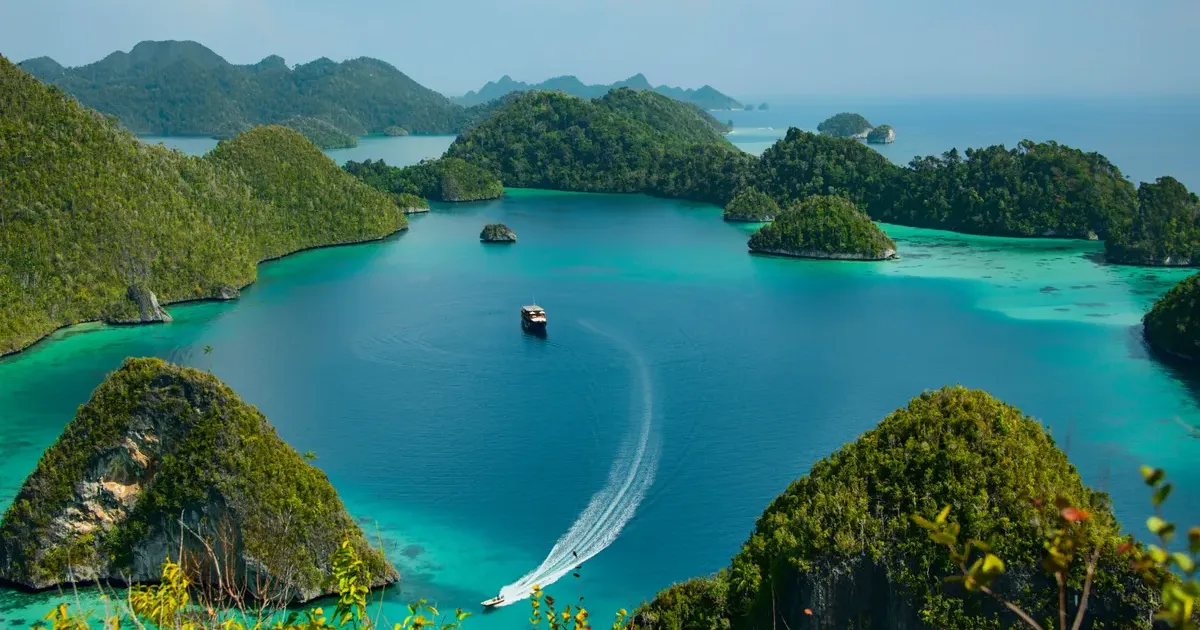
Raja Ampat continues to be the crown jewel of the Coral Triangle, though its price point has effectively excluded the middle class. Marine conservationists in West Papua enforced a new patrol tax that funds a 200-person maritime security force. By doing so, they have nearly eliminated illegal poaching and blast fishing in the archipelago. Divers now pay a mandatory $500 conservation fee upon entry to the park. Large cruise ships are banned from the territory to prevent anchor damage to the reefs. Private yachts must submit their planned routes for approval forty-eight days in advance.

Laos has also entered the luxury sphere with the expansion of the Luang Prabang heritage zone. High-speed rail connections from China have brought a new demographic of wealthy travelers to the Mekong River. Boutique river cruises now feature French-Lao fusion cuisine and onboard spas. History remains the primary draw, but the packaging has become clearly more opulent. Ancient temples are undergoing restoration funded by private donations from international art collectors. The city is still a quiet bastion of colonial architecture and Buddhist tradition.

Cambodia's Koh Rong archipelago is the final addition to the 2026 list of wonders. Developers have avoided the mistakes of Sihanoukville by focusing on sustainable timber construction and solar energy. Most islands in the group are now privately leased to operators who maintain their own conservation teams. Visitors can only arrive via seaplane or private catamaran from the mainland. This isolation preserves the bioluminescent plankton that makes the nighttime waters a global attraction. Each villa on the island of Krabey is required to maintain a certain percentage of original jungle cover.

The Elite Tribune Perspective

Luxury is the only viable future for Southeast Asian tourism if these nations wish to survive their own popularity. The era of the five-dollar hostel and the crowded beach party was a destructive phase that nearly bankrupted the region’s natural capital. Why should Thailand or the Philippines subsidize the vacations of Western backpackers who contribute nothing to the local tax base while leaving behind mountains of plastic? We are seeing a necessary correction where the market finally assigns a true value to the world’s most breathtaking landscapes.

If you cannot afford the five-hundred-dollar entrance fee to Raja Ampat, you have no business being there. Conservation is not a democratic process, and it certainly isn't cheap. The transition to high-yield tourism is a rational defense mechanism against the locust-like consumption of mass-market travel agencies. By pricing out the masses, these governments are successfully curating an audience that respects the environment because they have a financial stake in its exclusivity. It is a harsh reality for the budget traveler, but a win for the planet and the sovereign wealth of the region.

Expect these prices to double again by 2030 as the scarcity of pristine nature becomes the ultimate global commodity.