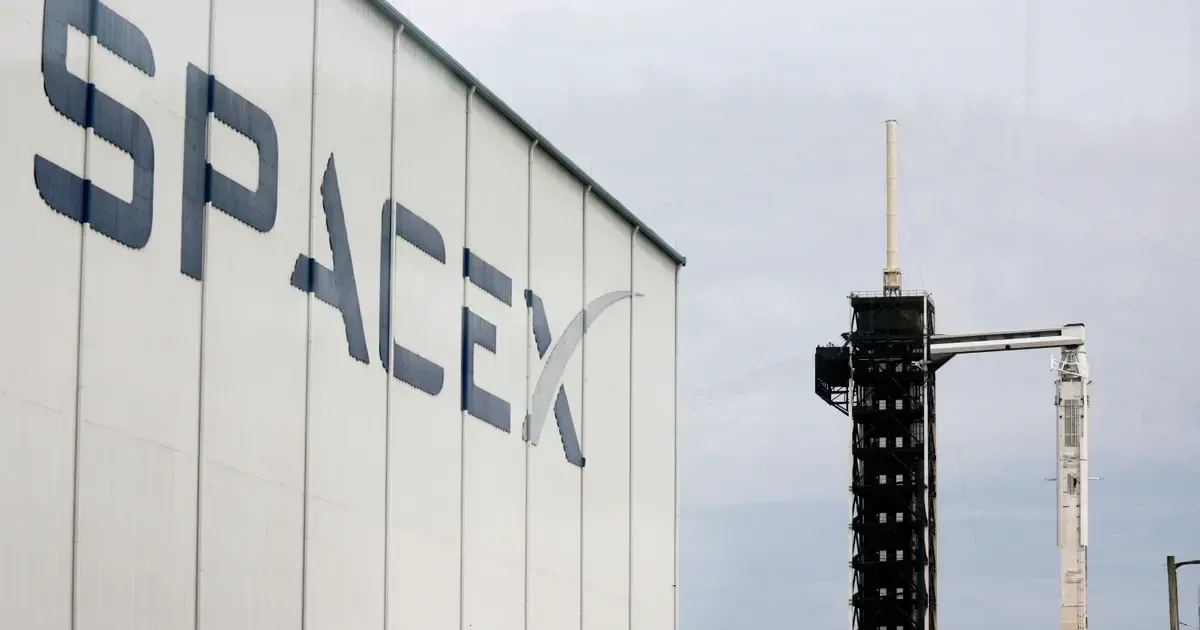
SpaceX disclosed plans to sell shares to the public for the first time, opening the formal path toward what could become the largest initial public offering on record. The filing gave investors a clearer look at the company behind Starlink, reusable launch systems and a widening artificial intelligence strategy. The May 20, 2026 disclosure also turned years of private-market speculation into a document investors can test line by line.
The filing matters because SpaceX has operated for years as one of the most valuable private companies in the world. Public investors now have to judge whether its satellite revenue, launch contracts and research ambitions can support the enormous valuation attached to the company. AP reported that the filing showed operating losses last year despite $18.7 billion in revenue, a detail that complicates the celebratory market narrative around the offering.
That financial split is the core of the investment case. SpaceX can point to real revenue, government demand and a commercial satellite network, but it is still spending at a pace that would alarm investors in a mature industrial company. The IPO pitch therefore has to explain why today's losses are tied to future infrastructure rather than weak operating discipline.
Elon Musk remains central to that narrative. A successful listing could lift the paper value of his SpaceX stake sharply, though claims that the IPO will make him the first trillionaire depend on final pricing, share structure and post-listing market demand. That uncertainty makes cautious language necessary: the filing creates a path to historic wealth, not a guaranteed outcome.
IPO Filing Puts SpaceX Finances Under Scrutiny
Public listing rules will force a level of disclosure that private SpaceX investors did not require. Quarterly reporting, risk factors and audited financial statements will make launch delays, prototype losses and capital spending easier for outsiders to measure. That transparency is useful for investors, but it also exposes the company to market reactions after every technical setback.
The company is asking the market to value two businesses at once. One is a revenue-generating space and satellite operator with government and commercial customers. The other is an expensive research platform trying to advance heavy-lift rockets, autonomous systems and longer-range spaceflight. Investors may like the ambition, but they will still price the risk.
That distinction matters for ordinary buyers who may see the listing as a simple chance to own part of a famous rocket company. A public stock is not a mission poster. It is a claim on future cash flows, and those cash flows must eventually justify the capital being poured into launch facilities, satellites, software and testing failures.
The strongest near-term support comes from Starlink and launch services, which give SpaceX a commercial base that earlier space startups lacked. The harder question is how much public shareholders will tolerate if the company keeps spending heavily on systems that may not generate immediate returns. That tension will shape the IPO roadshow.
Rocket Research and AI Spending Drive the Pitch
The filing arrives as SpaceX is spending heavily on launch infrastructure, spacecraft development and advanced computing. NPR and Axios described the offering as connected to a broader capital push for rocketry and AI, areas that require far deeper financing than ordinary software expansion. Reusable rockets lower some launch costs, but the next generation of vehicles still demands expensive testing and specialized supply chains.
Artificial intelligence is part of that spending story because satellite operations and autonomous flight systems depend on rapid data processing. The company can present AI as operational infrastructure rather than a decorative technology label, but investors will want to know which projects directly improve margins and which remain speculative research.
The filing may also pressure competitors to describe their own automation strategies more clearly. If SpaceX convinces the market that AI lowers mission risk or improves satellite economics, rival aerospace companies will face questions about whether their slower software investment leaves them structurally behind.
Elon Musk also brings a wider governance question to the listing. His business empire spans Tesla, xAI, social media and aerospace, so public shareholders may ask how management attention and related-party interests will be handled. The IPO can raise capital, but it also raises the standard for board oversight.
Wall Street Weighs a Historic Space Listing
A SpaceX listing would reset comparisons across aerospace, defense and high-growth technology. Traditional contractors would be judged against a company that combines launch cadence, satellite services and founder-driven research. Smaller space companies could benefit from renewed investor attention, but they could also be overshadowed by the scale of one dominant listing.
The risk is that scarcity and excitement push buyers to treat the stock as a symbolic bet on the future rather than a business with costs, losses and execution limits. If the valuation outruns the numbers, early trading could become volatile. If the company explains its spending clearly, the IPO could establish a new public-market category for space infrastructure.
Governance will be another test. Public shareholders may accept founder control when growth is obvious, but they usually demand more disclosure when losses, related ventures and long development cycles sit inside the same story. SpaceX can ask for patience; the market will ask for evidence.
The market debut is therefore more than a financing event. It tests whether public investors are willing to fund aerospace timelines that stretch beyond ordinary quarterly expectations. SpaceX has built the credibility to ask that question, but the filing begins the harder part: proving that ambition can survive public ownership.
That proof will not arrive on listing day. It will come through launch cadence, satellite subscriber growth, capital spending discipline and the company's ability to explain failures without asking investors to ignore them. The IPO opens the door; execution will decide whether the valuation can stay there. For the wider market, the filing also creates a benchmark. If SpaceX wins a premium while reporting large research costs, other capital-hungry technology and infrastructure companies will argue for similar patience. If the market resists, the lesson will be just as powerful: even famous companies must translate ambition into numbers. The filing also gives investors a clearer way to price Starship risk before any public-market debut, especially while launch timelines and capital spending remain unusually aggressive.