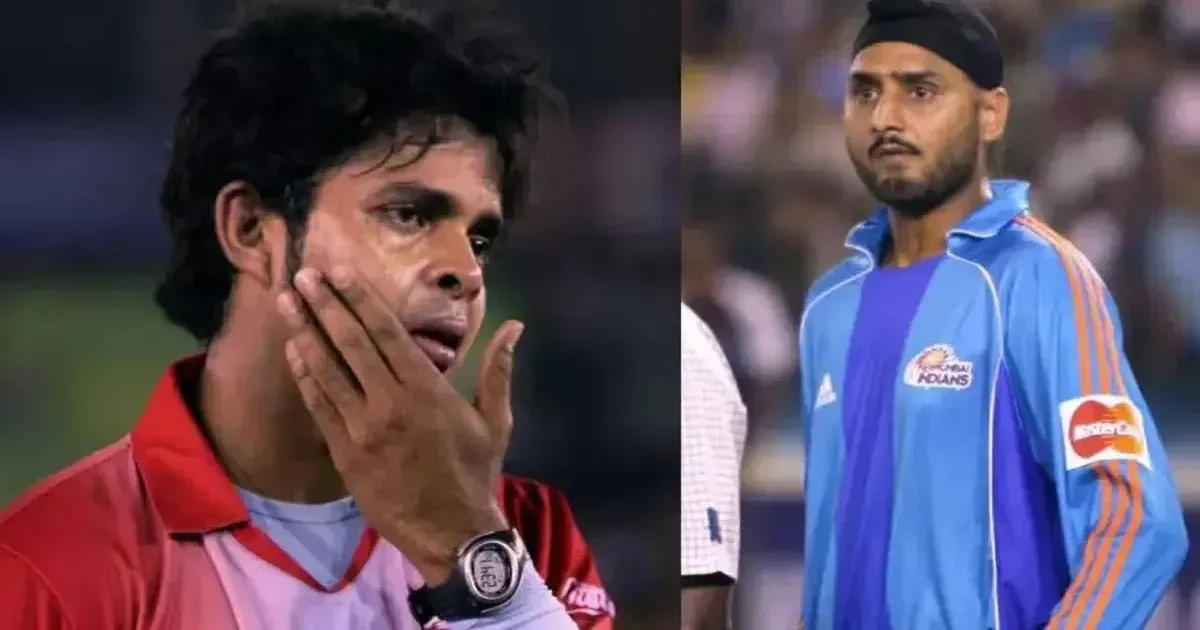
S Sreesanth announced on April 25, 2026, his decision to terminate all personal and professional ties with Harbhajan Singh. This total severance follows the release of a controversial marketing campaign that parodied the infamous 2008 slapgate incident. Sreesanth alleged that his former colleague profited between 80 lakhs and 1 crore rupees from the advertisement. Direct communication between the two athletes ceased immediately after Sreesanth viewed the promotional material. He subsequently blocked Singh on all social media platforms to ensure no further contact occurs.
Years of public reconciliation attempts appeared to dissolve within hours of the advertisement's circulation. "I have no relationship with that person," Sreesanth stated during a recent media appearance. He described the former off-spinner's public persona as a carefully constructed facade. His frustration stems from what he views as the trivialization of a moment that caused him lasting professional distress nearly two decades ago. Slapgate remains one of the most polarizing events in the history of the IPL. During the inaugural 2008 season, Singh struck Sreesanth across the face after a match between the Mumbai Indians and Kings XI Punjab.
Historical Foundations of the Mohali Confrontation
Television cameras captured Sreesanth in tears on the field shortly after the physical exchange occurred in Mohali. Board of Control for Cricket in India (BCCI) officials handed Singh an 11-match ban for the assault. The disciplinary action also led to his exclusion from the remainder of that season's tournament. Sreesanth, while the victim of the strike, faced his own share of scrutiny regarding his on-field provocations. Farooq Abdullah, the match referee at the time, described the incident as a slap that left visible marks. The pacer finished with figures of 2 for 31 that night.
Simultaneously, the league struggled to manage its first major behavioral scandal. Public perception of the two players shifted dramatically as footage of the crying bowler looped on news cycles for weeks. Singh eventually issued a public apology, which many observers accepted as the end of the feud. Both players later shared a locker room while representing the Indian national team. Their joint victory in the 2011 World Cup was a visual indicator of their alleged truce. Fans often cited their celebratory embrace on the podium as proof that the rift was healed. National duty required a level of professional cooperation that masked underlying tensions.
Commercial Exploitation of On-Field Violence
Marketing executives often leverage past sporting scandals to drive engagement in the modern digital economy. Singh reportedly accepted a lucrative contract to recreate the tension of the 2008 event for a commercial brand. Sreesanth argued that profiting from such an aggressive act sets a dangerous precedent for younger athletes. Financial records cited by Sreesanth suggest the payout for the commercial reached 1 crore. He expressed disbelief that a teammate would seek to monetize a moment of physical violence. He noted that forgetting such incidents allows them to repeat in different contexts.
"I'll forgive but I'll never forget," Sreesanth said when explaining why the advertisement crossed a moral boundary he could not ignore.
Professional sports culture in India frequently blurs the line between genuine rivalry and manufactured drama. Critics of the ad campaign argue it prioritizes crude nostalgia over the mental well-being of the participants. Sreesanth claimed that while he attempted to move past the trauma, the commercial reignited old wounds. Singh has yet to issue a formal rebuttal to the specific financial allegations. His public interactions continue to focus on his broadcast duties and various brand endorsements. The silence from his camp suggests a strategy of non-engagement regarding the personal fallout.
Psychological Toll and the End of Public Forgiveness
Institutional responses to athlete-on-athlete violence typically focus on immediate suspensions and fines. Long-term psychological impacts often go unaddressed by league organizers or franchises. Sreesanth's reaction indicates that the emotional residue of the 2008 slap persists despite the passage of eighteen years. He warned that ignoring the severity of the original assault invites a recurrence of toxic behaviors in the dressing room. Retribution for the 2008 incident originally seemed complete after Singh apologized privately. However, the decision to transform that apology into a punchline for a brand deal altered the dynamic. This second betrayal felt more calculated than the initial heat-of-the-moment strike.
Aggressive marketing strategies in the IPL ecosystem frequently rely on "cringe-bait" to secure viral status. Brands often encourage athletes to mock their most controversial moments to appear self-aware or relatable. Sreesanth rejects this approach, viewing it as a mockery of the discipline required in professional cricket. He maintains that certain boundaries should remain sacred even in a highly commercialized sporting environment. His decision to block Singh reflects a desire to preserve his own mental peace. He emphasized that he no longer wishes to be associated with individuals who value profit over personal respect. The friendship survived for sixteen years before collapsing under the weight of a single commercial.
IPL Branding and the Ethics of Controversy
Corporate sponsors wield immense power over the narratives presented to cricket fans globally. The shift toward using controversy as a selling point reflects a broader change in how the league manages its image. Sreesanth believes the focus has moved too far away from the spirit of the game. He pointed out that his tears were not a performance but a genuine reaction to an assault. Re-enacting that pain for a paycheck constitutes a breach of the unwritten code between athletes. The advertisement effectively turned a traumatic professional memory into a consumable product. Such commodification often ignores the lived experience of the person who was harmed.
Beyond the personal grievance, the incident highlights the lack of oversight regarding how past disciplinary issues are marketed. League officials have not commented on whether parodizing an assault violates any current conduct codes. Sreesanth's vocal opposition might force a conversation about the ethics of brand partnerships. He remains firm in his refusal to engage with Singh in any capacity moving forward. His message to the public was clear: some things cannot be bought or joked about. The pacer has moved on by cutting the cord entirely. He finished his statement by affirming his commitment to coaching and personal projects away from the shadow of 2008.
Commercializing Slapgate Turns Reconciliation Into a Second Betrayal
Machiavelli famously noted that injuries should be done all at once, so that being felt less, they offend less. Harbhajan Singh ignored this principle by reviving a dormant trauma for a relatively meager sum relative to his net worth. By commercializing the 2008 slap, Singh transformed a moment of youthful aggression into a permanent stain of cynical opportunism. This maneuver reveals a disturbing trend where Indian cricketing legends view their own ignominy as an asset class to be liquidated. Sreesanth, often dismissed as mercurial, is entirely correct to identify this as a breach of the professional sanctum. The monetization of violence, even parodied violence, erodes the moral authority of the sport's elder statesmen.
Cricket fans must ask whether they are spectators of a sport or consumers of a scripted soap opera. If the 2011 World Cup reconciliation was genuine, it should not have been for sale. If it was a performance, then Sreesanth was a victim twice: once in Mohali and again in the marketing boardroom. Singh’s silence confirms the transactional nature of his public relations strategy. He effectively sold the dignity of his teammate for the price of a mid-tier Mumbai apartment. It is not savvy branding; it is a deep failure of character that justifies Sreesanth's decision to block his former friend. Respect is the only currency that does not depreciate in the long run. Singh is now bankrupt.