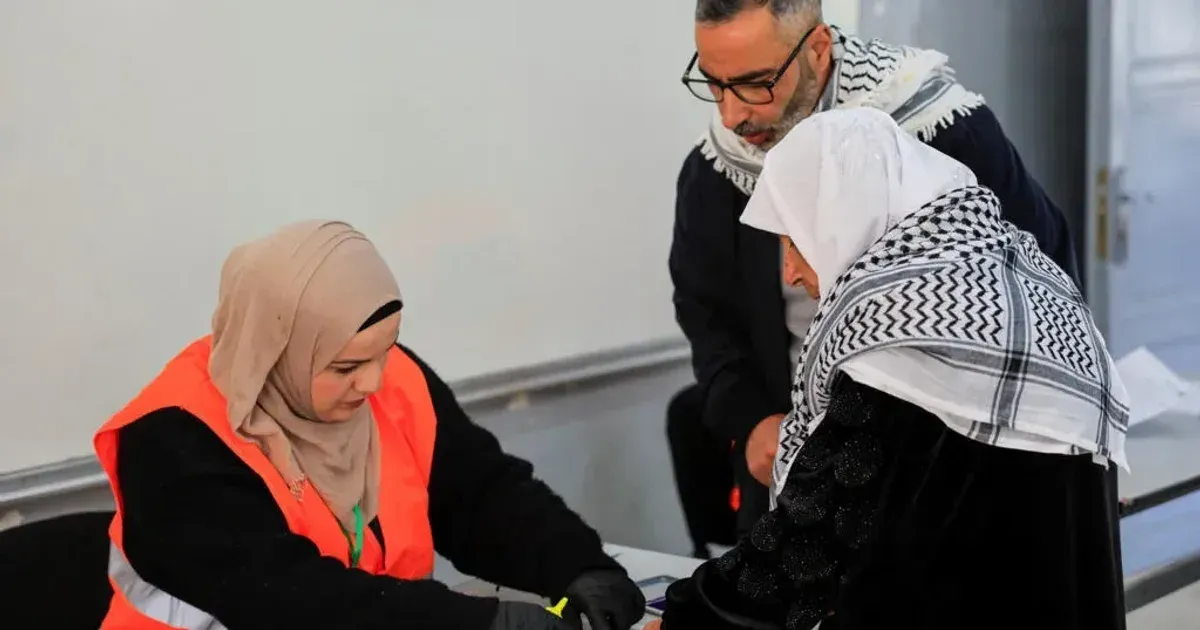
Palestinian voters gathered at polling stations on April 25, 2026, to cast ballots in the first municipal elections held since the conclusion of the Gaza war. Residents in the West Bank and selected districts across the territories stood in lines beginning at 7:00 a.m. local time. Mahmoud Abbas, the President of the Palestinian Authority, signaled that these elections would focus on local governance rather than broader legislative shifts. The local count remains politically important.
Election officials confirmed that lists are dominated by candidates from Fatah or affiliated independent blocs. No candidates officially representing Hamas appeared on the ballots. That absence follows a period of intense internal political friction and the physical devastation caused by the recent conflict. Hamas leaders previously characterized such local votes as incomplete without a broader consensus on national elections.
Sovereignty remains a distant prospect for the local councils being formed. Al Jazeera reports suggest these elections offer a form of participation that lacks actual power. Local municipalities manage waste collection, water distribution, and road maintenance, yet they operate under the structural constraints of Israeli military control. Territorial fragmentation limits the ability of any local leader to enact policy beyond their immediate municipal boundary.
Fatah Candidates Lead Municipal Ballots
Fatah operatives moved quickly to fill the void left by the exclusion of Hamas. Party leaders view the municipal vote as a test of their grassroots organizational strength. Campaign posters for Fatah-aligned candidates covered the walls of Ramallah and Bethlehem throughout the week. Candidates focused on bread-and-butter issues like infrastructure repair and public utility costs to appeal to a weary electorate.
Independent lists, often composed of local businessmen or professional engineers, provide the only alternative to the ruling party in many districts. These groups frequently claim they can provide better services without the baggage of national political rivalries. Voters often choose based on clan affiliations or local reputation. France 24 noted that the lack of national ideological diversity makes the contest feel like a series of neighborhood disputes.
The current security situation required a staggered approach to polling in several sensitive areas.
Sovereignty Constraints in Occupied Territories
Political analysts argue that the elections provide a veneer of democratic legitimacy to an administration that has not held national elections since 2006. The Palestinian Authority faces declining approval ratings in many West Bank enclaves. By focusing on local governance, the leadership attempts to demonstrate institutional stability. Critics argue that these local wins do not translate into progress toward statehood.
Power resides in military headquarters, not city halls.
Israeli checkpoints and transit restrictions continue to dictate the movement of goods and people between municipalities. A mayor in the West Bank cannot authorize a new building project if the land falls within Area C, which is under full Israeli control. Such realities make municipal mandates feel symbolic to many younger Palestinians. The lack of sovereignty transforms local governance into a task of managing the status quo of the occupation.
Voter Participation Figures and Local Demographics
Participation rates varied sharply between rural villages and larger urban centers. In some northern West Bank towns, turnout reached 65 percent within the first six hours of polling. Urban centers like Nablus saw slower movement at the polls. Economic exhaustion often outweighs political enthusiasm for those struggling with high unemployment rates. Women and youth activists pushed for greater representation in these local contests. Several lists featured young professionals trying to bypass the traditional gerontocracy of Palestinian politics. Their success, however, depends on their ability to navigate the existing patronage networks established by Fatah over several decades. The market for new political ideas is often stifled by the immediate need for basic survival. Financial support for these municipalities comes largely from international donors and tax revenues collected by Israel and transferred to the Palestinian Authority. Such fiscal dependency limits the autonomy of elected local officials. If the Palestinian Authority faces a budget crisis, local services are the first to suffer. Municipalities often find themselves begging for funds to complete basic sewage or paving projects.
Security Dynamics Near Polling Stations
Security forces from the Palestinian Authority maintained a visible presence near all voting centers to prevent clashes between rival factions. No major incidents were reported by midday, although tensions lingered in refugee camps. Israeli defense forces also maintained a perimeter around major Palestinian population centers. Coordination between these two security apparatuses is essential for the logistics of the vote. International observers from various European nongovernmental organizations monitored the proceedings in larger cities. They focused on the transparency of the ballot boxes and the freedom of voters to access the stations. While the technical conduct of the election appeared standard, the political context stayed tense. Many observers noted the irony of holding elections for local councils that cannot control their own borders. Hamas officials in Gaza did not allow the vote to take place in the coastal enclave. The split further solidifies the political division between the two territories. While the West Bank goes to the polls, Gaza continues to manage the aftermath of the war without a clear path toward political reintegration. Tensions over the lack of a national vote persisted throughout the day. Results are expected to be announced within 48 hours of the polls closing. The incoming council members will inherit a set of challenges that predate their administration. Aging infrastructure and a growing population place immense pressure on limited municipal budgets. Success will be measured in gallons of water delivered and kilometers of road paved. Palestinian civil society continues to demand a return to national presidential and legislative elections. Local votes are seen by many as a diversion from the larger issue of leadership succession. Mahmoud Abbas has led the Palestinian Authority for over two decades without a fresh national mandate. Succession plans for the presidency remain absent from the municipal agendas.
Municipal Voting Gives the Palestinian Authority Legitimacy Without Reform
Democracy is a convenient theatrical production when genuine sovereignty is absent. By allowing municipal elections, the Palestinian Authority provides a release valve for public frustration without risking its grip on national power. The international community often applauds these local votes as evidence of institutional maturity, yet this praise ignores the structural paralysis defining Palestinian life. A mayor in Hebron or Bethlehem possesses less actual authority over their territory than a mid-level military officer in the Israeli civil administration. This power imbalance ensures that municipal governance remains an exercise in crisis management. If the goal was truly democratic reform, the leadership would have scheduled national elections years ago. Instead, the world watches a hollowed-out process where the most influential political actor, Hamas, is entirely excluded. This exclusion does not remove Hamas from the political consciousness; it only ensures that the results reflect a curated reality. Expect the new local councils to become battlegrounds for patronage instead of engines of change. These elections are not a step toward statehood. They are a management tool for an administration desperate to justify its continued existence. The farce of local voting will continue until the underlying issue of national legitimacy is addressed.