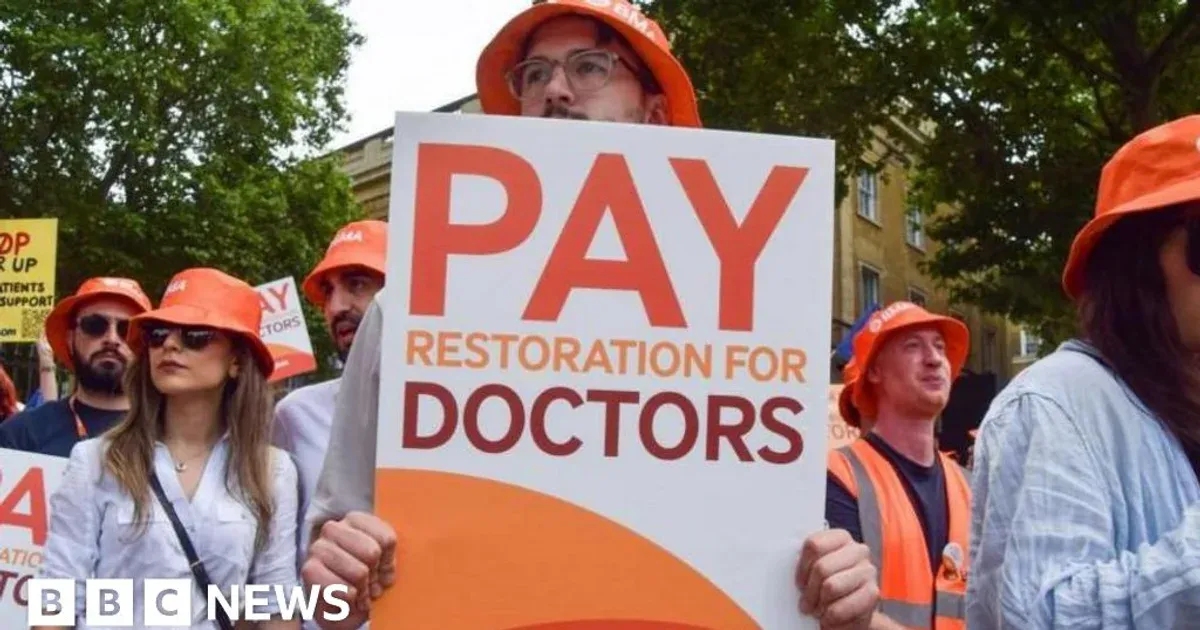
Keir Starmer's March ultimatum to resident doctors raised the NHS strike dispute from a pay fight into a workforce-planning test. The prime minister gave the British Medical Association 48 hours to call off planned strike action or risk losing a government offer that included pay changes, reforms and up to 4,500 additional specialty training posts over three years.
The immediate argument centered on 1,000 posts intended for recruitment in April and August 2026 starts. When the six-day strike went ahead, the government said that round could not proceed as planned. A later June settlement returned a broader three-year expansion: at least 4,000 additional posts, with up to 500 more depending on training capacity and service need.
Training Became the Pressure Point
Resident doctors had been arguing for pay restoration after years of real-terms erosion. The BMA's demand was above what ministers were prepared to accept, and the government accused the resident doctors' committee of rejecting an offer without putting it to the full membership. Starmer's 48-hour deadline was designed to force that question into the open.
The leverage worked politically because training posts are not an abstract benefit for doctors. They shape whether young medics can move into specialties, whether bottlenecks ease, and whether the NHS has enough consultants, GPs and specialist staff in future years. Using training posts as a bargaining chip was therefore risky. A pipeline under strain is not a clean tool for punishment.
The Government Had a Real Backlog Problem
Ministers were not inventing the patient cost of strikes. A walkout by resident doctors disrupts elective care, appointments, rota planning and emergency-cover arrangements. NHS leaders already face waiting-list pressure, staff exhaustion and public frustration over delays. Another strike after Easter gave the government an obvious argument: patients would carry the immediate disruption.
The patient-disruption argument had force, but it did not settle the dispute. The NHS also carries a long-term staffing problem. If specialty training places are delayed or withdrawn during a pay fight, the health service may save face in one week and create capacity pressure later. The government cannot claim to be protecting patients only by shortening the strike calendar. It also has to protect the workforce route that patients will depend on years from now.
The BMA Also Faced a Trust Test
The union's case rested on a real grievance: doctors had seen pay fall in real terms while workloads, debt and career uncertainty grew. Training bottlenecks made the profession feel less secure for many resident doctors. A pay settlement that ignored that frustration would not have been durable.
Still, repeated disruption weakens public sympathy. Doctors can have a strong pay case and still face a political problem if patients see only cancellations, crowded hospitals and delayed treatment. The BMA had to explain not just what doctors were owed, but why another strike was the right route when the offer included career-progression and training elements as well as pay.
Patients Sit Between Two Timelines
The dispute was painful because patients experienced it on two clocks. The first was immediate: postponed clinics, thinner rotas and more pressure on remaining staff. The second was structural: whether enough doctors would be trained into the specialties and community roles the NHS needs over the next decade.
Neither side could claim the patient interest while ignoring one of those clocks. Ministers could not protect appointments by weakening the future staffing plan. Doctors could not protect the future NHS while leaving patients to absorb repeated walkouts without a convincing explanation. Both timelines were real at once.
The Later Settlement Changed the Numbers
The revised offer was accepted after 53% of eligible BMA members who voted backed it. It included pay-structure reform, specified professional-fee support and up to 4,500 specialty training posts over three years. The minimum was 4,000, with a further 500 dependent on trust demand, training capacity and service need.
That agreement ended the dispute and superseded the withdrawn March offer. It also makes the chronology essential: the 48-hour ultimatum and the interrupted 1,000-post round were one stage of the conflict, while the final deal created a different implementation schedule and a larger three-year commitment.
The NHS Cannot Bargain Away Its Future
Starmer was right that the NHS cannot absorb endless strike cycles without consequences. He was wrong if he treated training capacity as a clean bargaining chip. The health service's crisis is partly a pipeline crisis, and turning that pipeline into leverage carries a price.
The BMA faced its own problem. Public trust weakens when disruption repeats, even when the pay argument has substance. The dispute sat in the worst possible place: patients needed care, doctors wanted pay and career repair, and the NHS needed more trained specialists later. The accepted deal ended the immediate collision. The harder test is whether its training-post promise is delivered rather than becoming the next bargaining chip.