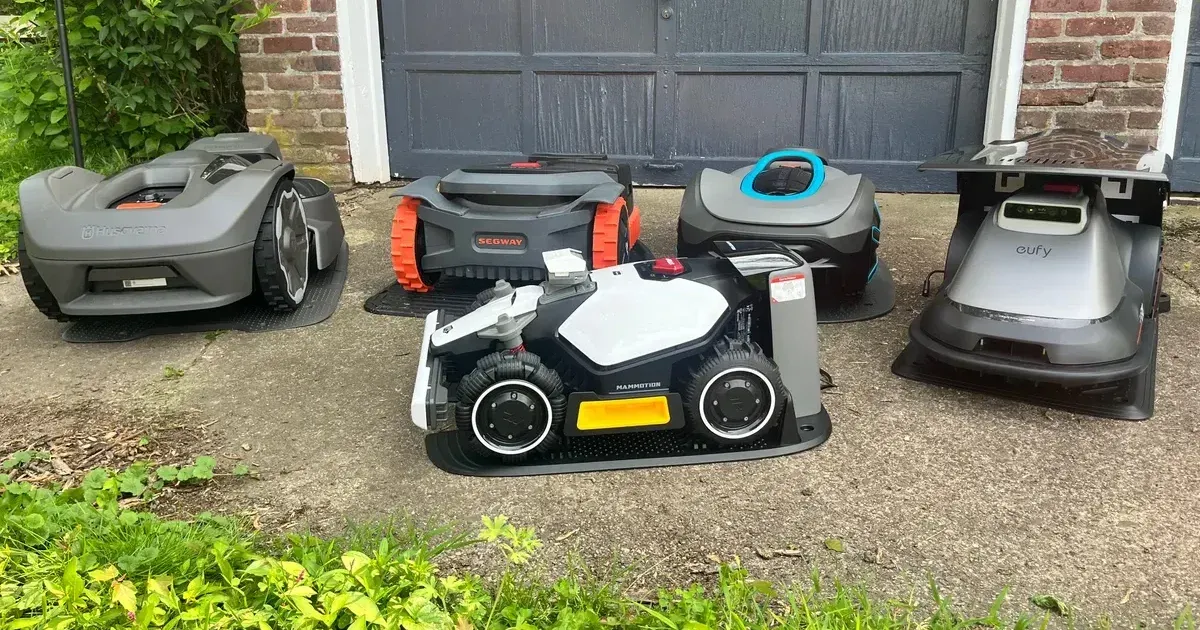
Robotic lawn care is moving from novelty hardware into a broader home-automation market. Navigation now matters as much as blade performance. Homeowners are weighing app control, terrain handling and setup friction before replacing traditional mowers. New performance data released on April 6, 2026, showed Segway and Mammotion gaining ground as buyers adopted satellite-guided mowers without boundary wires.
Removing the physical perimeter requirement solved the largest barrier to entry for suburban property owners. Satellite signals now dictate the cutting path, replacing buried copper cables that often suffered from degradation or accidental breaks. Segway has capitalized on this shift by integrating its expertise in short-distance transportation into the lawn maintenance sphere. Software platforms accompanying these machines now allow for complex zone management and scheduling through cloud-based interfaces.
Reliability remains the primary metric for consumer retention.
Wireless Navigation Reshapes Robotic Lawn Care
GPS-based navigation has entered its third generation of refinement, addressing previous failures in signal stability near tall structures. Engineers at various firms have deployed hybrid systems that combine satellite data with visual odometry. Navimow X350 units use a front-facing camera system to navigate when overhead cover blocks satellite reception. Precision cutting patterns have largely replaced the random-bounce algorithms used by early robotic vacuum cleaners. Modern units follow efficient, parallel lines that mimic professional landscaping standards.
Hardware durability has likewise improved to meet the demands of variable climate conditions. Sensors now detect moisture levels and temperature fluctuations to determine if a scheduled mow would damage the turf. High-end models feature IPX6 waterproofing, allowing the chassis to withstand high-pressure water jets during cleaning. This integration of industrial-grade components has extended the expected lifespan of these machines to approximately seven years. Batteries use lithium iron phosphate chemistry to ensure thermal stability and high cycle counts.
Segway Navimow X350 and Tech Giant Competition
Performance testing of the Navimow X350 indicates that software integration is the defining feature of the 2026 product cycle. Setup times have dropped from hours to minutes as users simply walk the mower around the yard like a remote-controlled vehicle to define boundaries. Digital mapping allows for the creation of "no-go" zones around flower beds or temporary obstacles without physical intervention. Segway's proprietary VisionFence technology identifies pets and toys in real-time, halting the blades before contact occurs. Processing power on these units now rivals that of mid-range smartphones.
"Don't be surprised if your neighbors stop by to ask about your new gadget," Jill Waldbieser of Business Insider wrote regarding the social impact of these machines.
While Segway leads in software fluidity, competitors are pushing the limits of physical torque. Motors must balance the need for quiet operation with the power required to mulch thick fescue or ryegrass. Noise emissions for the X350 remain below 58 decibels, allowing for nighttime operations without disturbing nearby residents. Nighttime mowing has become a standard feature for high-income households looking to maximize yard availability during daylight hours. Total market valuation for the autonomous sector is projected to reach $11 billion by the end of the fiscal year.
Mammotion's terrain handling gave the market another proof point that robotic lawn care is moving from novelty hardware toward practical yard automation.
Steep gradients and uneven topography continue to challenge lower-tier robotic systems. Mammotion addressed this specifically with the LUBA Mini AWD, a unit designed with all-wheel-drive capabilities to navigate slopes up to 80 percent. Dual cutting plates provide a wider path than single-blade competitors, reducing the total time required to finish a task. Independent suspension systems allow the mower to maintain contact with the ground on rutted or bumpy lawns. Traction control algorithms prevent the wheels from spinning and damaging the root structure of the grass.
Beyond the hardware, the economic impact of these machines is reshaping the local service industry. Professional landscaping crews increasingly deploy fleets of robots to residential sites, allowing one technician to oversee five properties simultaneously. Financial analysts suggest that the upfront cost of $1,200 for a consumer-grade robot is recouped within two seasons of avoided labor fees. Maintenance requirements are limited to monthly blade rotations and seasonal battery storage. Most repairs now involve modular sensor replacements rather than engine overhauls.
Reliability of signal remains the only serious vulnerability in dense urban environments.
Economic Shifts in the Robotic Lawn Care Market
Global supply chains have shifted to accommodate the rapid growth of the robotic sector. Manufacturers are moving away from proprietary charging ports toward standardized wireless docking stations. Power consumption for a typical robot mower is less than thirty kilowatt-hours per month, representing a fractional cost compared to gasoline-powered alternatives. Emissions regulations in California and New York have further accelerated the phase-out of two-stroke engines. Consumers now view the robot mower as a necessary appliance instead of a luxury novelty.
Safety protocols have undergone rigorous standardization to meet international requirements. Ultrasonic sensors detect objects up to five meters away, slowing the machine before it approaches a potential collision. Lift and tilt sensors immediately disengage the cutting motor if the unit is disturbed. Theft prevention features include GPS tracking and geofencing, rendering the unit inoperable if it is removed from its designated property. Firmware updates deploy via local Wi-Fi networks to patch security vulnerabilities or improve pathfinding logic.
Autonomous Lawn Care Adoption
Obsession with reclaimed time has blinded the modern homeowner to the erosion of domestic agency. While the marketing departments of Segway and Mammotion champion the liberation from weekend chores, they are simultaneously tethering property owners to a cycle of perpetual software subscriptions and proprietary hardware. The transition from a mechanical tool that can be repaired with a wrench to a digital platform requiring a satellite link is not progress; it is a calculated surrender of self-sufficiency. We are trading the tactile connection to our land for a pixelated map on a five-inch screen.
Economic logic favors the machine, but the societal cost remains uncalculated. Displacing the local labor force that once maintained these green spaces removes a critical entry point for young workers and small business entrepreneurs. Instead of a vibrant local economy of service providers, we have a consolidated flow of capital toward a handful of technology firms in Beijing and Silicon Valley. The 2026 market data suggests that convenience outweighs the desire for local economic resilience. If the primary value of a home is its ability to maintain itself without human presence, the concept of home ownership has shifted from stewardship to mere asset management. The robotic mower is the final step in the sanitization of the suburban experience.