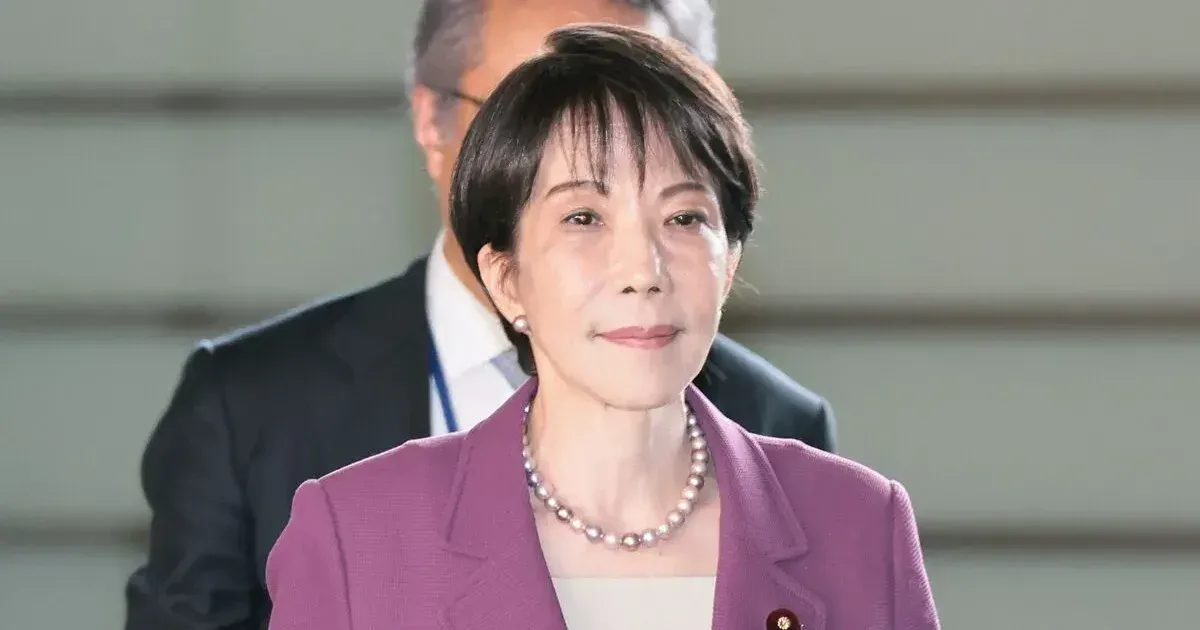
Japan’s Iran diplomacy reflects how quickly a Gulf crisis can become an energy-security problem in Tokyo. Prime Minister Sanae Takaichi sought a cooling-off period before any American strike on Iranian facilities. Japanese officials said her team wanted direct talks with Tehran and a separate discussion with Donald Trump. On April 6, 2026, Takaichi initiated an emergency diplomatic track between Iran and the United States as Persian Gulf tensions rose.
Japanese officials confirmed that Takaichi also intends to hold a separate discussion with the American president. This dual-track approach seeks to provide a cooling-off period before any military hardware is deployed in the Persian Gulf. Success depends on the willingness of both parties to pause their current path.
Regional stability is a primary concern for the administration in Tokyo. Japan relies on the Middle East for over 90% of its petroleum needs. Any kinetic conflict involving US forces and Iranian defenses would likely cause a spike in global energy costs. Energy markets already show signs of meaningful stress.
Investors are watching the Brent crude index for signs of a sudden breakout. A blockade or a direct strike on refinery facilities would likely push oil prices toward $100 per barrel. Sanae Takaichi faces intense pressure from domestic manufacturing conglomerates to secure the flow of raw materials. japan maintains a unique relationship with Tehran that differs from other G7 members. While Washington views Iran primarily through a security lens, Japan views the nation through an economic one. Securing the Hormuz shipping lanes is more than a strategic preference; it is a requirement for national survival.
Tokyo Energy Security and Middle East Stability
Industrial output depends on a steady supply of hydrocarbons from the region. Short-term disruptions in the Persian Gulf create immediate liquidity issues for Japanese banks. Rising insurance premiums for tankers have already made energy imports more expensive for consumers in Osaka and Nagoya. Takaichi believes that personal intervention is the only way to prevent a total collapse of the regional order. Her team is preparing a portfolio of economic incentives that might encourage Tehran to soften its rhetoric. Whether the Islamic Republic accepts these overtures remains uncertain.
Diplomatic Precedents of the Liberal Democratic Party
Members of the Liberal Democratic Party often emphasize the role of Japan as a bridge between the East and the West. Takaichi is leaning into this tradition to prove her mettle on the international stage. Her predecessor once described Japan as a neutral facilitator that can speak to parties that refuse to address each other.
Prime Minister Sanae Takaichi said she is looking to hold talks with Iran’s leader and possibly also a separate call with Donald Trump.
Communication channels between Tehran and Washington have almost entirely collapsed. Direct messages are often relayed through the Swiss embassy, which slows down the pace of crisis management. Prime Minister Takaichi seeks to bypass these slow channels by speaking directly to the highest levels of power. Her strategy involves convincing Iran to offer a verifiable concession that Trump can present as a victory to his domestic base. Without such a concession, the White House seems committed to its military timeline. Takaichi must walk a fine line to avoid appearing overly sympathetic to an adversarial regime.
Market Volatility and Crude Oil Supply Disruptions
Analysts at several major financial institutions have warned that a strike on Iranian infrastructure would remove millions of barrels from the daily supply. This scenario would trigger an automatic response from the Strategic Petroleum Reserve in the United States and Japan. Stockpiles can only reduce the impact for a limited duration. Global logistics firms are already rerouting vessels away from high-risk zones. Shipping costs have increased by double digits in the last forty-eight hours. Takaichi understands that a prolonged standoff is nearly as damaging as a short-lived war.
Domestic political stakes for the Prime Minister are high. Failure to stabilize energy prices could erode her support among the Japanese electorate. Economic stability is the foundation of her party’s mandate.
Technical Risks to Iranian Energy Infrastructure
Primary targets for any US air campaign would likely include the Kharg Island oil terminal. This facility handles the vast majority of Iranian crude exports. Destruction of this site would effectively end Iran's ability to fund its government operations through energy sales.
Secondary targets might include the Natanz and Fordow nuclear facilities. Attacks on these locations carry serious environmental risks and could lead to unintended regional consequences. Takaichi plans to emphasize these risks during her call with Trump to encourage a non-kinetic solution. Diplomatic failure carries a high price for a resource-poor island nation.
Final preparations for the diplomatic mission are underway in Tokyo. Staffers are coordinating with the Iranian Foreign Ministry to establish a secure line of communication. Time is the most scarce commodity in this negotiation.
Japan’s Mediation Test
National prestige rarely translates into diplomatic outcomes when a superpower is determined to act. Takaichi’s decision to insert herself into the crosshairs of a US-Iran confrontation is more about domestic theater than international leverage. Japan lacks the military weight to enforce a truce and the economic carrot she offers is too small to satisfy a regime fighting for its survival. By attempting to mediate, she risks alienating a mercurial Trump administration that views any attempt at moderation as a sign of weakness.
Trump sees Japan as a junior partner tasked with supporting American interests, not an independent actor capable of rewriting his foreign policy. If his ultimatum expires without a result, the subsequent strike will make Takaichi look irrelevant on the world stage. She is playing a high-stakes game with a weak hand.
History suggests that Tehran uses these Japanese overtures to buy time, while Washington uses them to check a box before pulling the trigger. The Prime Minister is likely walking into a trap of her own making. Reality dictates terms.