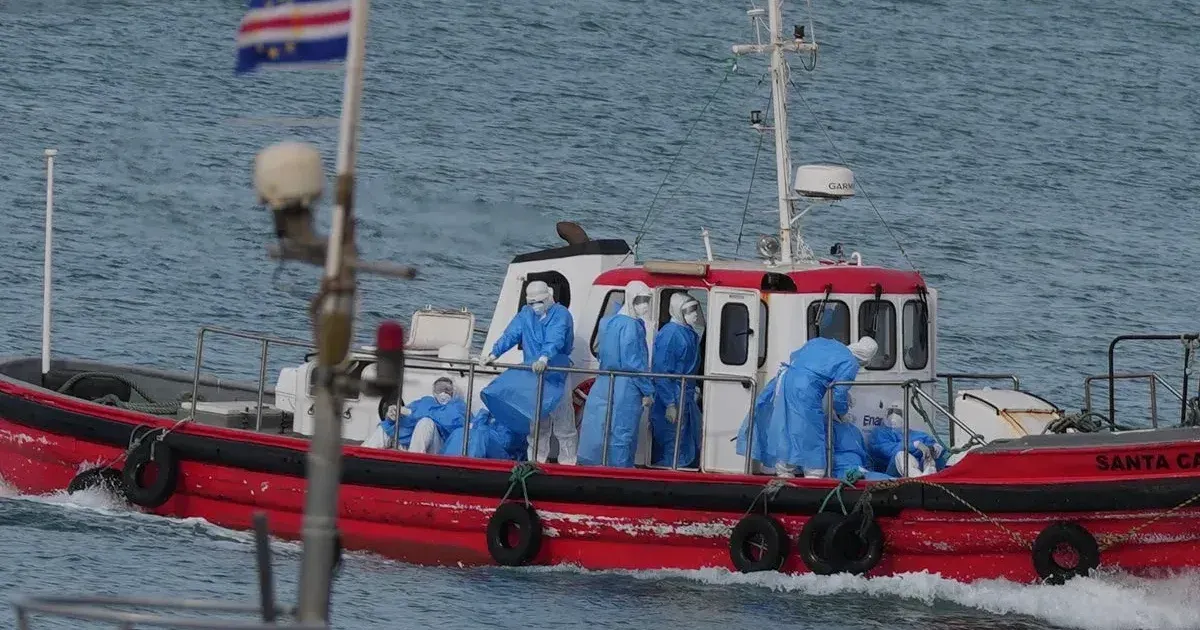
Medical teams in Tenerife moved into position as the MV Hondius approached the Canary Islands following a deadly hantavirus outbreak. The vessel carries passengers from multiple nations, and local port authorities had been coordinating with international health agencies for several days before its arrival. Tenerife officials are preparing for a medical arrival that will require isolation planning, passenger communication and coordination with Spanish health agencies.
By May 10, 2026, local health officials in Santa Cruz de Tenerife had spent the overnight hours establishing a secure perimeter around the primary cruise terminal. Spanish police cordoned off all access roads to the harbor to prevent any unauthorized contact with the returning travelers. Emergency vehicles and specialized containment units now line the pier in anticipation of the morning arrival.
The vessel, an expedition ship known for its polar voyages, diverted its course after medical staff reported the first fatalities while in international waters. BBC World correspondent Sarah Rainsford noted that the arrival is timed to coincide with a window of low wind speed to enable safe medical transfers from ship to shore, while the United States and Germany finalized flight manifests for an urgent evacuation effort focused on symptomatic passengers and those with underlying health risks.
Reports from CBS News indicate that 17 Americans are currently on the vessel and awaiting evacuation. They are expected to move to a military transport aircraft for a direct flight to a specialized treatment facility once cleared by on-site physicians, while medical briefings have emphasized that hantavirus can lead to hantavirus pulmonary syndrome, a severe condition requiring intensive supportive care.
Pathogens of this type typically reach humans through aerosolized particles from rodent waste, though the source of the outbreak on the ship remains under investigation.
British citizens aboard the MV Hondius face some of the strictest measures in Europe. The United Kingdom government mandated a 45-day isolation period for all returning travelers to ensure the virus does not enter the general population. This duration exceeds standard quarantine protocols for other respiratory viruses due to the specific risks of the current strain.
International Evacuation Effort for MV Hondius Passengers
Specialized aircraft are currently positioned at local airports across the Canary Islands to begin the repatriation process. DW News reported that German authorities sent a dedicated MedEvac plane equipped with isolation pods to transport their citizens safely across the continent without risking exposure to the flight crew.
Disembarkation will proceed in small groups to prevent overcrowding on the docks during the triage phase. Ground crews in Tenerife are wearing full-body protective suits and respirators during the transfer of baggage and medical supplies, while Spanish civil aviation officials coordinate with foreign transport teams so evacuation flights can depart as soon as passengers are boarded and cleared.
Triage units on the pier will evaluate every individual before they proceed to evacuation flights. Doctors will check for fever, lung congestion and oxygen saturation levels to determine who needs immediate stabilization in a local Spanish hospital and who can endure a long-distance flight; officials have not issued a new death toll since the vessel entered Spanish territorial waters.
Medical Containment and Public Health Protocols
Health monitors from the European Union are tracking the ship’s course as it moves toward its designated berth at the Santa Cruz de Tenerife port. Security forces have been authorized to use drone surveillance to monitor the perimeter of the containment zone throughout the duration of the docking process.
Families waiting for news in Berlin and London have criticized the lack of daily updates from the vessel’s owners. Many travelers have been confined to their cabins for several days to limit interaction, with meals delivered by crew members wearing protective equipment to maintain basic hygiene standards.
Engineers from the shipping line are currently cooperating with Spanish environmental health officers to map the ship’s ventilation ducts and air filtration systems. These systems are under investigation to see if they contributed to the spread of aerosolized particles throughout the passenger decks during the voyage.
The arrival on Sunday marks the end of a ten-day period of isolation for those on board. Security teams established a 200-meter exclusion zone around the berth to ensure that only authorized medical personnel have access to the vessel.
Once the evacuations are complete, the MV Hondius will undergo deep chemical cleaning using industrial-grade disinfectants. The decontamination process is expected to take at least two weeks and will include the removal of soft furnishings and carpets from public areas before port authorities allow the harbor operation around the berth to return to normal.
Containment Risks
Operating an international air bridge for a deadly viral outbreak presents a unique set of biosecurity challenges that extend far beyond the cruise terminal. The primary risk lies in the transition from a controlled maritime environment to the mobile confinement of a medical aircraft. While the German MedEvac pods offer a high degree of containment, the transfer of 17 Americans and hundreds of European citizens involves hundreds of touchpoints where human error could lead to a breach.
National health services are also bracing for the strain on isolation facilities, particularly in the United Kingdom, where a 45-day quarantine requires serious logistical support and monitoring. The central risk is not panic but process: if handoffs between ship, pier, aircraft and receiving hospitals are inconsistent, authorities could lose track of exposure status or delay care for passengers who deteriorate after leaving Tenerife.
Authorities are trying to move quickly without weakening screening. That balance will decide whether the Tenerife operation becomes a controlled evacuation or a warning about how difficult maritime outbreaks are to manage once passengers must be dispersed across borders.