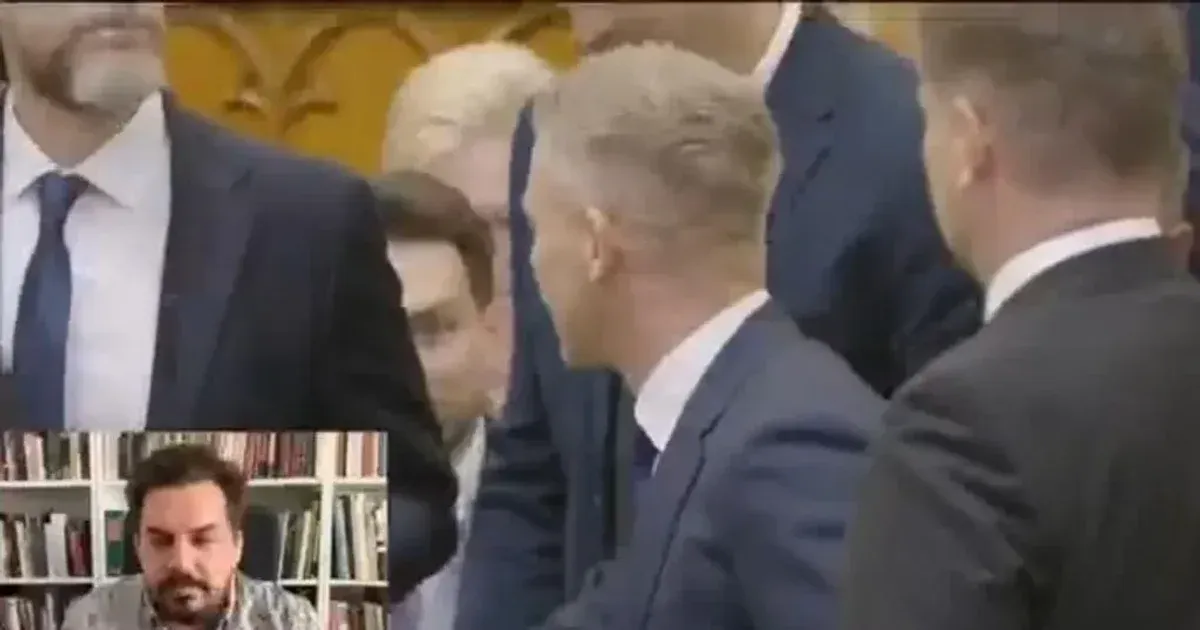
Hungary now faces a transition that will test institutions as much as party strength. Magyar inherits public expectation after turning anti-Orban energy into governing authority. Péter Magyar walked into Hungary's parliament Saturday to take the oath of office as prime minister, formally ending Viktor Orbán's 16-year hold on government. The official transition occurred on May 9, 2026, after Magyar's Tisza party defeated Orbán's Fidesz in a landslide that reshaped Central European politics. The speed of the handover mattered because Magyar had pressed President Tamás Sulyok to convene parliament quickly, arguing that Hungary could not wait weeks for a government after such a decisive result.
Supporters gathered in Budapest to witness the transfer of power, a moment that signaled both a domestic rupture and a possible reset with Brussels. Magyar, a former Fidesz insider, built his campaign around anti-corruption reform, institutional repair and a conservative but clearly pro-European agenda.
The change is dramatic because Orbán did more than lead Hungary for a long period. He rebuilt the state around a centralized political machine, rewriting laws, reshaping media oversight and turning conflict with European institutions into a defining feature of national politics. His departure therefore creates practical questions about prosecutors, courts, public broadcasters, regulators and state-linked business networks that cannot be answered by one inauguration ceremony.
Anti-Corruption Mandate
Voters delivered a clear message in April by handing Magyar's movement a decisive parliamentary mandate. His platform promised wide-ranging reforms aimed at dismantling patronage networks that expanded during the Orbán era. Public procurement, state contracts and politically connected business empires are likely to face early scrutiny. Magyar has repeatedly promised to pursue those he says benefited from the old system, but he will have to do so through institutions that still contain many people appointed during the Orbán era.
Hungarian journalist Zsolt Kerner described the moment as the start of a new era, capturing the mood among voters who saw the transition as more than a routine party change. The phrase matters because Magyar has framed his victory as a systemic break rather than a conventional change of cabinet.
Corruption remains the central test. Magyar's background as a former ruling-party insider gives him credibility with voters who believe he understands how the old system worked from the inside. It also raises expectations that he can identify where institutional safeguards failed and where legal changes must come first.
Economic stability is another urgent task. Inflation, wages and uneven investment shaped the campaign, and Magyar has promised a policy mix that reassures households while restoring predictability for investors. A previous election result already reshaped the political map of the region; now the question is whether the governing transition can turn that result into durable policy.
Repairing Relations with Brussels
European Union officials are expected to watch the first weeks closely. For years, Brussels challenged Budapest over rule-of-law standards, judicial independence, media freedom and the use of EU funds. Magyar has pledged to end the cycle of vetoes and legal battles that made Hungary a frequent outlier inside the bloc.
Unlocking frozen EU money will not be automatic. The new government has to show that institutional reforms are credible, not simply announced. Brussels will look for durable legal changes, independent oversight and proof that EU funds can be spent without the conflicts of interest that defined many disputes with the previous government. That means judicial guarantees, transparent procurement and meaningful limits on political control over public institutions.
The transition also changes Hungary's foreign-policy weight. Orbán frequently acted as a contrarian voice inside the EU and NATO, especially on Russia, Ukraine and sanctions policy. Magyar's arrival removes a major obstacle to European alignment, but it also creates pressure to prove that Budapest can shift without producing domestic instability. The new government will be judged quickly on whether it can turn campaign promises into laws, budgets and appointments that survive legal challenge.
Hungary Will Test Whether Entrenched Rule Can Be Reversed Democratically
Central Europe is entering a period of recalibration. Hungary had long served as a model for nationalist incumbency and institutional capture. A peaceful transfer to Magyar gives opposition movements elsewhere a rare example of an entrenched leader losing power through elections rather than crisis.
The hard part begins now. Fidesz loyalists remain embedded across parts of the state, media ecosystem and local administration. That gives the outgoing political order leverage even after losing the cabinet, especially if courts, regulators or public institutions slow the implementation of Magyar's first reforms. Magyar must move quickly enough to satisfy voters without creating administrative chaos or making reform look like revenge.
The regional stakes are therefore larger than Hungary alone. If Magyar restores transparency while keeping the economy stable, he can change how Brussels, Warsaw, Prague and Vienna think about democratic recovery after a long period of centralized rule. If he overreaches, Orbán's allies can argue that the new era is merely another partisan purge. If reforms stall, the Orbán system may prove easier to defeat at the ballot box than to dismantle in practice.