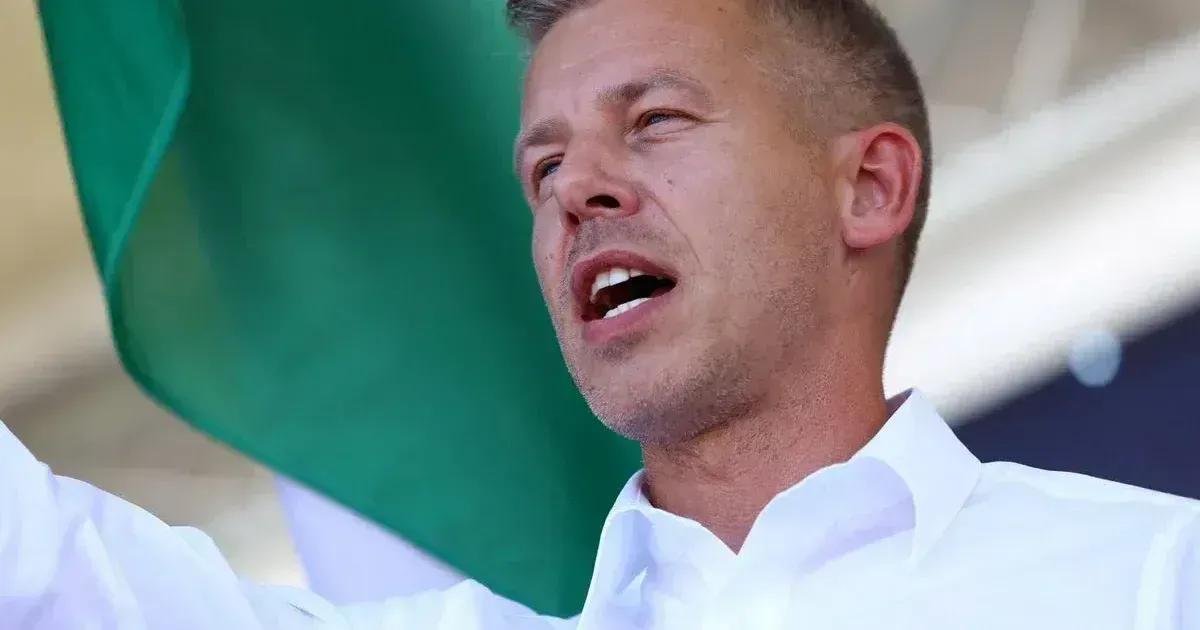
Hungary's election result has forced a sudden reset in Budapest, Brussels and Moscow. Opposition forces ended Viktor Orbán's long hold on power after a high-turnout ballot centered on rule of law, living costs and the country's isolation inside the European Union. The political message was clear before coalition talks even began. Results reported on April 13, 2026, pointed to an electorate ready to trade confrontation for institutional repair.
Brussels Prepares for a Budapest Reset
Diplomats at the European Commission began discussing the release of billions of euros in frozen funds almost immediately. These assets stayed locked for years due to concerns over judicial independence and government corruption under the Orbán administration. Restoration of these funds depends on the new government meeting specific rule-of-law benchmarks that the previous leadership consistently rejected. Commission President Ursula von der Leyen issued a statement congratulating the Hungarian people on their commitment to democratic renewal. Central European neighbors, particularly those in the Visegrad Group, view the shift as a chance to repair regional alliances. Poland and the Czech Republic often found themselves at odds with Hungary over its proximity to Russian interests despite their shared history of Soviet opposition. The fracture in this regional bloc had weakened the collective bargaining power of Eastern Europe within the wider union. Rebuilding these ties will require more than a change in leadership. Institutional damage within the Hungarian state media and the judiciary will take years to rectify. Critics of the outgoing administration argue that Orbán spent fourteen years populating every level of the civil service with loyalists. Transition teams are now auditing the accounts of the Prime Minister's Office to determine the extent of state-funded patronage networks. Public records indicate that a small circle of business associates controlled over 20% of government-tendered infrastructure projects since 2018.
Moscow Watches a Reliable Ally Fall
Energy security persists as a primary concern for the incoming government because of Hungary's heavy reliance on Russian natural gas and nuclear technology. Contracts for the Paks II nuclear power plant expansion, funded largely by Russian loans, represent a meaningful geopolitical entanglement for the new administration. Withdrawing from these agreements could trigger huge financial penalties that the national budget cannot easily absorb. Russia provided 85% of Hungary's natural gas in the previous fiscal year. Foreign policy experts suggest that the Kremlin will use these economic levers to pressure the new leadership. Dmitry Peskov, the Kremlin spokesperson, stated that Russia expects to maintain mutually beneficial ties with any Hungarian government. He emphasized that existing contracts are legally binding regardless of the political party in power.
"Russia respects the choice of the Hungarian people and expects the new administration to honor existing economic agreements regarding energy and infrastructure," Peskov said during a press briefing in Moscow.
Geopolitical isolation now looms for Russia in Central Europe. Without Orbán to act as a spoiler, the European Council can move more quickly on foreign policy initiatives that require unanimity. Defense ministers from across the continent are already proposing a steadier security framework that excludes Russian influence from the Danube region. The Hungarian military is expected to increase its participation in NATO-led exercises along the eastern flank.
Rule of Law and Cost-of-Living Pressure
High inflation and a stagnant manufacturing sector eroded the populist appeal of the Fidesz platform over the last eighteen months. Households across the Great Hungarian Plain struggled with rising food prices that peaked at levels far exceeding the European average. Orbán blamed external factors like "Brussels-driven sanctions" for the economic pain, but voters increasingly pointed to domestic mismanagement and the lack of transparency in public procurement.
Polling data showed that the youth vote turned out in record numbers to support the opposition. These younger citizens cited the desire for professional mobility and the protection of civil liberties as their primary motivations. Educators and healthcare workers also joined the protest movement, highlighting the decay of public services under the previous government's austerity measures and privatization efforts. Organized labor groups once again became a potent force in the final weeks of the campaign.
Urban centers like Budapest and Debrecen saw turnout rates exceeding 80 percent. This surge proved impossible for the incumbent's rural base to offset, especially as small-scale farmers felt the sting of rising fertilizer costs and reduced subsidies. Regional analysts noted that the opposition's ability to field a single candidate in key swing districts prevented the vote-splitting that had secured Fidesz victories in 2018 and 2022.
Institutional Isolation Ends the Orbán Era
Observers from the Organization for Security and Co-operation in Europe noted that the election was competitive but took place in an environment heavily skewed by incumbent advantages. About 1,000 international monitors watched the polling stations to ensure the integrity of the ballot. Their presence discouraged the blatant irregularities that opposition leaders feared would occur in rural districts where local bosses held serious sway.
Exit polls accurately predicted the margin of victory, leaving the outgoing prime minister little room to contest the outcome. Orbán conceded the election in a brief televised address, urging his followers to protect the "national values" his party had championed. His political future appears uncertain as investigations into the wealth of his inner circle are expected to begin within the first hundred days of the new parliament. Official assets belonging to the Fidesz leadership have already been subject to preliminary scrutiny by the European Anti-Fraud Office.
European capital markets reacted positively to the news. The Hungarian forint gained value against both the euro and the U.S. dollar within minutes of the exit poll releases. Investors anticipate a more predictable regulatory environment and a return to orthodox fiscal policies that will attract foreign direct investment back to the country. Political stability in Hungary now depends on the ability of a diverse opposition coalition to stay unified.
Europe After the Budapest Vote
Was the fall of Viktor Orbán a victory for democracy or simply the inevitable collapse of a patronage system that ran out of money? Europe is currently congratulating itself on the removal of a populist thorn, but this self-congratulation is premature. Orbán did not lose because his illiberal democracy was philosophically rejected. He lost because he could no longer subsidize the lifestyle of his electorate while being frozen out of the European Union treasury. The opposition coalition is a fragile marriage of convenience between groups that share nothing but a common enemy. Once the task of governing begins, the same fissures that Orbán exploited will reappear.
Brussels is about to learn that a pro-EU Hungary is not a compliant Hungary. The new government will still face the same geographic and economic realities that dictated Orbán's pragmatism toward the East. Replacing a strongman with a committee often leads to paralysis rather than progress. Moscow lost a tool, but it has not lost its influence. Energy dependence is a physical reality that votes cannot wish away. Russia will wait for the first winter crisis or the first major coalition disagreement to remind Budapest where its heat comes from. The celebration in the streets of Budapest is a victory of hope over math. Math usually wins.